
Last updated September 23, 2026
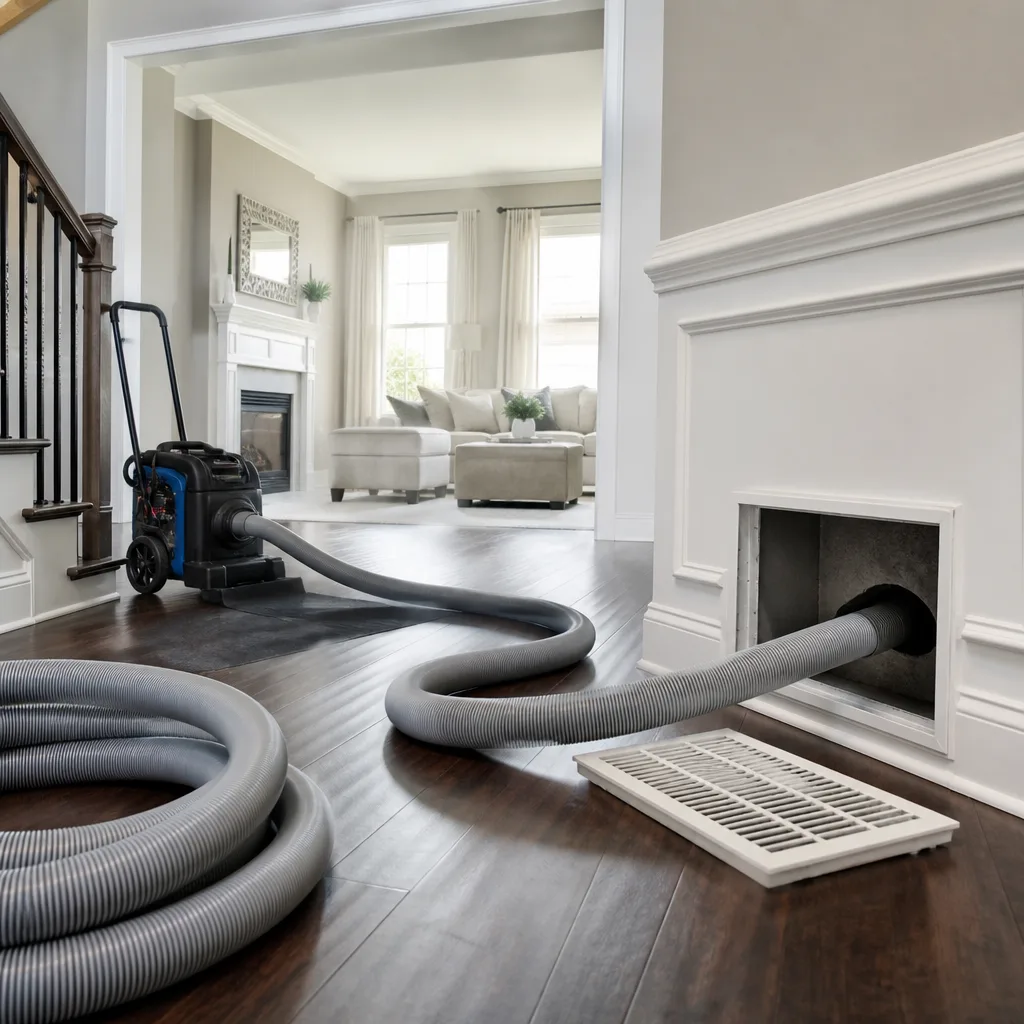
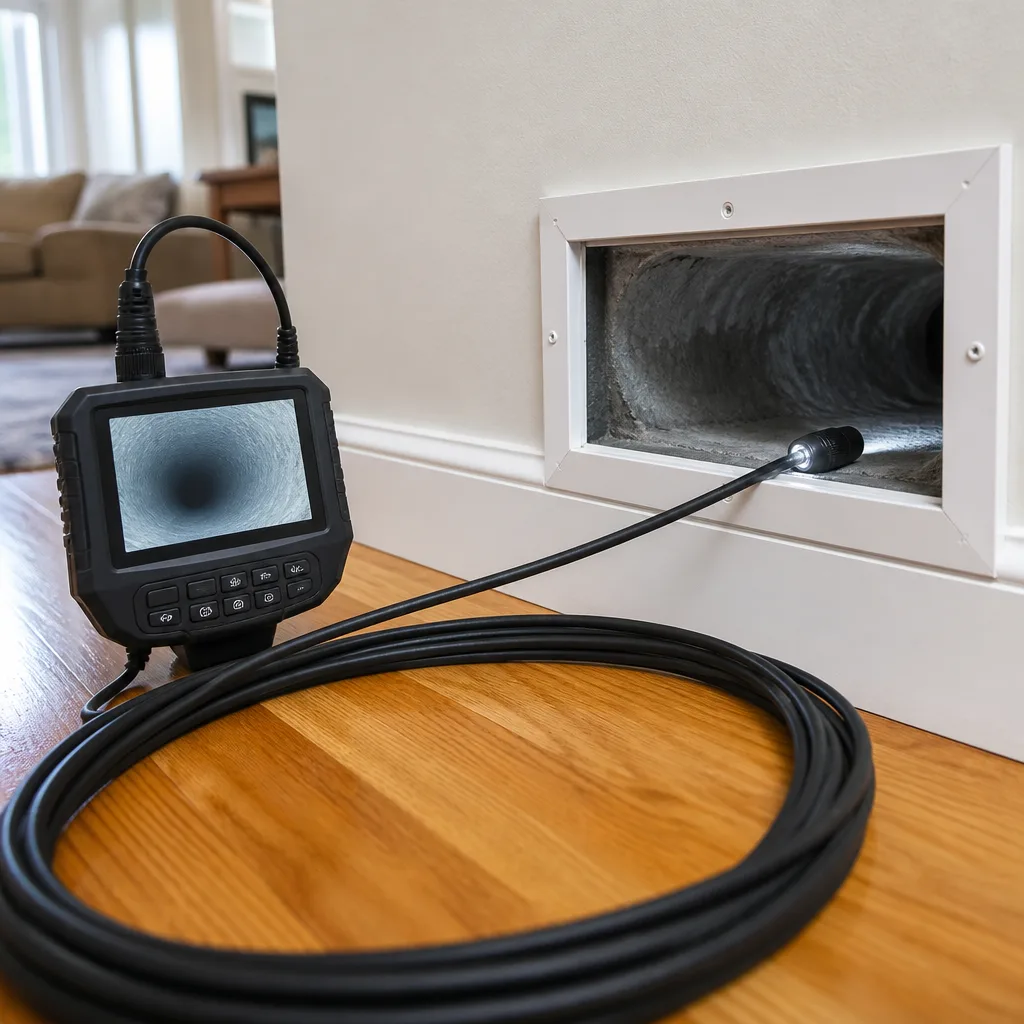
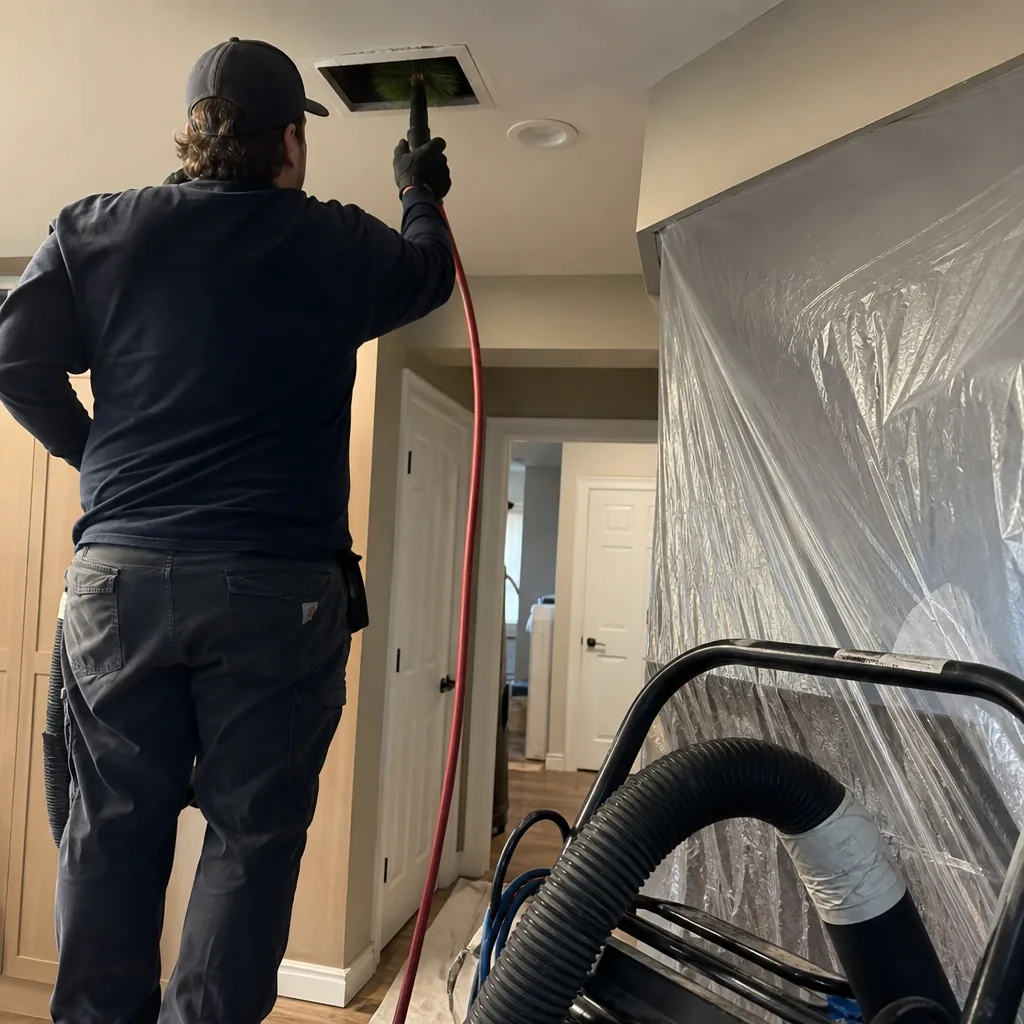
Whole-system duct and dryer vent check with before-and-after photos - you see exactly what came out of your vents
That "$99 whole-house special" is a bait ad - the real number appears once they are in your hallway, or the "clean" is a shop-vac at the register. We photograph the inside of your ducts before and after instead.
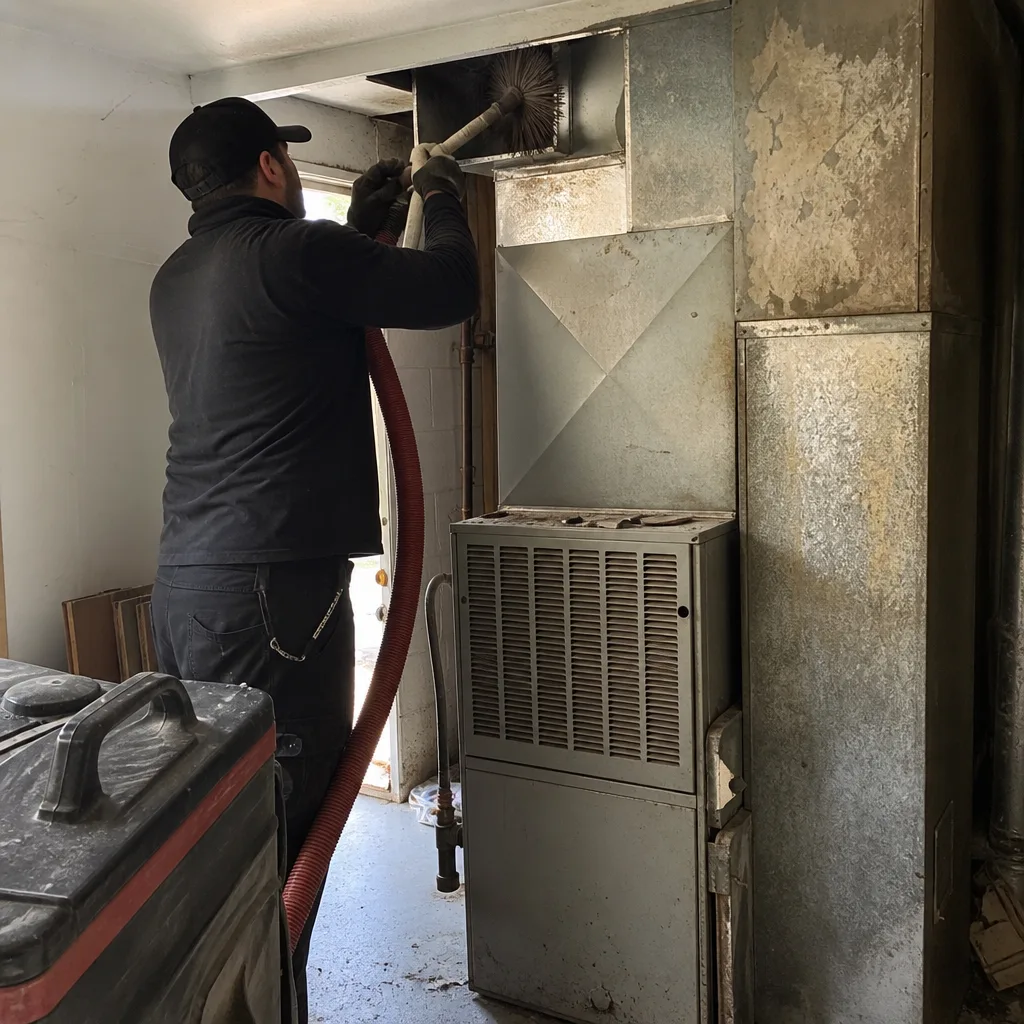 Before
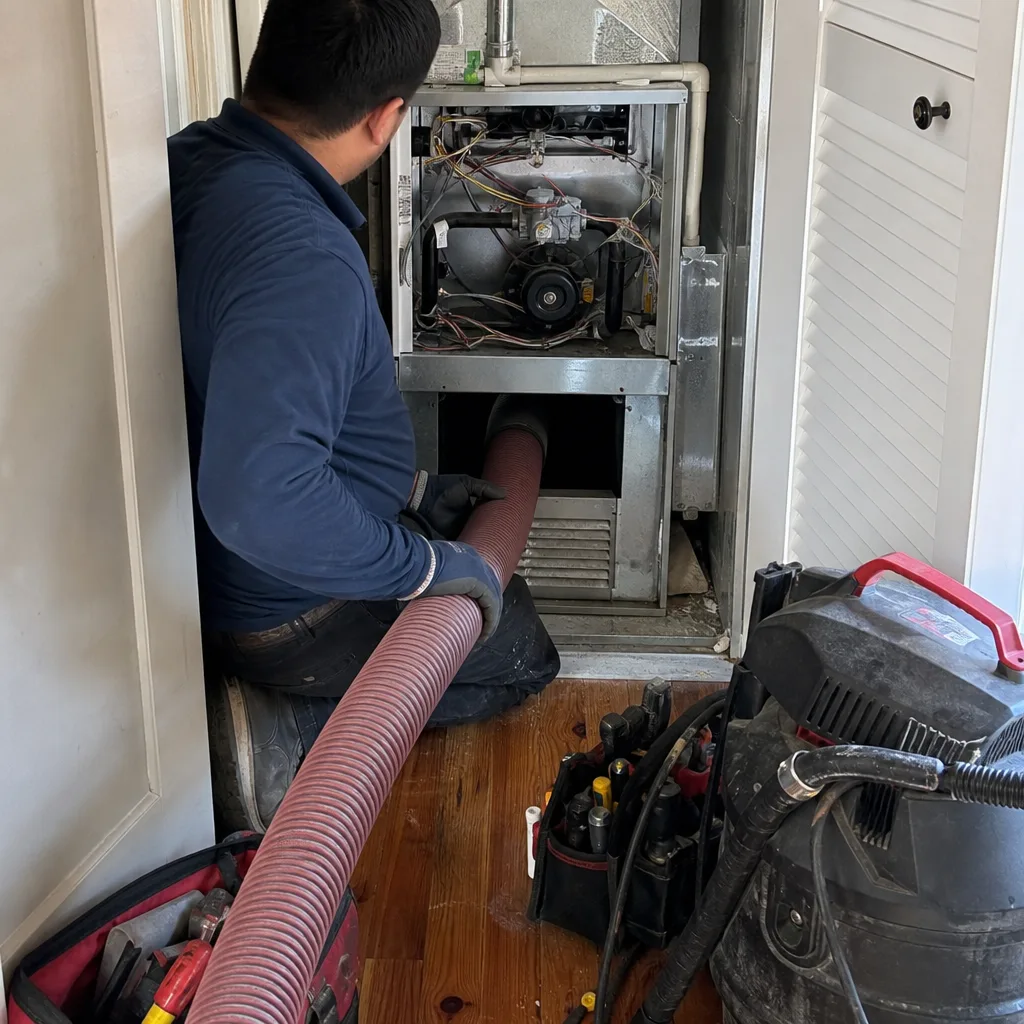 After
After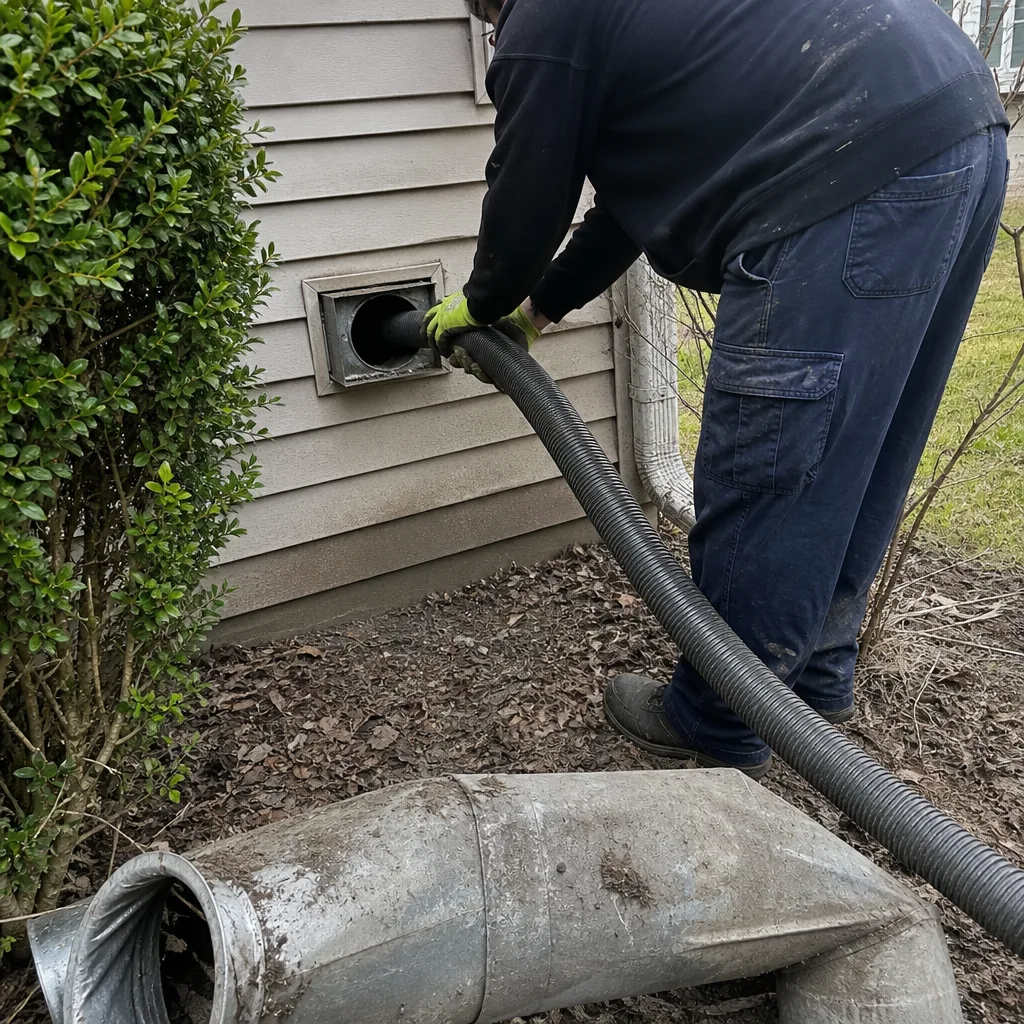 Before
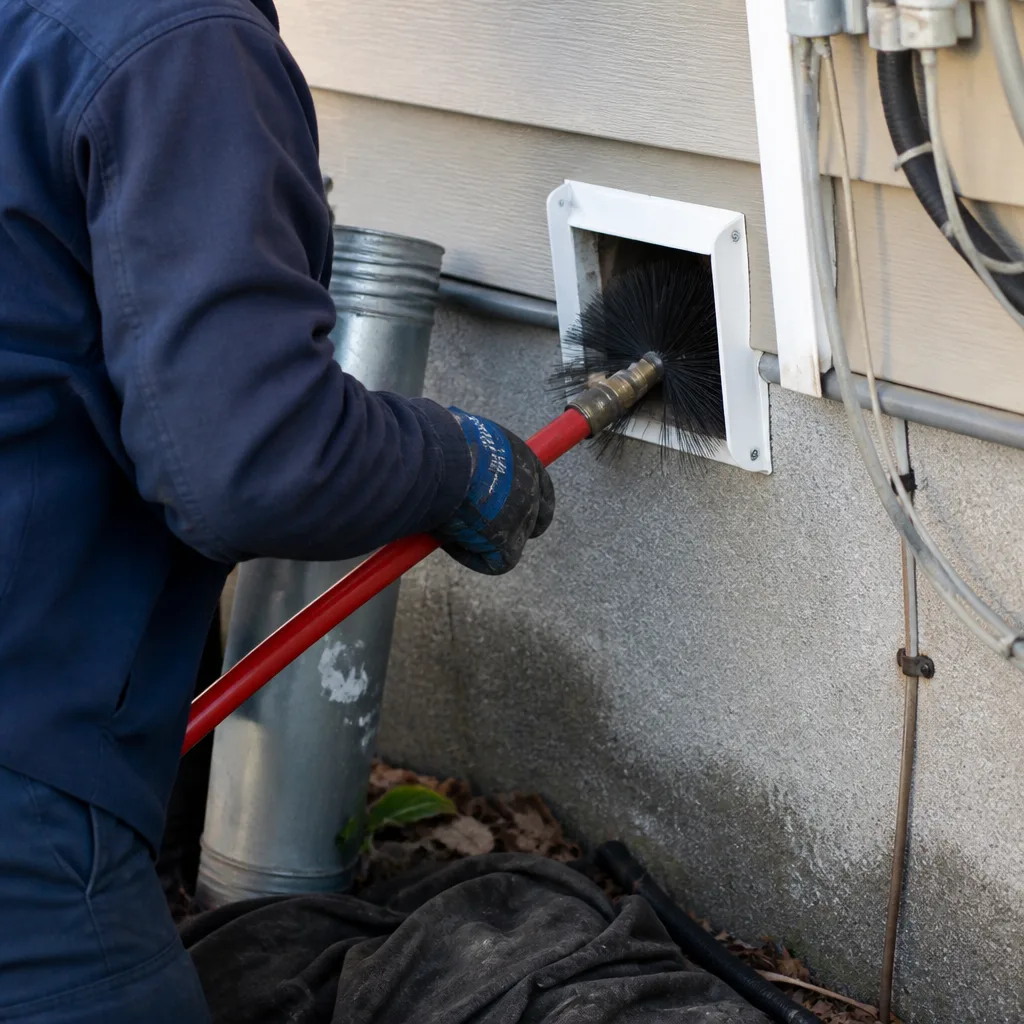 After
After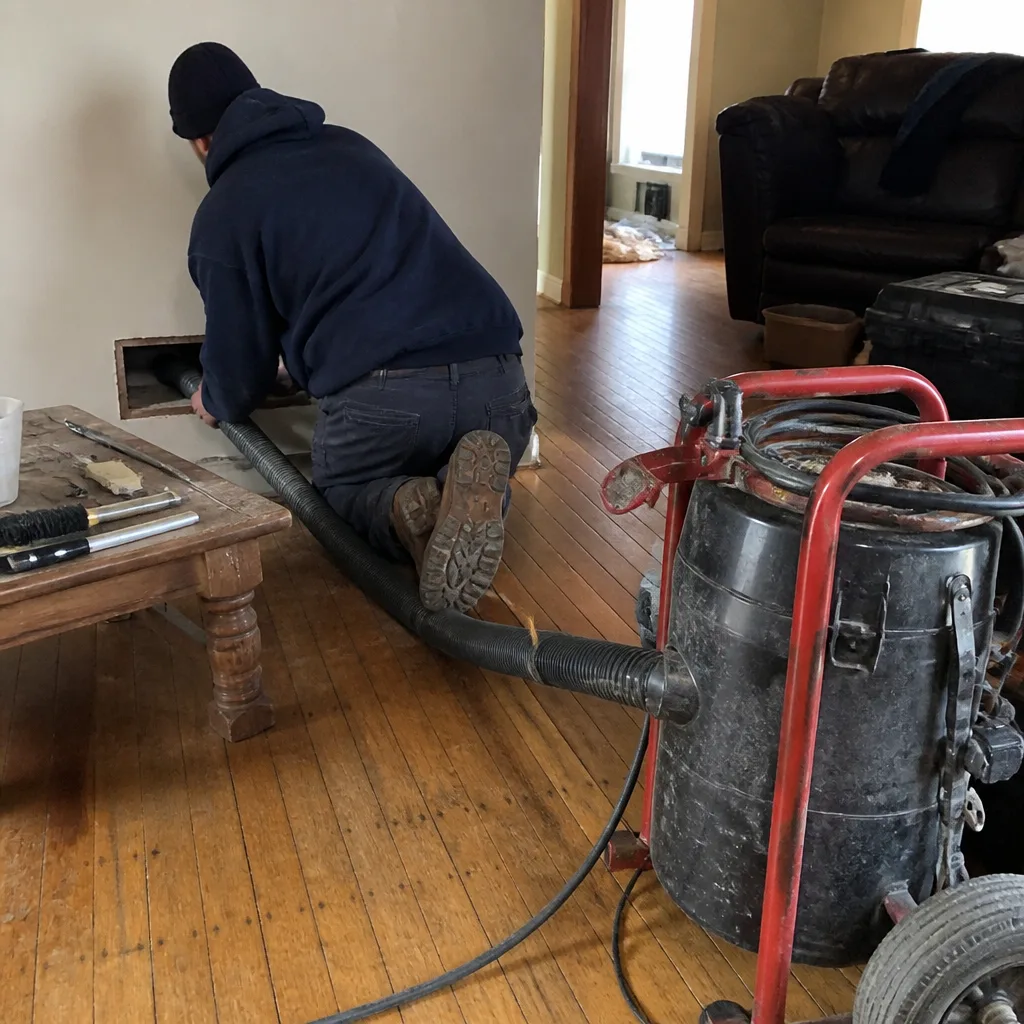 Before
 After
AfterDIY vs Professional Air Duct Cleaning: The Elk Grove Village Homeowner’s Decision Guide
Here’s something most duct cleaning companies won’t tell you: a homeowner in Elk Grove Village with a $35 dryer vent brush kit and a shop vac can clean the first 12 inches of every supply register in their home and get a measurable improvement in room-to-room airflow. That’s not a teaser for a sales pitch. It’s legitimate maintenance that belongs in your quarterly routine. What that same homeowner cannot do is depressurize the trunk line enough to dislodge debris without pushing it deeper into the system. The physics don’t allow it. In this guide, we’ll draw the exact line between what you should handle yourself and what requires professional equipment, what those tools actually cost, what goes wrong when the line gets crossed, and how to document your own work so a technician can build on it rather than undo it.
Quick Answer
DIY duct maintenance is limited to register grilles, the accessible 12-inch duct throat, return filter housings, and interior dryer vent runs. Full interior Air Duct Cleaning requires negative-pressure equipment generating 2,000+ CFM that no consumer tool can replicate. For Elk Grove Village homes, professional whole-system cleaning typically runs $450-$850 per system with a written price agreed before work starts.
Table of Contents
- What DIY Duct Maintenance Can Actually Accomplish
- The Tools, Their Actual Costs, and What They Reach
- The Physics of Negative-Pressure Cleaning
- What Goes Wrong When Homeowners Attempt Full DIY Duct Cleaning
- The Hybrid Approach That Saves Money Without Risking Damage
- How to Document Your DIY Cleaning for the Professional
- Cost Comparison: DIY Tools vs. Professional Service in Elk Grove Village
- Common Mistakes to Avoid
- When to Call a Professional
- Frequently Asked Questions
BeforeAfterWhat DIY Duct Maintenance Can Actually Accomplish
Let’s be specific about scope. There are four areas inside an Elk Grove Village home where a homeowner with basic tools can perform legitimate, useful duct maintenance without risking the system.
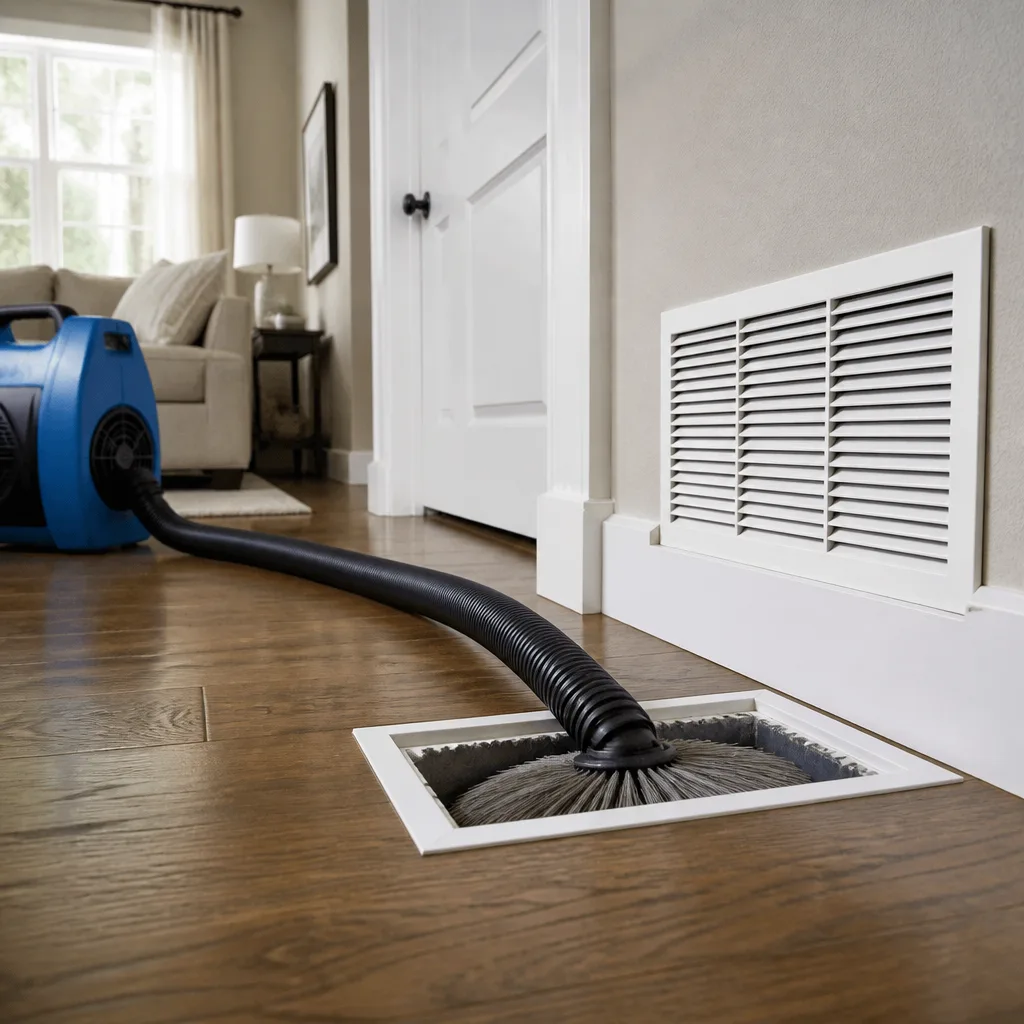
Supply register grilles and the visible duct throat. Remove the grille, vacuum the back surface with a brush attachment, and run a dryer vent brush or flexible drain snake into the duct opening as far as it will go without forcing. In most Elk Grove Village homes built 1975-2005, that’s 8-14 inches before the first elbow or damper. You’re removing hair, dust bunnies, and the debris that accumulates at the terminal point where airflow velocity drops. This is where we find the heaviest concentration of visible buildup on service calls in neighborhoods like Westgate and Biesterfield.
Return air filter housing. After removing the filter, vacuum the interior surfaces of the housing, including the door gasket track where mold spores colonize in humid July conditions. Wipe with a damp microfiber cloth. This is not duct cleaning, but it is air quality maintenance that reduces the load on the entire system.
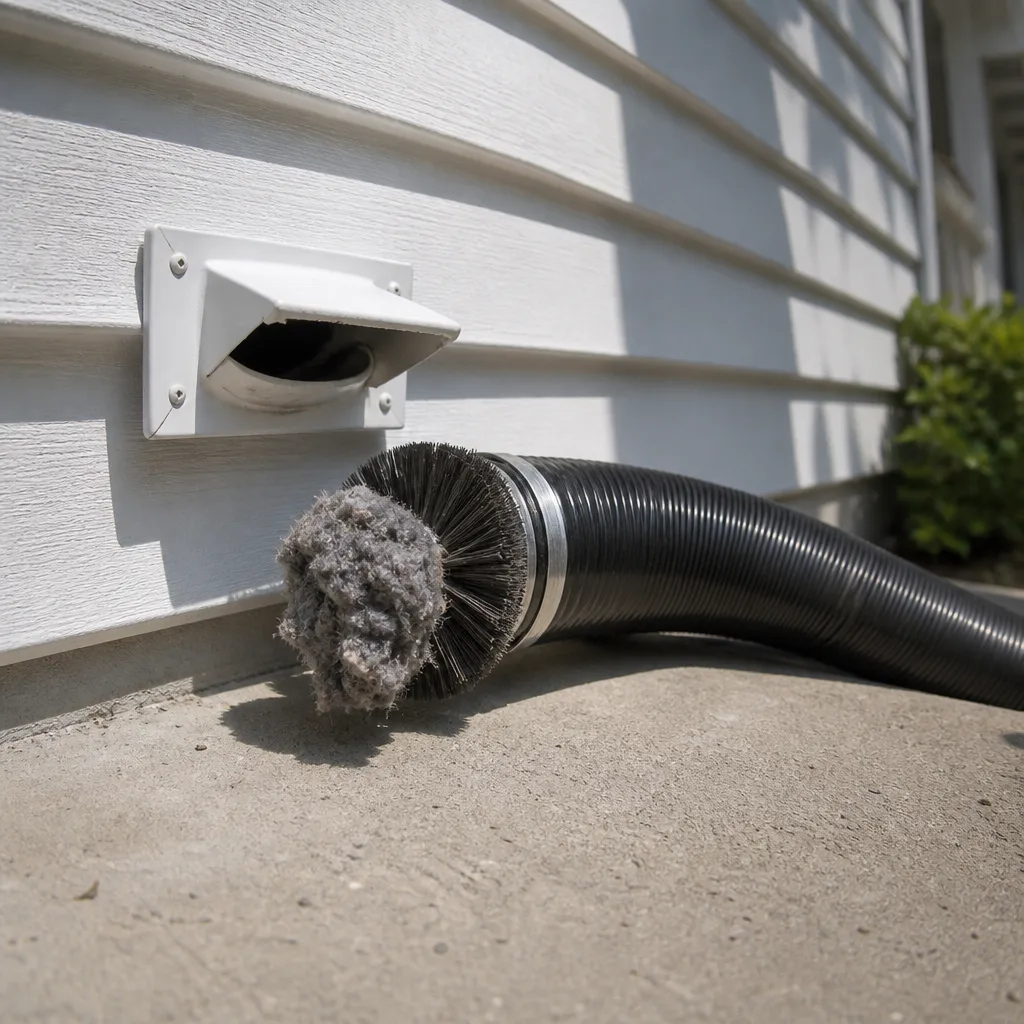
Interior dryer vent run from the appliance to the wall penetration. Disconnect the flex transition duct, vacuum lint from the dryer outlet and the transition piece, and use a dryer vent brush kit to clean the rigid or semi-rigid duct running to the exterior wall. In Elk Grove Village’s older townhouse stock near Arlington Heights Road, these runs are often 6-10 feet and accessible. This is the single highest-ROI DIY task because lint accumulation is a documented fire hazard.
Condensate drain pan and visible evaporator coil fins (if accessible). Some Elk Grove Village homes with attic or basement air handlers have a removable access panel that exposes the downstream side of the coil. A foaming no-rinse cleaner and a soft brush can remove surface mold and biofilm. Stop where the fins disappear from view.
What ties these four tasks together: they all occur at points where the ductwork is accessible without dismantling, and none require creating pressure differential inside the system. You’re removing debris at rest, not debris in motion.
The Tools, Their Actual Costs, and What They Reach
Here’s what you actually need, with prices we’ve verified at Elk Grove Village-area retailers as of early 2025.
| Tool | Approximate Cost | What It Reaches |
|---|---|---|
| Dryer vent brush kit (8-12 ft extendable) | $28-$45 | Interior dryer vent runs, first 12″ of supply ducts |
| Flexible drain snake (1/4″ × 25 ft) | $15-$22 | Light debris in straight duct sections |
| HEPA shop vac (6+ gallon, 4.5+ HP) | $120-$180 | Register grilles, filter housing, localized suction |
| Microfiber cloths (12-pack) | $12-$18 | Filter housing interior, grille surfaces |
| Condensate pan tablets (6-pack) | $8-$14 | Drain pan algae prevention |
| Evaporator coil foaming cleaner | $12-$18 | Visible coil fins only |
| Inspection mirror with LED | $18-$28 | Visual confirmation of first elbow condition |
Total investment for the complete DIY kit: approximately $213-$325. The shop vac is the largest outlay, but most Elk Grove Village homeowners already own one for garage and basement use. If you do not, consider that a HEPA-rated unit serves multiple purposes beyond duct maintenance.
What these tools collectively reach: every surface you can see or touch without removing screws, panels, or duct sections. That is more than most homeowners assume and less than every coupon duct cleaner implies.
The Physics of Negative-Pressure Cleaning
This is where most guides become vague. We’ll be exact.
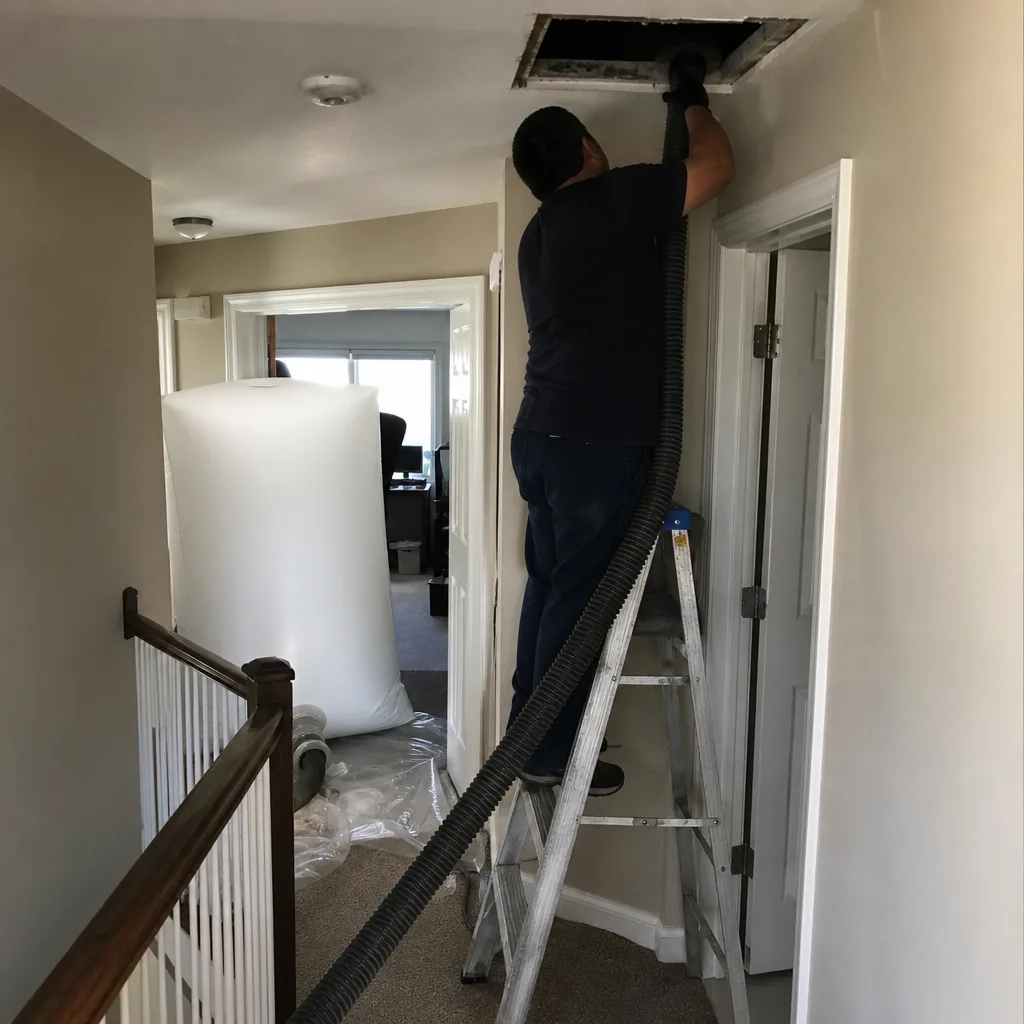
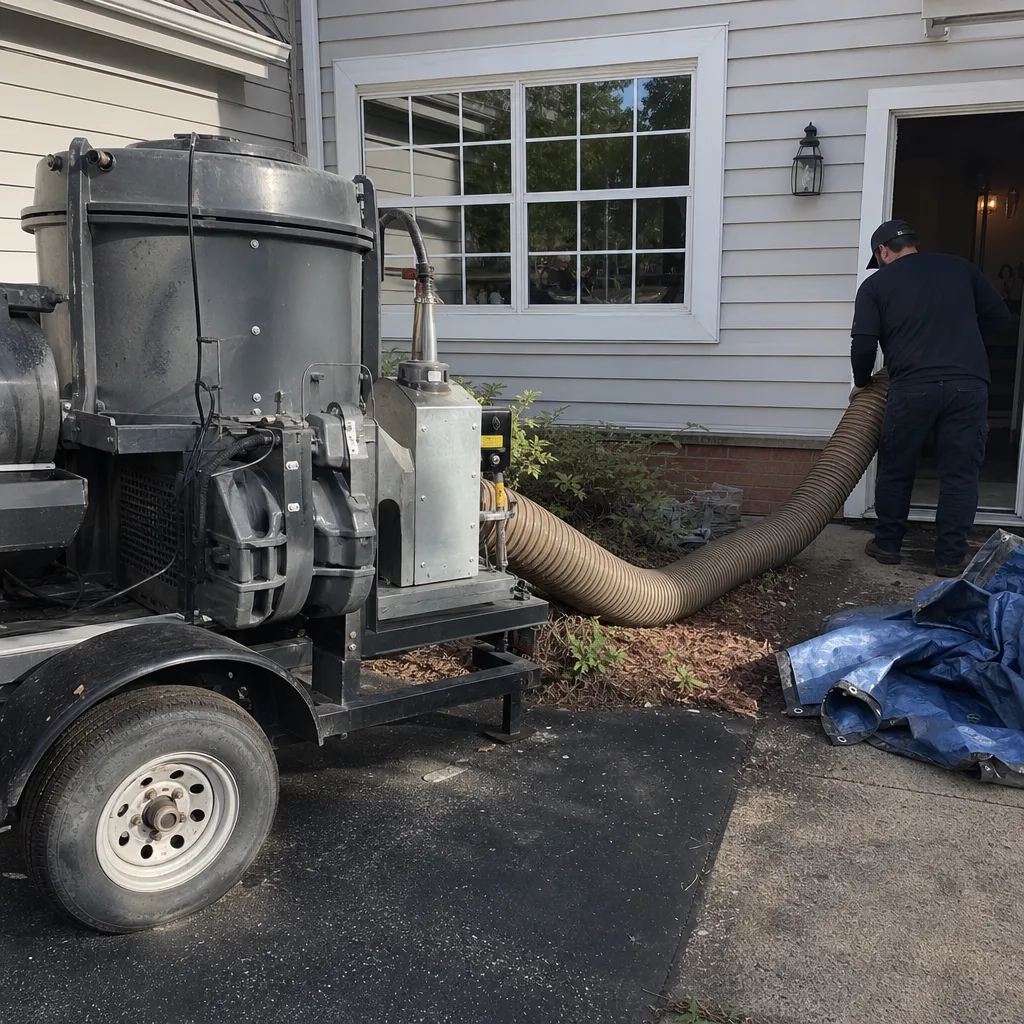
Professional duct cleaning operates on negative-pressure extraction. A large vacuum unit, typically mounted on a truck or as a portable unit on wheels, connects to the duct system at a central point, usually near the air handler. The unit draws air through the entire system at high volume, creating suction that pulls dislodged debris toward the collection point rather than allowing it to escape into living spaces.
The critical specification is CFM, cubic feet per minute of airflow. To create sufficient negative pressure in a residential trunk line, a unit must move approximately 2,000-4,000 CFM, depending on system size and duct configuration. The CleanRun Air Duct Cleaning Elk Grove Village home equipment roster includes Nikro and Abatement Technologies portable units rated in this range, with truck-mounted systems at the higher end for larger Elk Grove Village homes in the Countryside or Grove Creek areas.
A standard shop vac moves 120-200 CFM. A high-end consumer HEPA vac might reach 250 CFM. The gap is not incremental; it’s an order of magnitude. At 200 CFM, you have localized suction at the nozzle tip. You do not have system-wide depressurization. When you insert a brush into a duct and agitate debris without sufficient draw, that debris becomes airborne inside the duct and resettles elsewhere, often at the next elbow or damper where airflow velocity drops.
The professional process adds a second component: agitation tools that work in concert with the negative pressure. Rotobrush systems use rotating bristle heads that contact duct walls while the vacuum draw operates simultaneously. Compressed air whips and skipper balls dislodge debris from trunk lines while the collection unit maintains constant suction. The agitation and extraction are coupled, not sequential.
What this means practically: a homeowner can remove debris that is already loose and at rest. A homeowner cannot create the conditions to safely mobilize adhered debris and capture it. The physics are not a matter of technique or effort. They’re a matter of equipment specification.
What Goes Wrong When Homeowners Attempt Full DIY Duct Cleaning
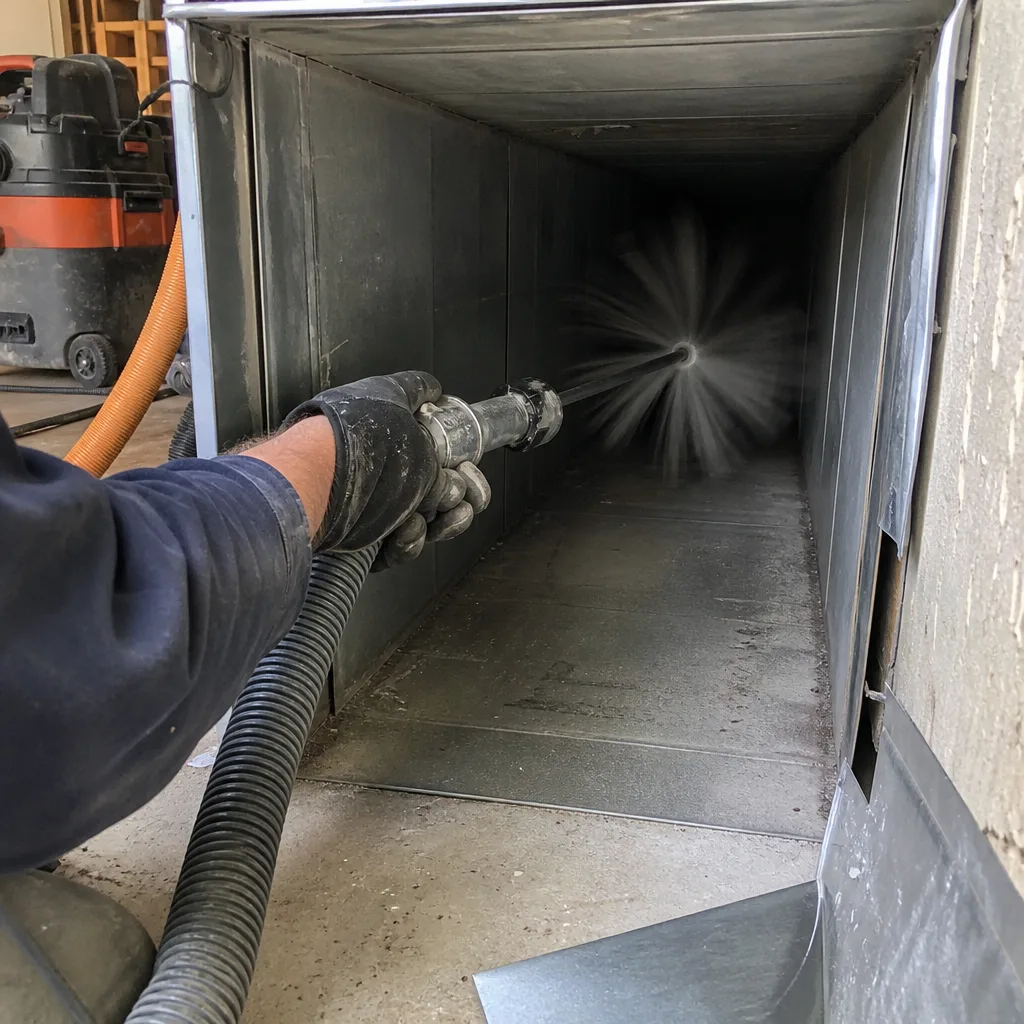
We’ve been called to Elk Grove Village homes where DIY attempts created problems that exceeded the original condition. Here are the three failure modes we see most often.
Debris displacement deeper into the system. A homeowner in the Manchester Green neighborhood used a shop vac and a homemade brush attachment to clean supply ducts from each register. Without negative pressure at the trunk, the dislodged debris migrated past dampers and accumulated at the plenum junction. Six months later, airflow to three bedrooms had dropped measurably. The camera showed a 4-inch debris dam at the transition from trunk to branch. The remediation required section access that the original cleaning had made necessary.
Disturbed fiberglass duct liner shedding into the airstream. Many Elk Grove Village homes built 1965-1990 have internally lined fiberglass ductwork, common in the original construction near Higgins Road and Meacham Road. The liner is adhered to sheet metal and is not designed for mechanical contact. A stiff brush or aggressive vacuum attachment breaks the surface seal, releasing fiberglass particles that the HVAC system then distributes. The correct approach for lined ducts is low-agitation contact cleaning with simultaneous negative pressure, or in some cases, liner encapsulation. Neither is a DIY procedure.
Flex duct damage from improper brush use. Flexible duct, the ribbed silver tubing common in additions and retrofits throughout Elk Grove Village, has a spiral wire helix and a polymer inner liner. A rotating brush or rigid snake catches on the corrugations, tears the liner, or kinks the duct, reducing diameter and creating permanent airflow restriction. We’ve replaced 20-foot sections where a homeowner’s “duct cleaning” tool punctured the flex duct at the second rib. The repair cost exceeded three professional cleanings.
A fourth, less common but serious issue: electrical contact inside the air handler cabinet. Some homeowners remove access panels to reach what they believe are interior ducts and contact live components, capacitor terminals, or control board connections. The 24V control circuit can deliver a surprising shock, and the 240V compressor contactor is lethal. We do not recommend opening sealed HVAC cabinets for any reason.
The Hybrid Approach That Saves Money Without Risking Damage
The most cost-effective strategy for Elk Grove Village homeowners is not DIY-or-professional. It’s both, with a clear boundary, as explained in our guide on How to Hire a Air Duct Cleaning Contractor in Elk Grove Village: A Step-by-Step Guide.
Perform the accessible maintenance tasks quarterly-see our Seasonal Air Duct Cleaning Care for Elk Grove Village: Year-Round Homeowner’s Guide for timing. Mark your calendar: first weekend of March, June, September, December. Clean every supply and return register grille. Vacuum filter housings. Clean the interior dryer vent run. Photograph what you find, dated, and keep the photos in a dedicated album on your phone. This reduces the debris load that enters the trunk line and extends the realistic interval between professional cleanings.
For a typical Elk Grove Village home with two occupants, no pets, and quarterly DIY maintenance, professional whole-system cleaning every 5-7 years is often sufficient. Homes with multiple pets, recent renovation, or occupants with respiratory sensitivity may need service every 3-4 years. The DIY maintenance does not eliminate the need for professional service. It defers it, reduces the severity of each service, and provides documentation that helps the technician target their effort.
When you do schedule professional service, the technician arrives to a system where the terminal debris has been managed, not neglected. The cleaning focuses on trunk lines, plenums, and branch ducts where only professional equipment can operate effectively. You’re not paying for what you could have done yourself. You’re paying for what only professional equipment can accomplish.
The Air Duct Cleaning in Elk Grove Village service from CleanRun includes the documented photo record of every duct run, so you can compare the professional results against your own maintenance photos and verify what was accomplished.
How to Document Your DIY Cleaning for the Professional
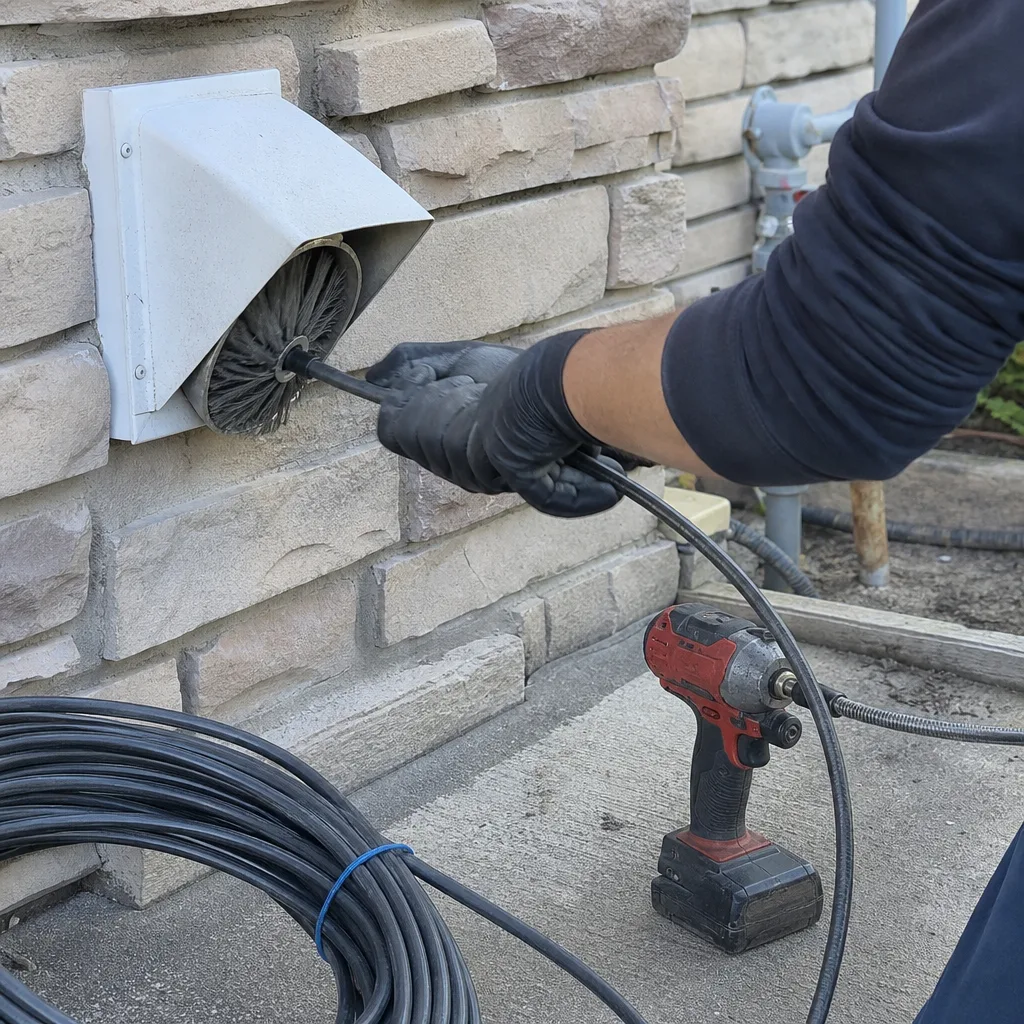
Documentation is not obsessive. It’s the standard that professional trades operate under, and it benefits the homeowner equally.
- Photograph each register before removal. Date-stamped, showing the grille condition and any visible debris at the duct opening. Label by room: “Master BR supply, 3/15/25.”
- Photograph the debris collected. Not for shock value, for volume reference. A tablespoon of dust versus a half-cup changes the technician’s assessment of upstream conditions.
- Photograph the cleaned register and duct throat. This establishes your baseline. When the professional’s camera shows the condition 24 inches upstream, you have context for how much accumulation occurred beyond your reach.
- Store photos in a dedicated album, chronological. Do not let them disperse into your general camera roll where they become unfindable.
- Note any anomalies: odors, moisture, insect activity, fiberglass visible. These observations direct the technician’s inspection priorities and may affect equipment selection.
When CleanRun technicians arrive for service, we review any documentation the homeowner provides. It does not replace our own inspection, but it informs it. A customer who can show six quarters of dated maintenance photos demonstrates engagement that typically correlates with well-maintained systems. The technician can spend more time on problem areas and less on baseline assessment.
The same documentation standard applies to professional work. Every CleanRun job concludes with a Documented Photo Record of every duct run, before and after, delivered as part of the standard job record. The homeowner receives what the technician saw, not a verbal summary.
Cost Comparison: DIY Tools vs. Professional Service in Elk Grove Village
Honest numbers, based on what we’ve quoted and completed in Elk Grove Village homes during 2023-2024.
| Approach | Initial Cost | Ongoing Cost | What It Covers |
|---|---|---|---|
| DIY tool kit (full) | $213-$325 | $15-$30/year (consumables) | Registers, 12″ duct throat, filter housing, dryer vent |
| DIY tool kit (minimal: brush + vac attachment) | $45-$75 | $10-$15/year | Register grilles only |
| Professional whole-system cleaning, single HVAC system | $450-$650 | Every 3-7 years | Full trunk, branches, plenum, registers, returns |
| Professional whole-system cleaning, dual-zone or large home | $650-$850 | Every 3-7 years | Extended ductwork, multiple air handlers |
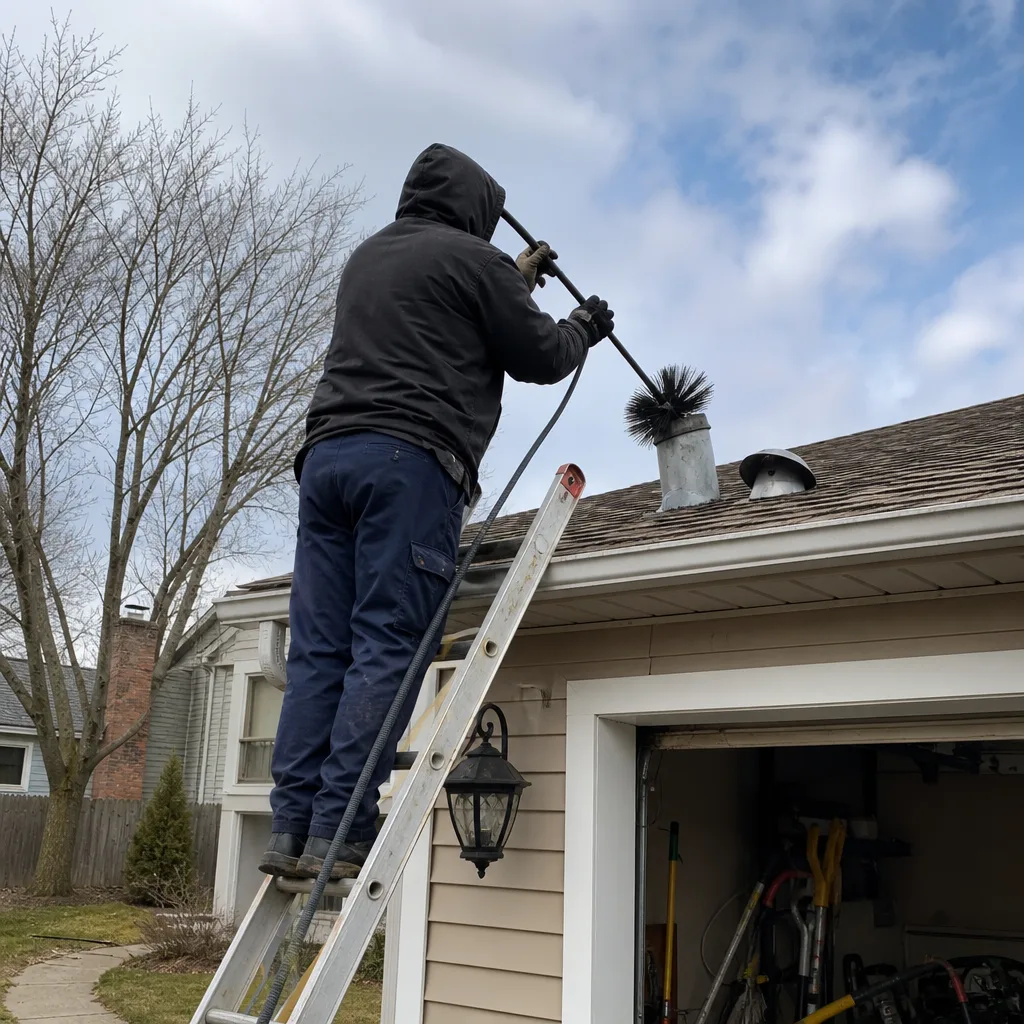
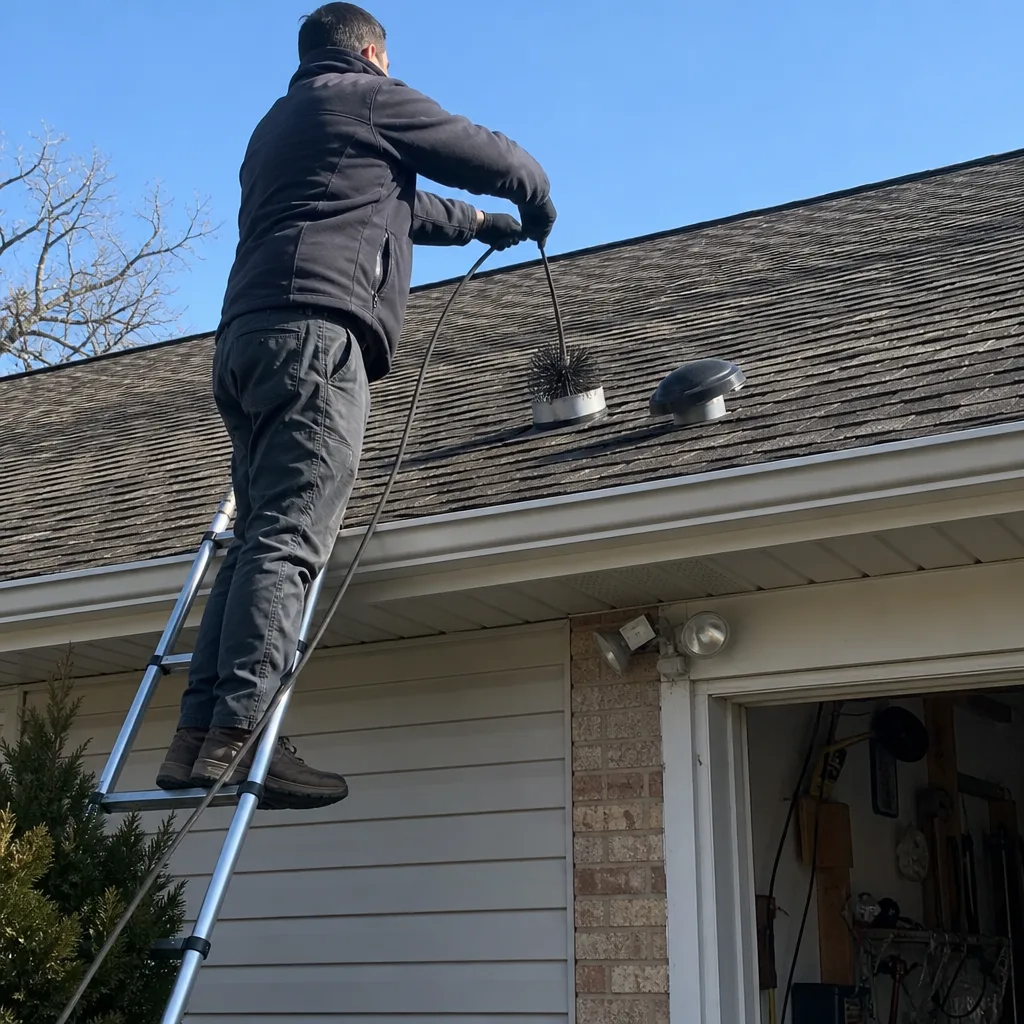
| Professional dryer vent cleaning (standalone) | $120-$180 | Annually to biennially | Full vent run to exterior, including roof terminations |
The hybrid approach, quarterly DIY plus professional service every 5-6 years, annualizes to approximately $85-$140 per year for a single-system home. Pure professional service without DIY maintenance, every 3-4 years, annualizes to $110-$215 per year. The savings from DIY are modest in pure dollars but meaningful in system longevity and in the quality of documentation you accumulate.
Critical distinction: CleanRun’s pricing is one flat price per system, agreed in writing before work starts, under Haven Standard Clause 1. We do not quote per vent, per register, or per linear foot. The price you receive is the price you pay. The Dryer Vent Cleaning in Elk Grove Village service operates under the same standard.
Common Mistakes to Avoid
- Using a standard vacuum without HEPA filtration on duct interiors. The fine particulate in ductwork, particularly in Elk Grove Village homes with forced-air heating history, passes through standard filters and recirculates. Only HEPA-rated collection protects air quality during the cleaning process itself.
- Inserting any rotating tool into flex duct. The spiral wire helix catches brushes, snakes, and attachments. Damage is often not visible from the register end but creates permanent airflow restriction.
- Cleaning ducts during active heating or cooling. The system fan, even on low, creates unpredictable pressure that can mobilize debris before you’re ready to capture it. Always shut off the HVAC at the thermostat and the breaker.
- Applying chemical sanitizers or sealants as a DIY step. EPA-registered duct sanitizers require application under specific conditions, including post-cleaning verification and dwell time. Misapplied, they leave residues that become respiratory irritants. This is not a homeowner procedure.
- Ignoring the return side. Homeowners clean supply registers because they’re visible. The return ductwork, often larger and more debris-laden, is equally important and equally inaccessible without professional equipment.
- Attempting to clean ducts after renovation without containment. Elk Grove Village’s active remodeling market means many homeowners attempt post-construction duct cleaning. Drywall dust and construction debris require specialized HEPA extraction and often multiple passes. Standard tools redistribute fine particulate throughout the system.
When to Call a Professional
Call when the work requires negative pressure, when ductwork is internally lined with fiberglass, when flex duct predominates, when mold or moisture is suspected, or when the system has not been professionally inspected in more than five years. Call after any renovation that generated significant dust. Call if you observe reduced airflow in specific rooms, persistent odors from registers, or visible debris exiting supply vents despite register cleaning.
CleanRun Air Duct Cleaning Elk Grove Village offers free estimates in Elk Grove Village. Every estimate includes a written price before any work starts, under Haven Standard Clause 1. Every completed job includes a Documented Photo Record of every duct run. The 365-Day Done Right Promise applies in writing, not as a verbal assurance. Call (224) 344-8881 to schedule. The HVAC Cleaning in Elk Grove Village service extends the same standards to coil, blower, and cabinet cleaning.
Frequently Asked Questions
Professional whole-system cleaning for a single HVAC system in Elk Grove Village typically costs $450-$650, with larger homes or dual-zone systems ranging $650-$850. CleanRun provides one flat price per system in writing before work starts, with no per-vent add-ons. Call (224) 344-8881 for an exact quote on your home.
The $79-$149 coupon offers typically cover register vacuuming only, or they use portable equipment insufficient for trunk line cleaning. The low initial price expands with per-vent surcharges, “deep cleaning” upsells, and mandatory sanitizing charges. A legitimate whole-system cleaning requires 2-3 hours of technician time and professional-grade negative-pressure equipment. Prices below $300 for a complete service indicate corners being cut.
Demand a documented photo record showing the interior of every duct run before and after. CleanRun includes this as standard on every job, delivered to the customer as part of the job record. If a company cannot or will not provide dated, location-specific photos of your actual ductwork, the work is unverified.
For homes with quarterly DIY register maintenance, every 5-7 years is typical. Homes with multiple pets, recent renovation, or occupants with allergies or asthma may need service every 3-4 years. Elk Grove Village’s climate, with humid summers that promote biofilm growth in condensate areas and dry winters that increase static dust accumulation, creates conditions that favor the shorter interval for sensitive households.
You can clean register grilles, the first 12 inches of duct throat, filter housings, and interior dryer vent runs. You cannot create the negative pressure required to safely clean trunk lines, branch ducts, or plenums. Attempting to do so typically displaces debris deeper into the system or damages ductwork. The legitimate DIY scope is real and useful, but it has a hard boundary at the first elbow or damper.
Duct cleaning addresses the distribution network: trunk lines, branches, registers, and returns. HVAC cleaning addresses the air handling unit itself: evaporator coil, blower assembly, condensate pan, and cabinet interior. The two services complement each other. A clean duct system connected to a contaminated air handler recirculates the handler’s debris. CleanRun offers both services with the same documentation and pricing standards.
The Bottom Line
The DIY versus professional question has a precise answer that serves your interests: maintain what you can reach yourself, quarterly, with modest tools and documented results. Hire professionals for what requires negative-pressure equipment, typically every 5-7 years for well-maintained Elk Grove Village homes. The boundary is not about skill or willingness to work. It’s about CFM ratings and pressure physics that consumer equipment cannot achieve. The hybrid approach saves money, extends system life, and gives you the documentation to hold every service provider accountable, including us. Explore more guides & resources for maintaining your home’s air quality.
Written by Tomas Reyes, Owner at CleanRun Air Duct Cleaning Elk Grove Village, serving Elk Grove Village since 2013.