
Last updated September 23, 2026
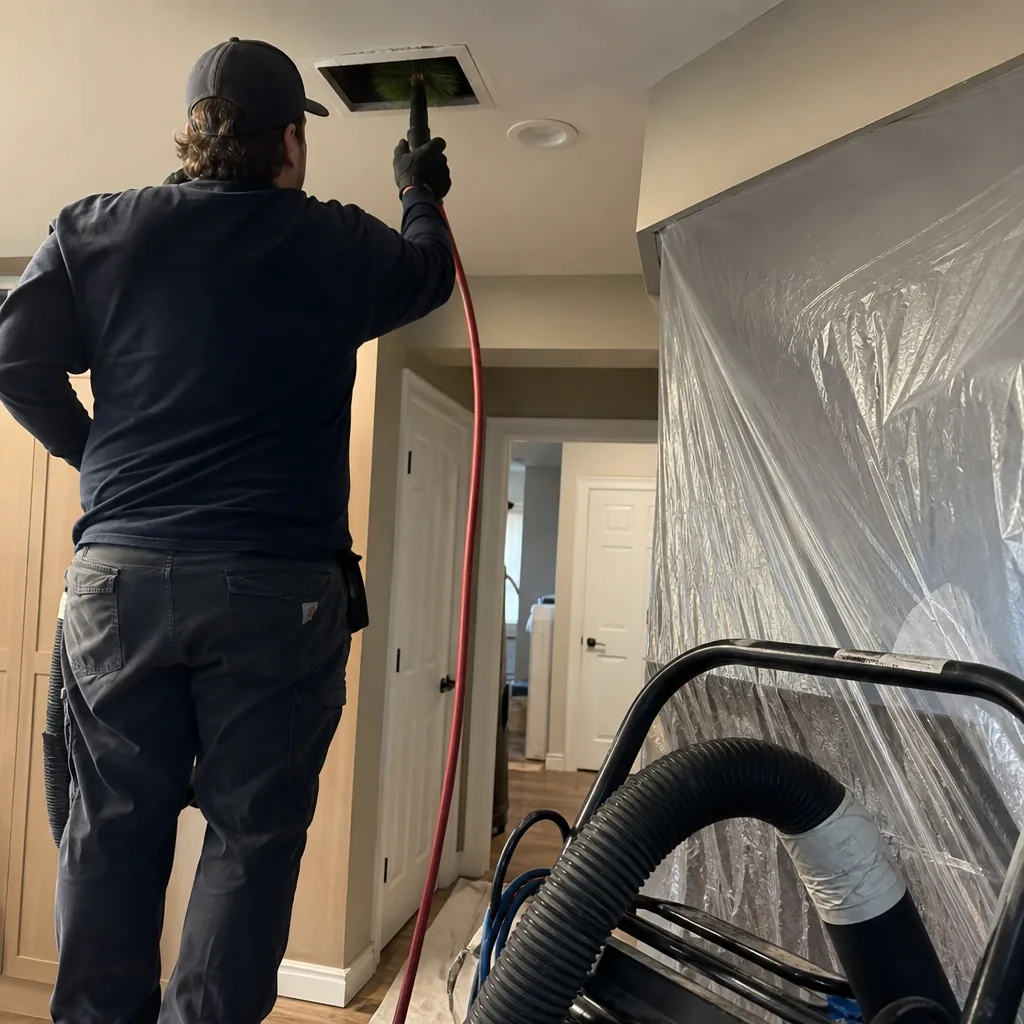
Whole-system duct and dryer vent check with before-and-after photos - you see exactly what came out of your vents
That "$99 whole-house special" is a bait ad - the real number appears once they are in your hallway, or the "clean" is a shop-vac at the register. We photograph the inside of your ducts before and after instead.
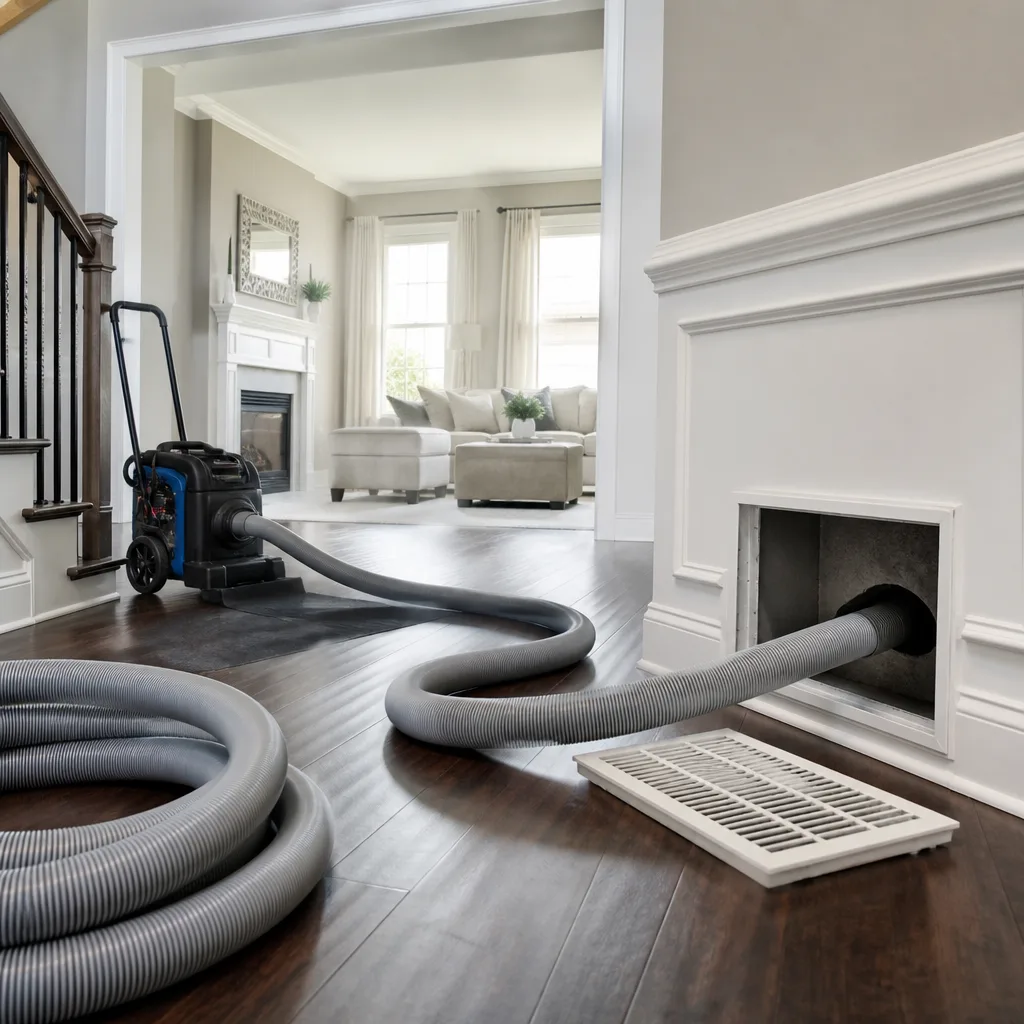
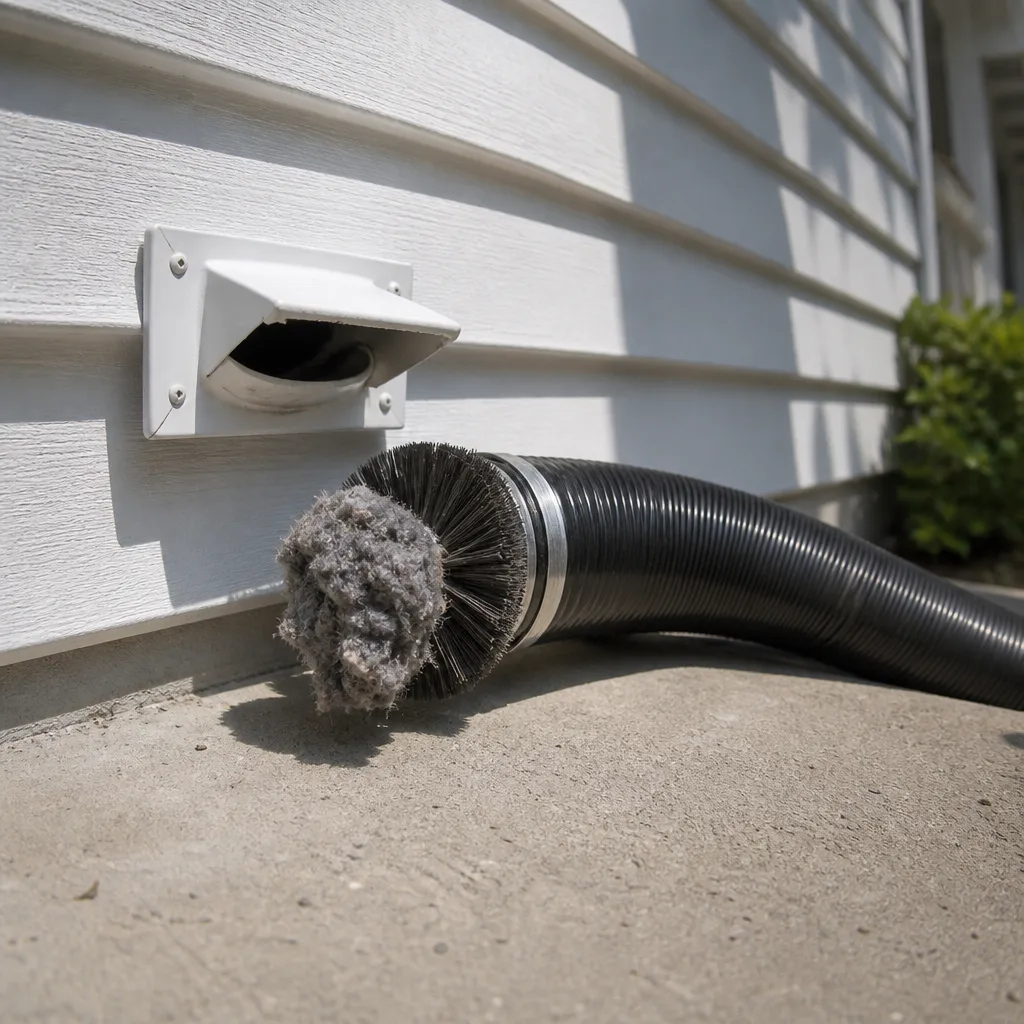
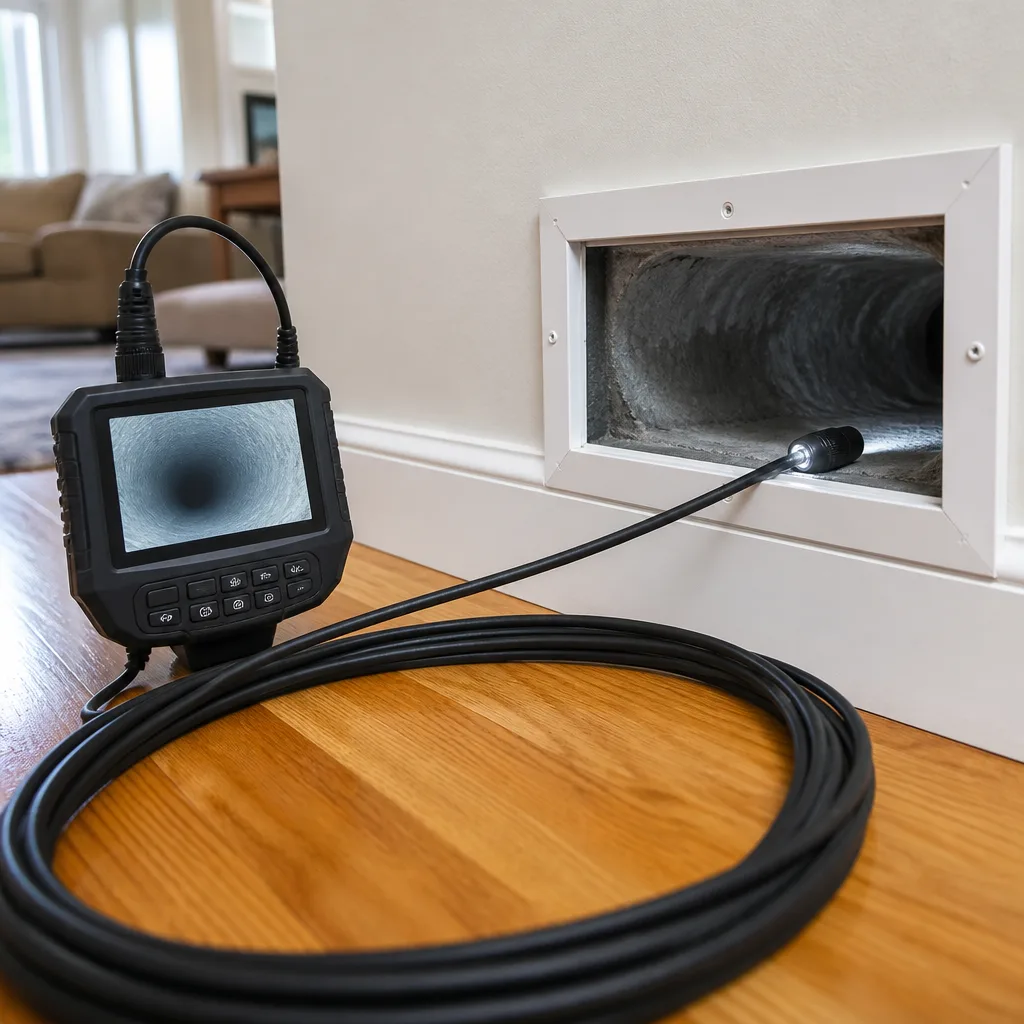
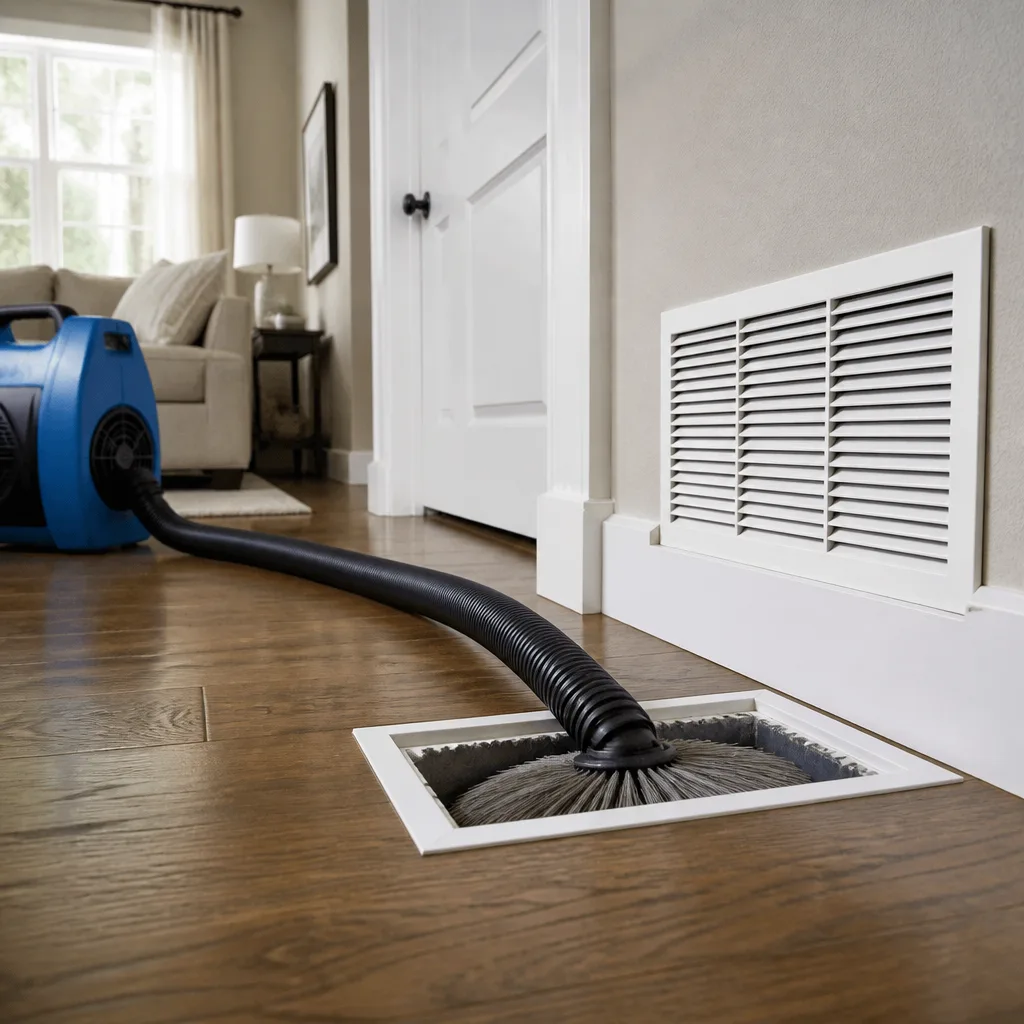
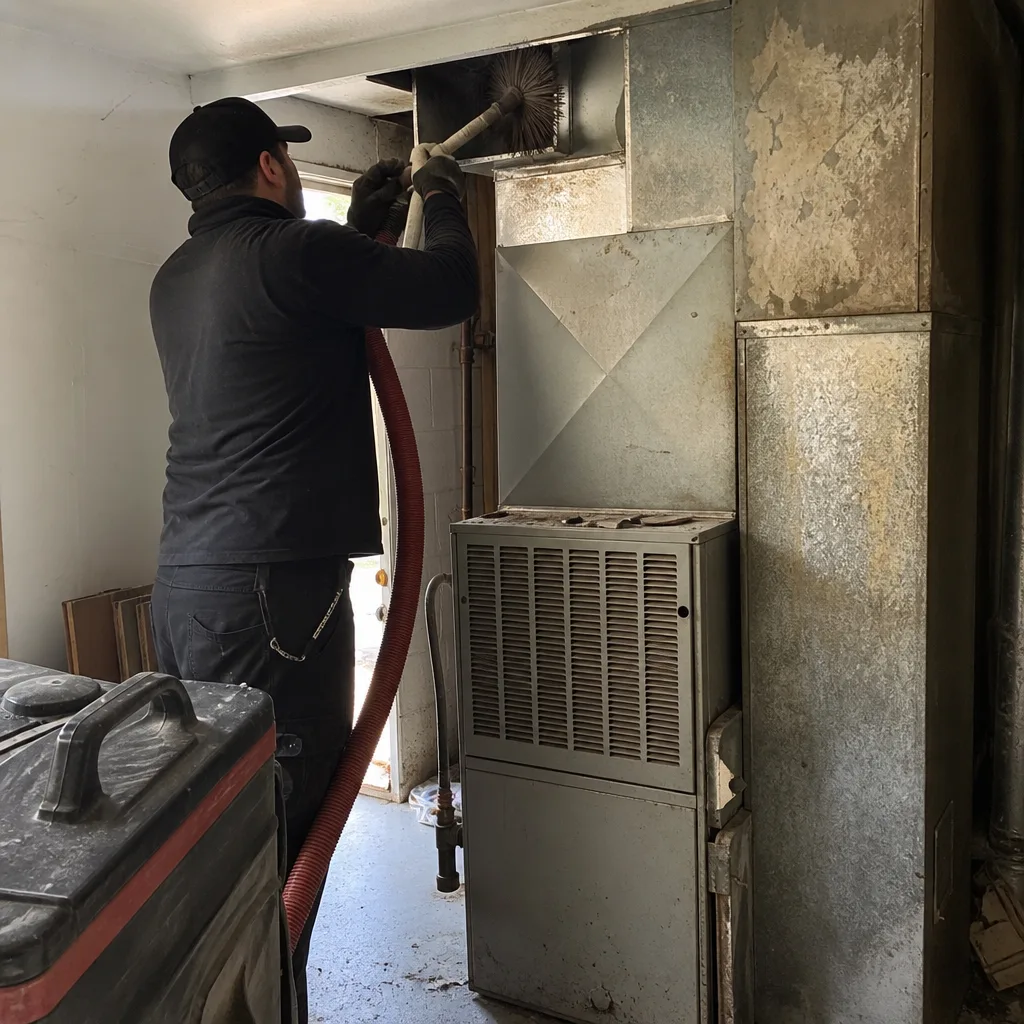 Before
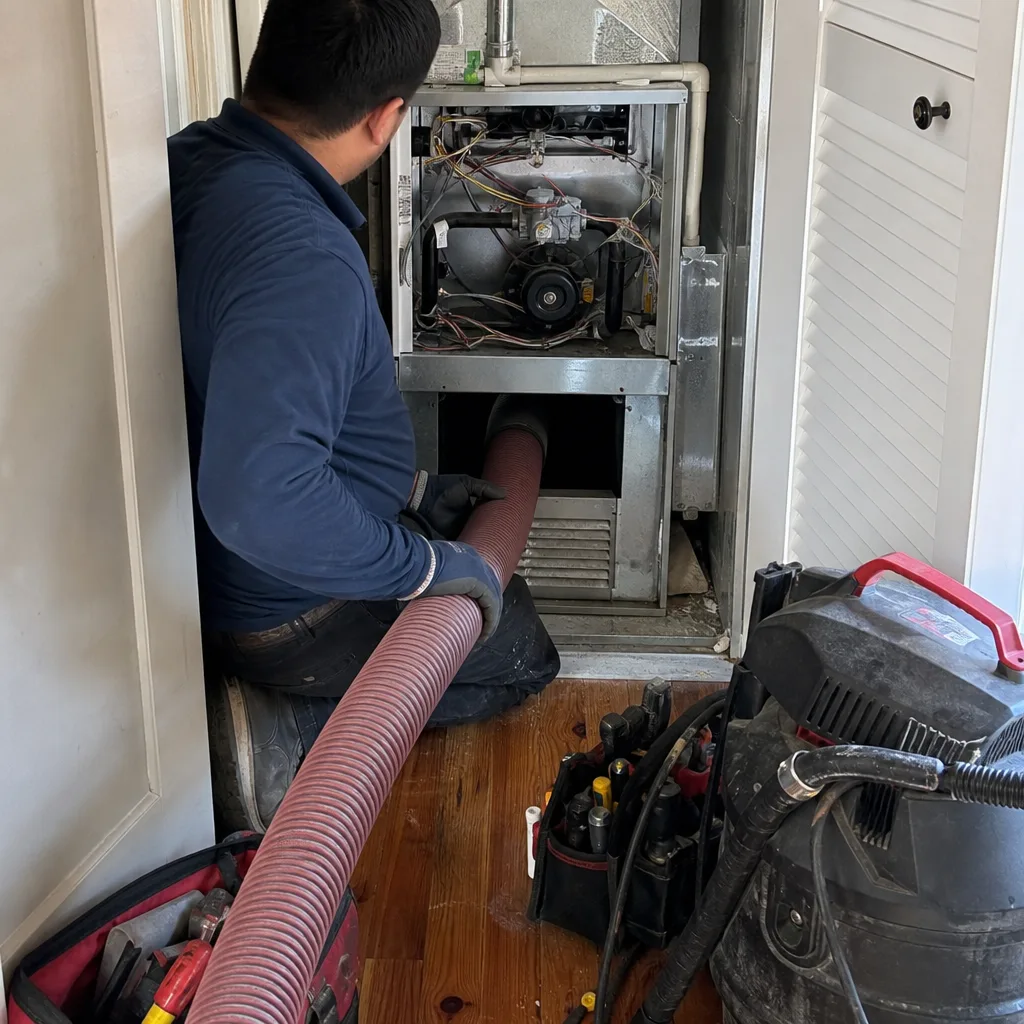 After
After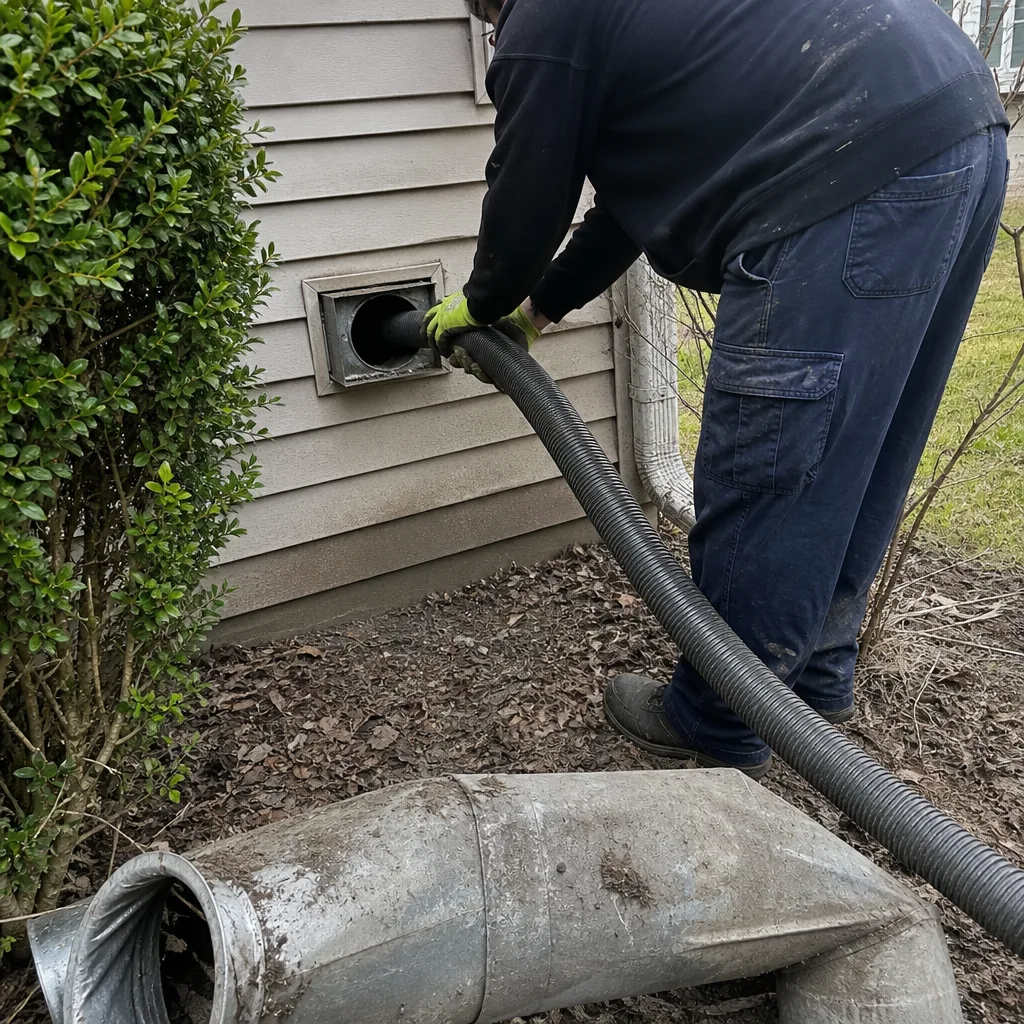 Before
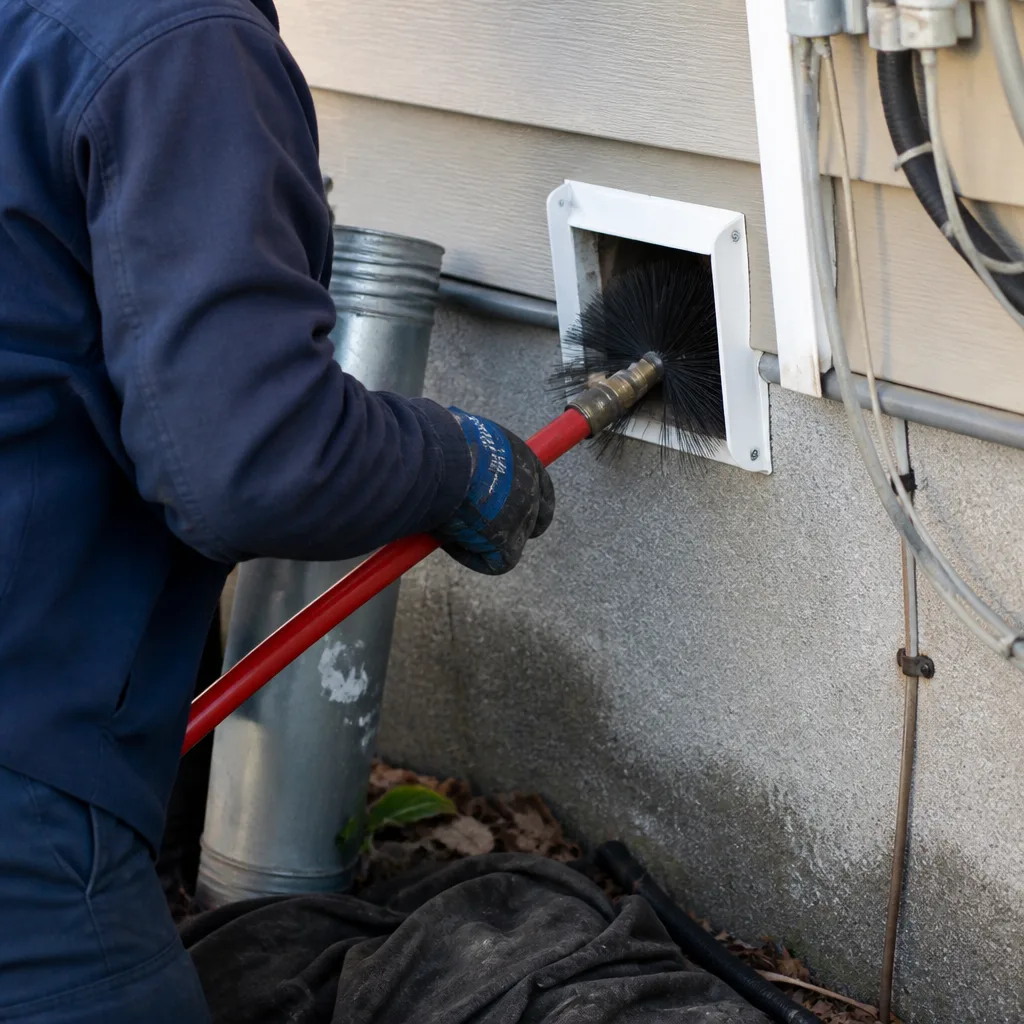 After
After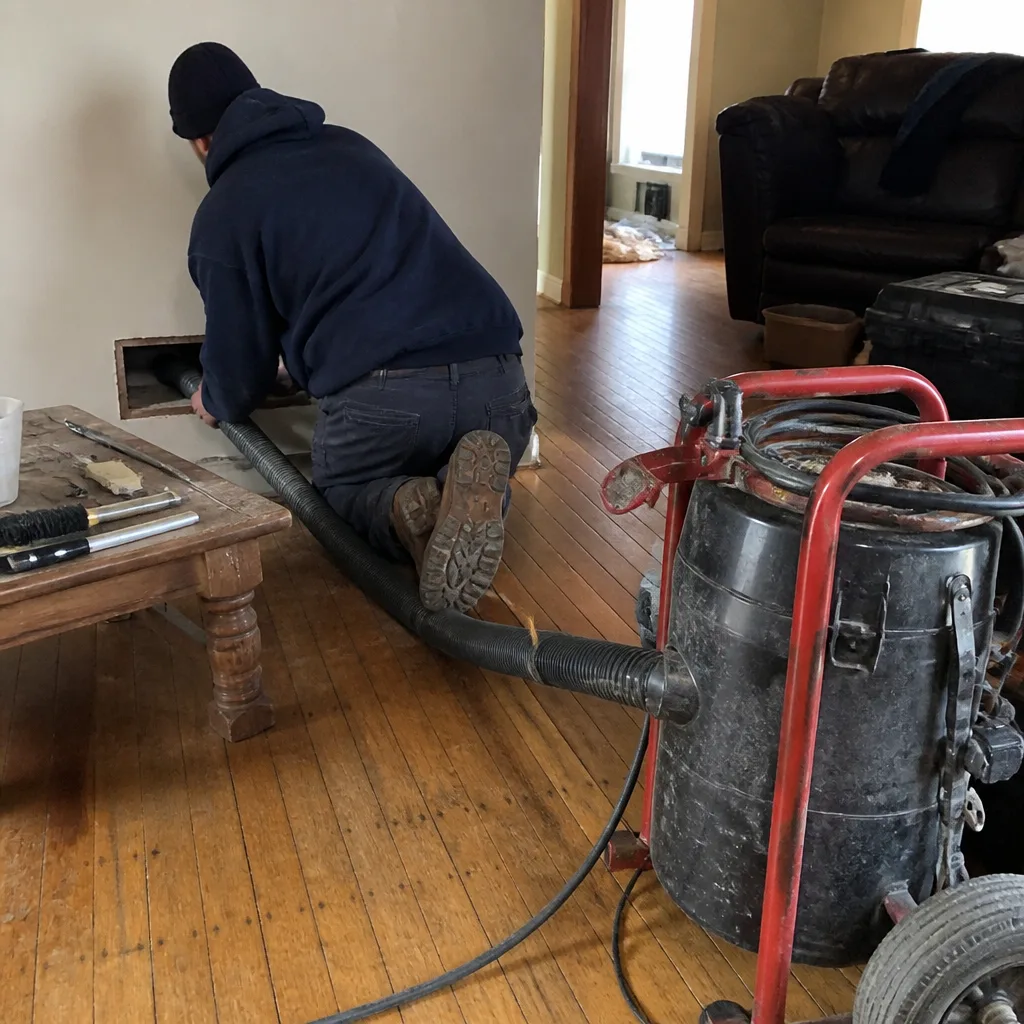 Before
 After
AfterAir Duct Cleaning Warning Signs: A Elk Grove Village Homeowner’s Reference Guide
Visible dust on a supply register almost never means the duct interior is heavily contaminated. In our work across Elk Grove Village since 2013, we’ve found that the warning sign homeowners notice first is usually cosmetic, while the one that actually predicts debris accumulation inside the duct is something else entirely. This guide matches each common warning sign to the specific duct condition it most likely indicates, explains which ones require professional camera inspection to diagnose accurately, and shows you how to document what you’re seeing so a technician can assess it before dispatching. For a deeper dive, see our Complete Guide to Air Duct Cleaning in Elk Grove Village.
Quick Answer
The warning signs that actually indicate dirty ductwork requiring professional cleaning are: debris visible past the first 6 inches of the duct throat (not just on the register surface), a heating-season odor that smells like ammonia or wet cardboard (often rodent activity in Elk Grove Village homes near forest preserve areas), and allergy symptoms that worsen predictably within 30 minutes of HVAC startup. Dust on the register grille, static cling near vents, and a single musty day in July are usually not duct issues at all.
Table of Contents
- Register Surface Dust vs. Debris Inside the Duct
- Musty Air From Vents: Three Distinct Sources
- Allergy Symptoms That Correlate With HVAC Operation
- The Heating Season Smell That Indicates Rodent Activity
- Unexplained Utility Bills and Weak Airflow
- How to Photograph a Warning Sign So It’s Useful
- Common Mistakes to Avoid
- When to Call a Professional
- Frequently Asked Questions
BeforeAfterRegister Surface Dust vs. Debris Inside the Duct
We start here because this is the most misread signal in every home we visit in Elk Grove Village.
Register surface dust is cosmetic. The thin film that collects on the grille and the visible louvers wipes away with a damp cloth. It forms because the register is the termination point where conditioned air exits, and airborne particles in the room settle on the metal surface due to temperature differentials and static. Cleaning it tells you nothing about the duct interior.
Debris inside the duct throat is actionable. Remove the register and shine a flashlight into the boot, the rectangular or round fitting that connects the register to the duct run. Look past the first 6 inches. If you see a build-up of gray, fibrous material, insect husks, or a coating that looks like compacted lint, that’s debris accumulation on the duct interior. In Elk Grove Village homes built during the 1960s and 1970s construction boom, we regularly find this condition in the first elbow of the duct run, where airflow velocity drops and particles settle.
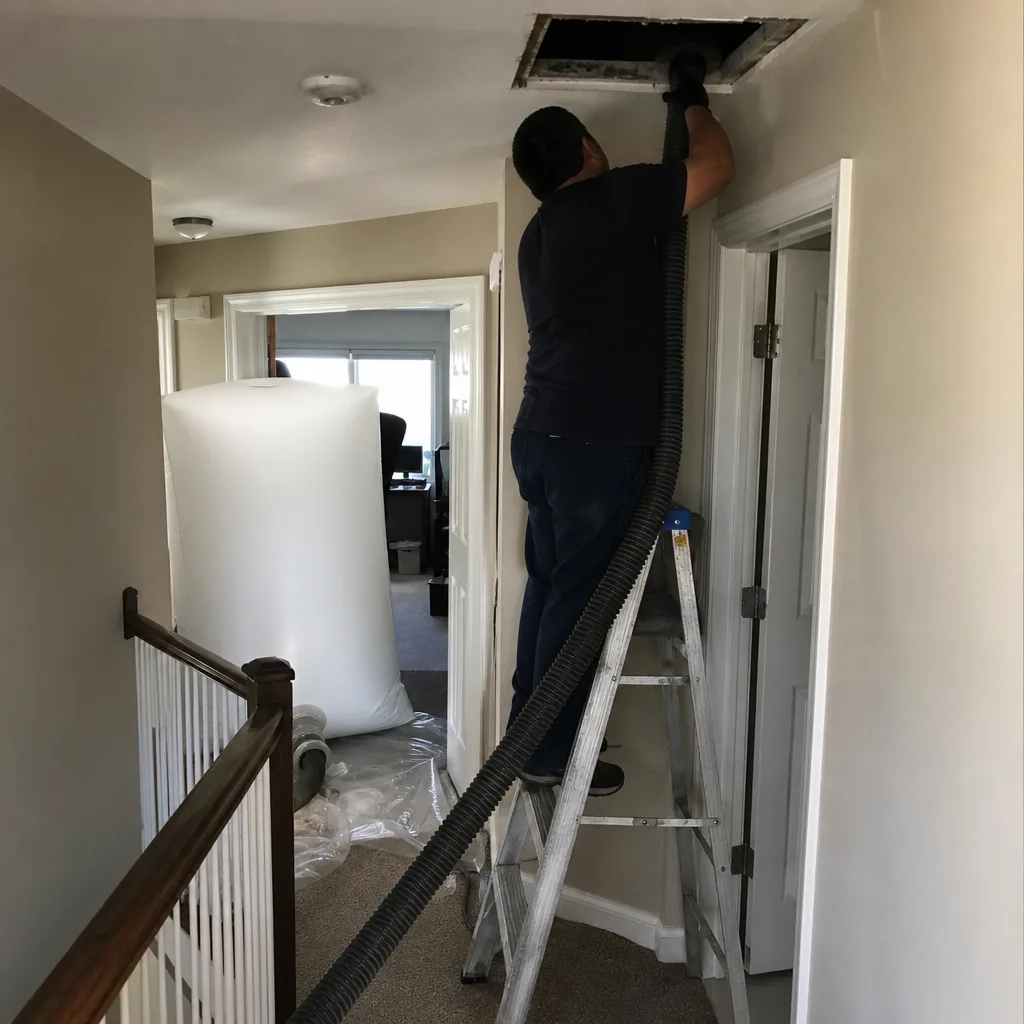
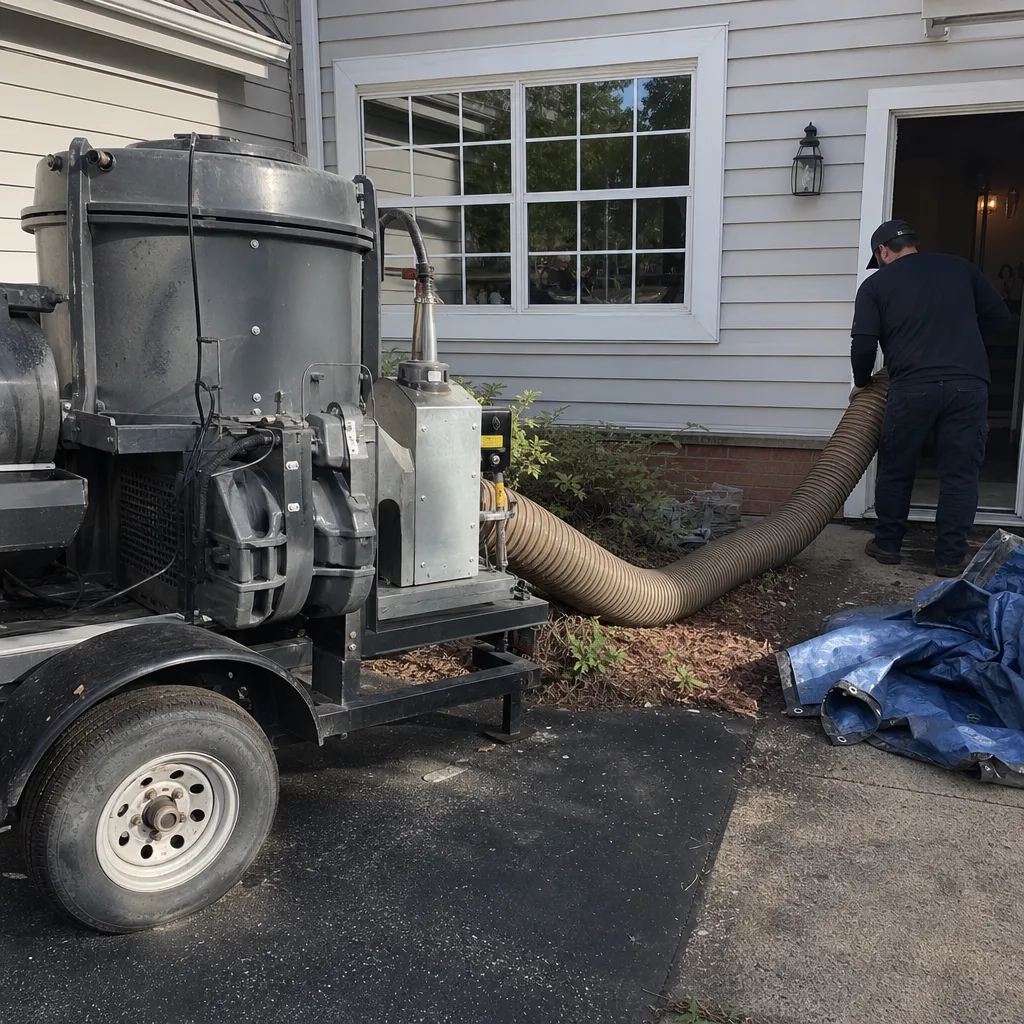
The distinction matters for two reasons. First, register dust does not require professional service. Second, debris past the throat indicates a condition that negative-pressure extraction can address, but only if the equipment and scope are matched to the contamination type. A shop-vac pushed into the boot will not reach the elbow where the build-up typically forms. Professional Air Duct Cleaning services in Elk Grove Village use equipment like the Rotobrush system or Nikro negative-pressure units to agitate and extract debris from the full length of the duct run.
What we’ve documented in our photo records: the average Elk Grove Village home we service has debris accumulation measurable at the first or second elbow in roughly 40% of duct runs, even when the register surface appears clean. The reverse is also true. We’ve photographed pristine duct interiors behind registers thick with household dust.
Musty Air From Vents: Three Distinct Sources
“Musty” is an imprecise word that covers three completely different conditions. Each has a different cause, a different smell character, and a different solution. Misidentifying the source leads to paying for duct cleaning that will not solve the problem.
Source 1: Biological Growth on the Evaporator Coil
The evaporator coil sits in the plenum, the large central chamber above your furnace or air handler. In humid summer conditions, which Elk Grove Village experiences from late May through September, condensation on the coil creates a moist environment where microbial growth can develop. The smell is sharp and organic, like wet soil or a damp basement, and it arrives strongest in the first 10 minutes after the AC cycles on.
This is an HVAC cleaning issue, not a duct cleaning issue. The coil must be accessed, inspected, and cleaned with appropriate foaming agents and tools. Our HVAC Cleaning in Elk Grove Village service addresses this specifically. Duct cleaning without coil cleaning leaves the source intact.
Source 2: Debris in the Duct Liner
Some ductwork, particularly flex duct installed from the 1980s forward, has an internal fiberglass liner. When this liner becomes loaded with organic debris, it can emit a musty smell that persists regardless of whether heating or cooling is active. The smell is duller than coil-related mustiness, more like old paper or a closed closet, and it’s consistent rather than tied to cycle startup.
This condition does require duct cleaning, but with a critical caveat: aggressive brushing can damage the liner. The correct approach is controlled negative-pressure extraction with soft-bristle contact, equipment we specify from Abatement Technologies for this exact condition.
Source 3: Condensation in Flex Duct
Flex duct in unconditioned spaces, attics or crawlspaces, can develop condensation on its exterior when warm, humid attic air contacts the cool duct surface. The resulting moisture can migrate to the interior through seams or damage points. The smell is metallic and damp, sometimes with a slight chemical note from the duct material itself, and it’s often accompanied by visible water staining on ceiling registers below attic runs.
This is a mechanical problem requiring duct repair or replacement, not cleaning. The condensation source must be eliminated. In Elk Grove Village, we see this frequently in homes with original flex duct in attic spaces, where temperature differentials between conditioned air and attic air exceed 40 degrees in summer.
Diagnostic summary:
- Sharp smell, first 10 minutes of AC cycle: likely evaporator coil
- Dull, persistent smell, no cycle correlation: likely duct liner debris
- Metallic damp smell with ceiling staining: likely flex duct condensation
Allergy Symptoms That Correlate With HVAC Operation
Unexplained allergy symptoms are among the most frustrating warning signs because the correlation with ductwork is statistical, not immediate. A sneeze does not prove duct contamination. But a pattern of symptoms that tracks with HVAC operation is worth documenting methodically.
We recommend a simple symptom diary to any Elk Grove Village homeowner who suspects their ducts. Track these four variables for two weeks:
- Symptom type and severity on a 1-10 scale: congestion, itchy eyes, cough, headache
- HVAC operating mode: heating, cooling, or off
- Time from system startup to symptom onset
- Room location when symptoms occur
What this diary can reveal: symptoms that appear 15-30 minutes after system startup, improve when leaving the home, and worsen upon return suggest recirculation of an indoor contaminant. If symptoms are worse in specific rooms, the duct runs serving those rooms should be camera-inspected first.
What the diary cannot reveal: whether the contaminant is in the ducts, the carpet, the HVAC components, or the building envelope. That’s where professional assessment comes in. At CleanRun, we review symptom diaries during our initial consultation and use them to prioritize which duct runs to inspect first with our camera system.
One Elk Grove Village-specific note: homes in the Biesterfield Road corridor and near the Busse Woods forest preserve areas have higher ambient pollen loads in spring and fall. Symptom patterns that persist through winter, when outdoor pollen is minimal, are more likely to indicate indoor sources including duct debris.
The Heating Season Smell That Indicates Rodent Activity
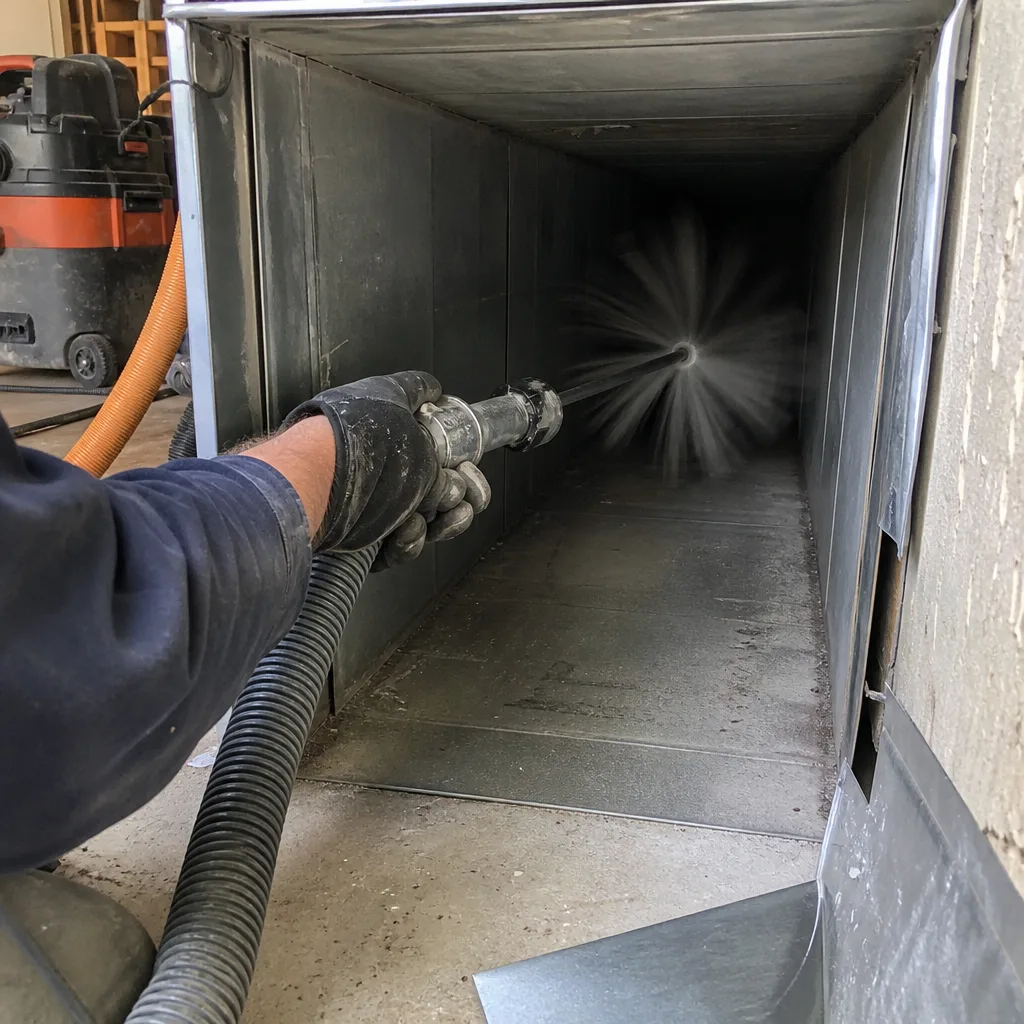
This is the warning sign most homeowners miss until it’s advanced, and it’s the one that most urgently requires camera inspection before any cleaning work begins.
When heating season begins in Elk Grove Village, typically mid-October through November, some homes emit a distinct odor from vents: ammonia-forward, with notes of wet cardboard or stale grain. It intensifies as the furnace runs and may fade when the system cycles off. This is not normal heating-system smell. Normal first-startup dust burn-off smells sharp and dry, like overheated metal or paper, and dissipates within 48 hours of initial use.
The ammonia-cardboard smell indicates rodent activity in ductwork. Mice enter duct systems through gaps in the building envelope, damaged flex duct, or unsealed return plenums. They nest in the relative warmth and travel the duct runs. Their urine and nesting material accumulate in low-velocity areas, particularly at elbows and in horizontal sections of return ductwork.
Why this requires camera inspection first: Rodent activity in ducts creates a contamination profile that standard cleaning may not address. Carcasses, dense nesting material, and saturated duct liner require specific remediation protocols. More critically, the entry points must be identified and sealed or the condition will recur within one heating season. Our photo records from Elk Grove Village homes, particularly those backing to greenbelt areas along Biesterfield Road and Meacham Road, show this pattern in roughly 8% of homes over 25 years old.
Camera inspection locates the contamination, documents its extent, and identifies whether the duct material itself has been compromised. Only then can an accurate scope and written price be developed. Haven Standard Clause 1 requires this documentation before any work begins.
Never attempt to clean or access ductwork with confirmed or suspected rodent activity without professional assessment. Disturbing dry rodent waste without proper containment and PPE creates inhalation hazards.
Unexplained Utility Bills and Weak Airflow
Rising utility bills and weak airflow at distant registers are often grouped together as “duct problems,” but the connection is indirect and requires careful diagnosis.
Utility bills: Duct leakage, not duct contamination, is the primary duct-related cause of energy waste. Conditioned air escaping into unconditioned spaces, attics or crawlspaces, forces the HVAC system to run longer to satisfy the thermostat. In Elk Grove Village, where winter design temperatures reach -10°F and summer cooling loads are significant, this leakage translates directly to higher gas and electric bills. But leakage is invisible from the living space. It requires pressure testing and thermal imaging to locate.
Duct cleaning does not seal leaks. If your concern is utility cost, request a duct leakage assessment, not a cleaning quote. Our duct repair and sealing service addresses this with mastic sealing and mechanical fastening, documented with before-and-after pressure test results.
Weak airflow: Reduced air volume at a register can indicate blockage, but the location of the blockage matters. A fully obstructed duct run, often from a collapsed flex duct section or a damper left closed during construction, produces no airflow. Partial obstruction from debris accumulation produces reduced but not absent airflow, usually with turbulence noise. A clean but undersized duct produces weak airflow with no noise.
The diagnostic sequence we follow: measure airflow at the register with a calibrated anemometer, inspect the duct run with a borescope camera, then determine whether the condition requires cleaning, repair, or resizing. Guessing based on symptoms alone is imprecise and often leads to unnecessary service.
How to Photograph a Warning Sign So It’s Useful
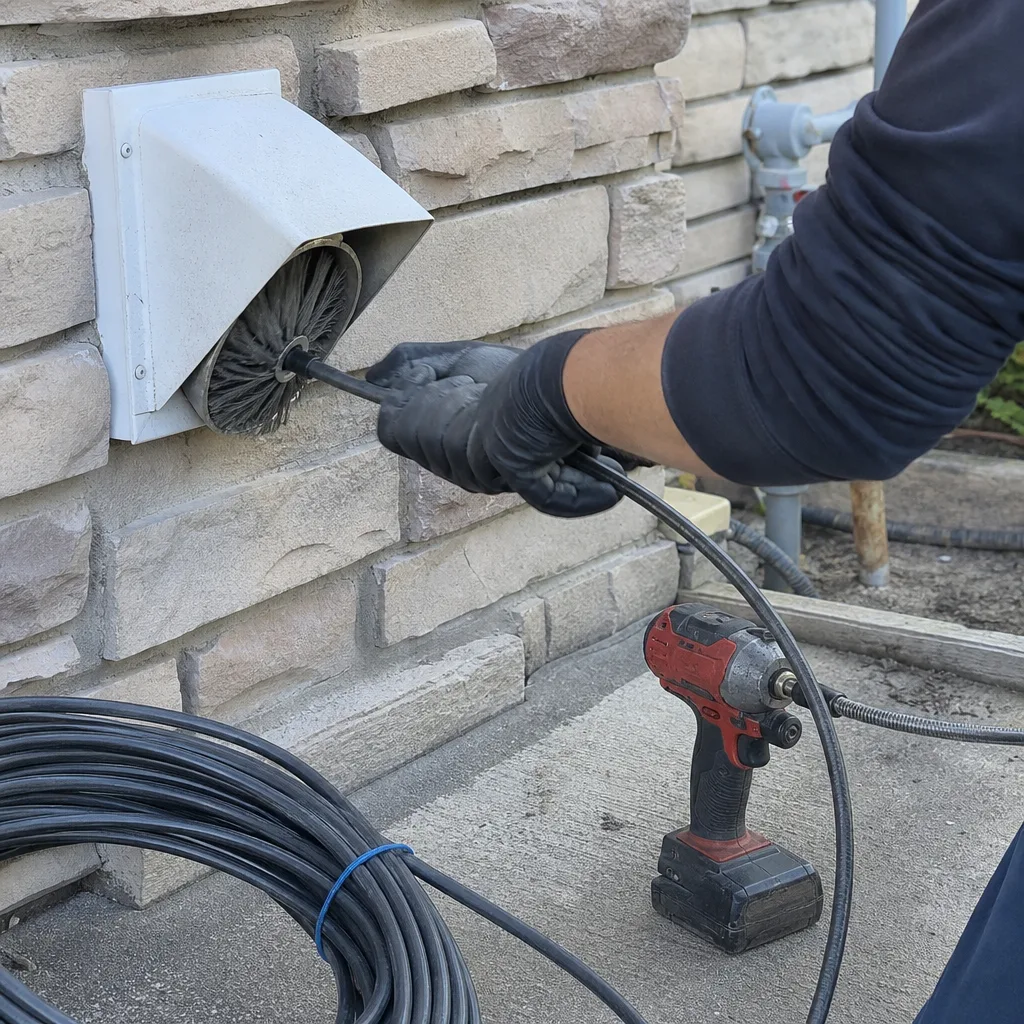
A useful photo lets a technician assess condition remotely and arrive with appropriate equipment. A useless photo wastes everyone’s time. Here’s how to document what you’re seeing.
For Register and Duct Throat Conditions
- Remove the register completely. Photos through the grille show only the grille.
- Use a flashlight held at arm’s length, shining directly into the boot, not angled from the side. Side lighting creates shadows that obscure depth.
- Hold the camera at the plane of the register opening, looking straight into the duct. Angled shots distort perceived depth.
- Include a reference object for scale: a pencil, a quarter, or your index finger placed at the duct throat entrance.
- Take two photos: one with flash, one with flashlight only. Flash reveals surface texture; flashlight reveals depth and accumulation patterns.
For Ceiling Staining or Register Damage
- Photograph the full register in context, showing surrounding ceiling material.
- Take a close-up with flash from 12 inches, perpendicular to the surface.
- Include the room in the background for location reference.
For Odor or Symptom Documentation
Odors cannot be photographed, but their circumstances can be documented. Note: date, time, outdoor temperature, HVAC operating mode, duration of system runtime before odor appeared, and which registers were affected. Email this with any photos to establish a record before the technician arrives.
At CleanRun, we use these photos and notes to pre-scope the job when possible. If your photos show debris past the throat in multiple runs, we arrive with full negative-pressure extraction equipment from Nikro or Rotobrush. If they show flex duct damage, we arrive with repair materials. This preparation is part of Haven Standard Clause 2: Informed Dispatch.
Common Mistakes to Avoid
- Assuming register dust means dirty ducts. Wipe the grille first. If the problem disappears, you’ve saved yourself a service call.
- Booking duct cleaning for a musty smell without identifying the source. Coil-related mustiness requires HVAC cleaning, not duct cleaning. A reputable company will inspect before quoting, not assume.
- Ignoring the heating-season ammonia smell. This is the one warning sign that can indicate active contamination requiring specialized remediation. Camera inspection is non-negotiable.
- Accepting a per-vent or per-register price. This pricing model incentivizes superficial work. A whole-system scope with one flat price per system, agreed in writing before work starts, is the only structure that aligns the technician’s incentive with thorough work.
- Expecting duct cleaning to solve utility bill problems. Leakage, not contamination, drives energy waste. Request a leakage test if bills are your primary concern.
- Not requesting photo documentation. Every legitimate duct cleaning should conclude with visual evidence of what was found and what was removed. If a company cannot show you the inside of your ducts, they cannot prove the work was necessary or performed.
- Scheduling cleaning based on time elapsed alone. “Every three to five years” is a rough guideline, not a rule. Condition-based service, triggered by documented warning signs, is more precise and more economical.
When to Call a Professional
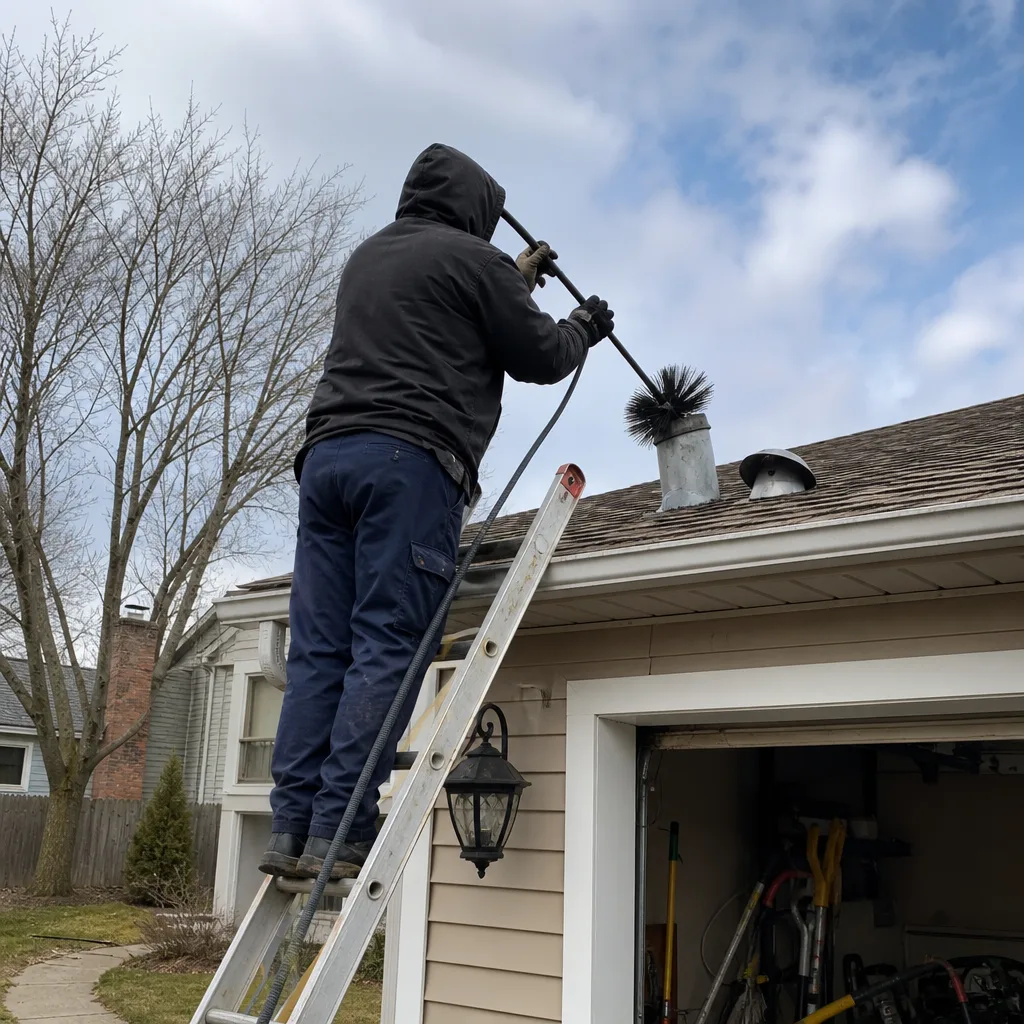
Call for professional assessment when: you can document debris past the first 6 inches of multiple duct throats; you detect the heating-season ammonia or wet-cardboard odor that suggests rodent activity; your symptom diary shows a consistent correlation with HVAC operation; or you’ve had a major home event, renovation, water intrusion, or pest treatment that could have introduced contamination into the duct system.
CleanRun Air Duct Cleaning Elk Grove Village offers free estimates in Elk Grove Village. Explore our more guides & resources on maintaining healthy indoor air. Every estimate includes a written price before any work begins, under Haven Standard Clause 1. We do not provide verbal quotes or “call for pricing” arrangements. Our technicians are background-checked, uniformed, and identified by name before arrival, per Haven Standard Clause 3: Verified Crews. Call (224) 344-8881 to schedule.
Frequently Asked Questions
Whole-system air duct cleaning in Elk Grove Village typically ranges from $450 to $850 for a single HVAC system in a home under 3,500 square feet, depending on the number of duct runs, the contamination level documented during inspection, and whether the job includes the plenum and evaporator coil. CleanRun provides one flat price per system, agreed in writing before any panel comes off, with no per-vent add-ons. Call (224) 344-8881 for an exact quote; estimates are free.
Low quotes, particularly those advertised at $79 to $149, typically cover only a superficial register wipe and brief vacuum noise at the boot, not full-system negative-pressure extraction. The industry model is to arrive with a low teaser price, then identify “additional services” once the technician is in the home. CleanRun does not operate this way. Our written price, delivered under Haven Standard Clause 1, covers the complete scope with no add-on pressure.
Request a documented photo record of every duct run, before and after. This has been standard on every CleanRun job since 2013. The photo record is delivered as part of the job documentation, not as an extra-cost option. If a company cannot or will not provide this, the work cannot be verified.
There is no fixed interval that applies to all homes. Homes with pets, recent renovations, or located near high pollen sources like the Busse Woods area may need more frequent service. Homes with excellent filtration, sealed ductwork, and no contributing factors may go longer. Condition-based service, triggered by documented warning signs rather than calendar time, is the more precise approach.
Register surfaces and the first few inches of the boot can be cleaned by a homeowner with a vacuum and brush attachment. Past the throat, duct runs contain sharp edges, electrical components in some configurations, and accumulated debris that requires controlled extraction. More critically, flex duct and duct liner can be damaged by aggressive contact. Professional equipment from manufacturers like Rotobrush and Nikro is designed to clean without damaging duct materials. For safety and preservation of the duct system, we do not recommend DIY cleaning of interior duct runs.
Yes. Elk Grove Village’s continental climate, with humid summers and cold, dry winters, creates conditions that can accelerate certain duct issues. Summer humidity supports microbial growth on coils and in duct liners if the system is oversized and short-cycles. Winter heating season drives rodents toward the warmth of duct systems, particularly in homes near greenbelt areas. The freeze-thaw cycle can also stress building envelopes, creating new entry points for pests and unconditioned air. These factors don’t mandate a fixed cleaning schedule, but they do make periodic camera inspection a reasonable preventive measure for homes over 20 years old.
The Bottom Line
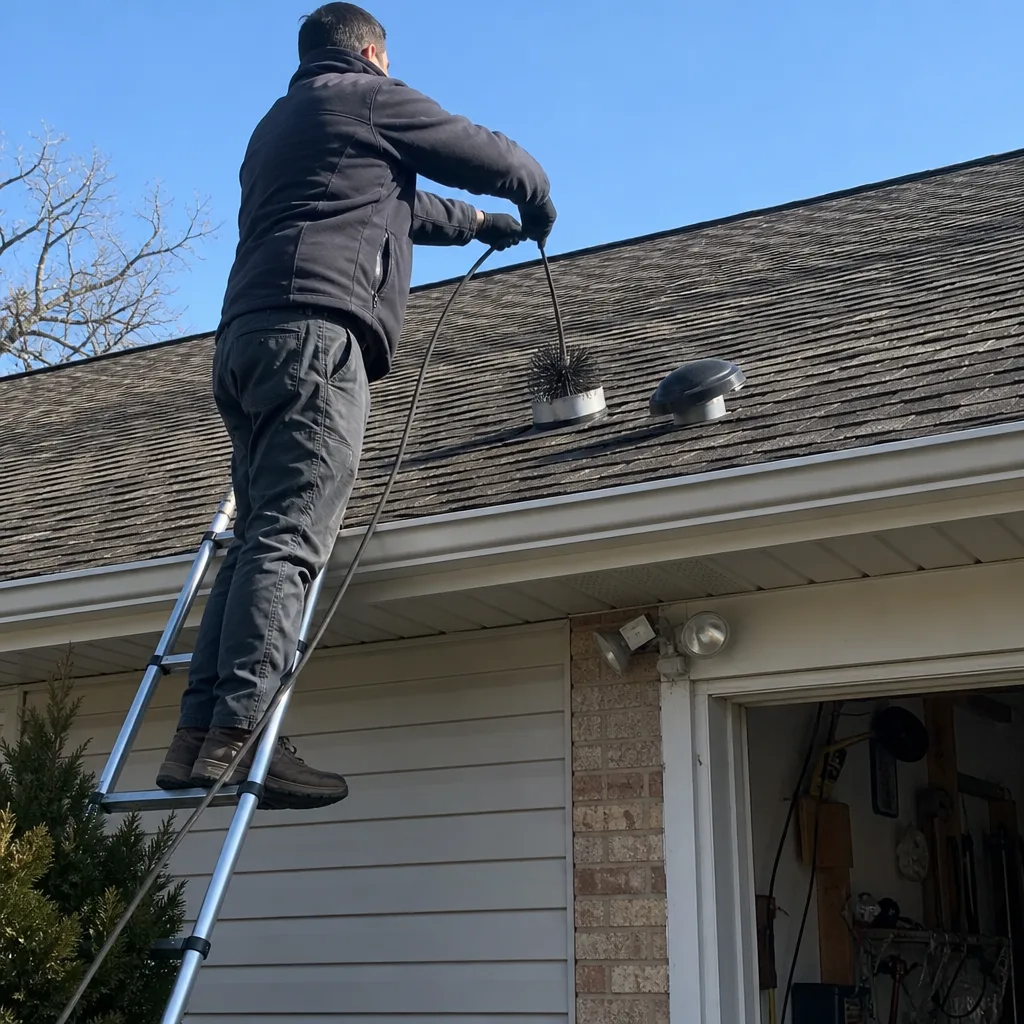
Warning signs are only useful when they’re matched to the correct condition. Register dust is cosmetic. Musty air has three distinct sources, only one of which duct cleaning addresses. Allergy symptoms require a diary to establish correlation. The heating-season ammonia smell demands camera inspection before any work begins. And every legitimate service should conclude with documented evidence, a written price agreed beforehand, and accountability after the truck leaves. In Elk Grove Village, where home values reflect genuine maintenance and not cosmetic quick fixes, precision in diagnosis and documentation in service are what separate real work from vacuum noise.
Written by Tomas Reyes, Owner at CleanRun Air Duct Cleaning Elk Grove Village, serving Elk Grove Village since 2013.