
Last updated September 23, 2026
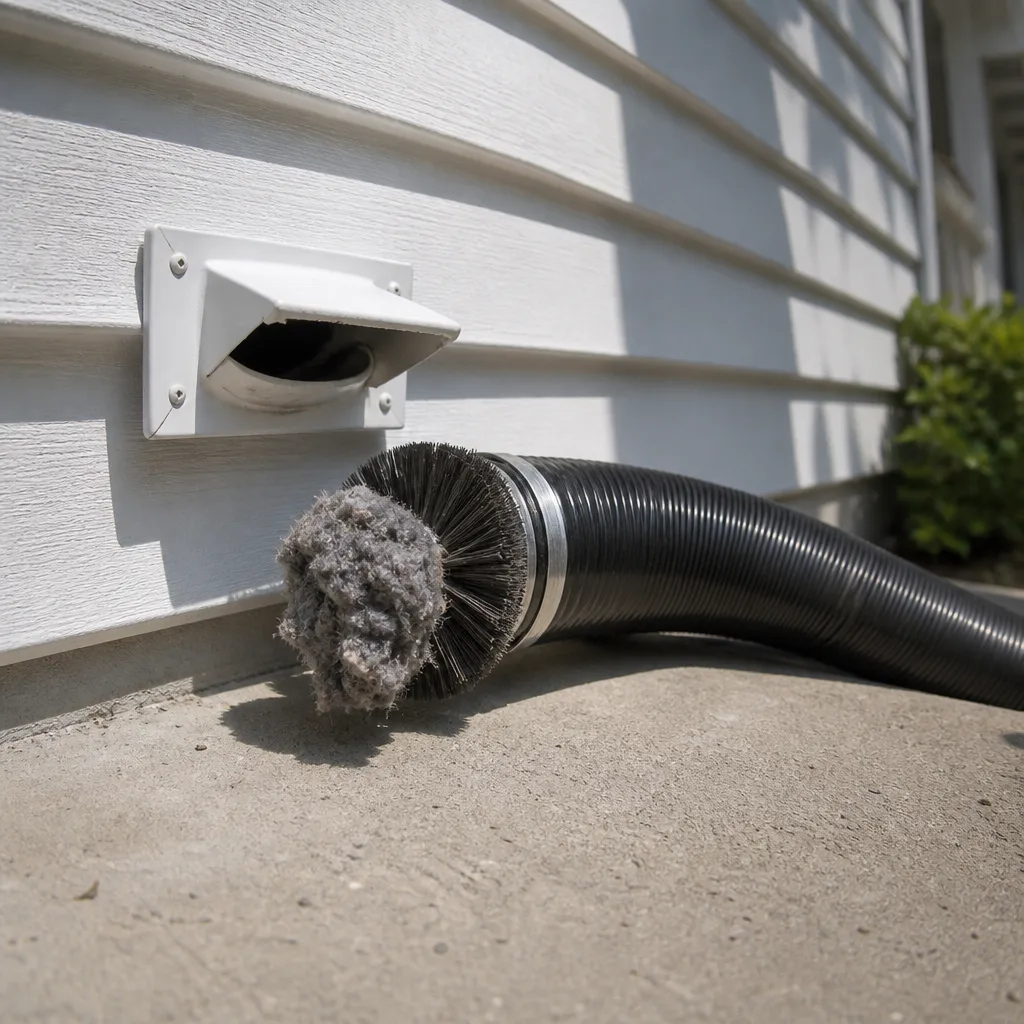
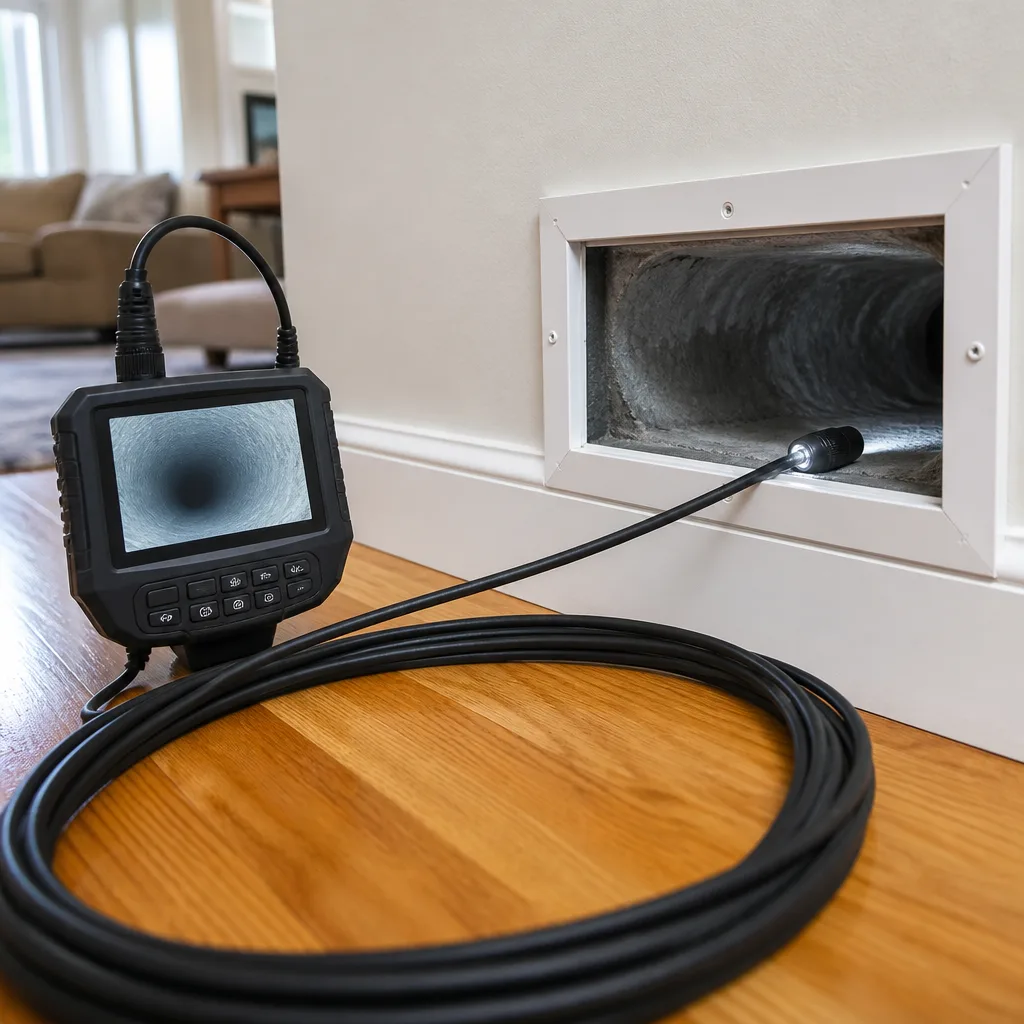
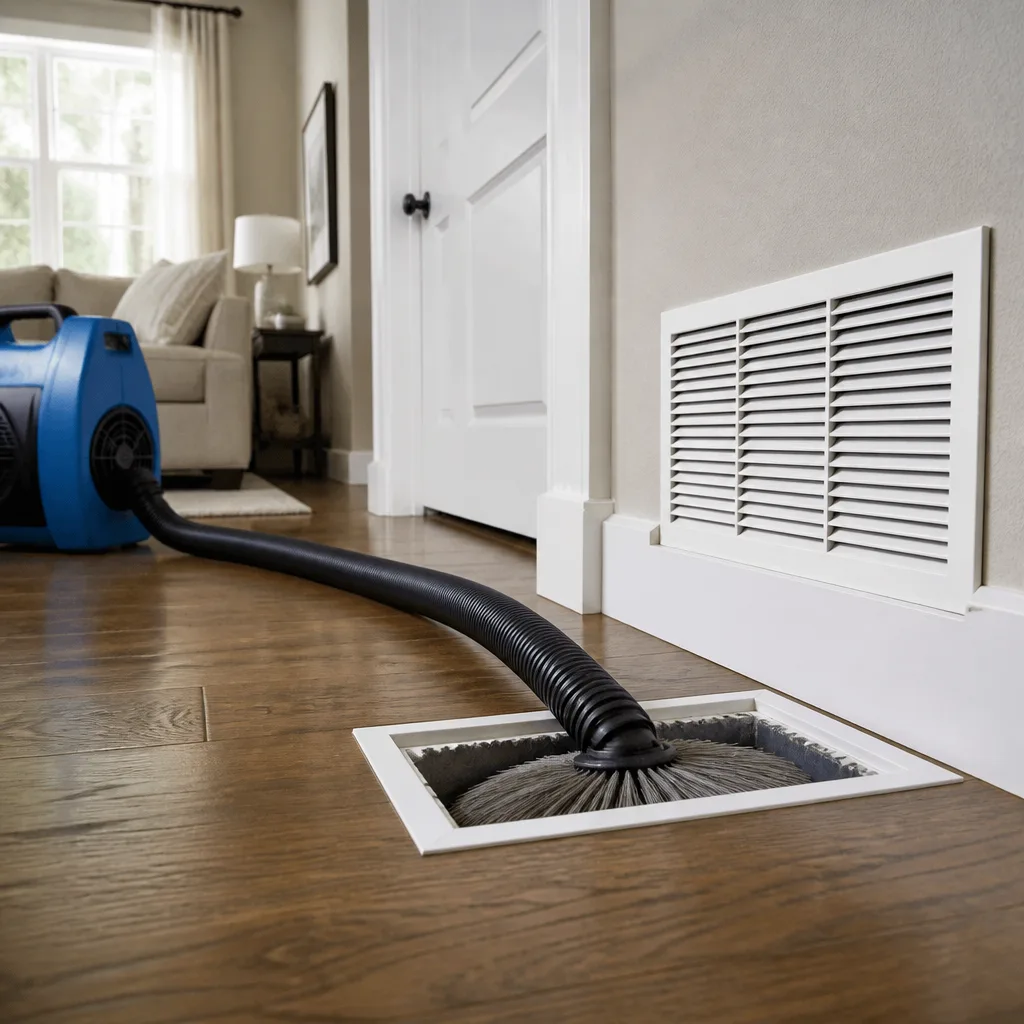
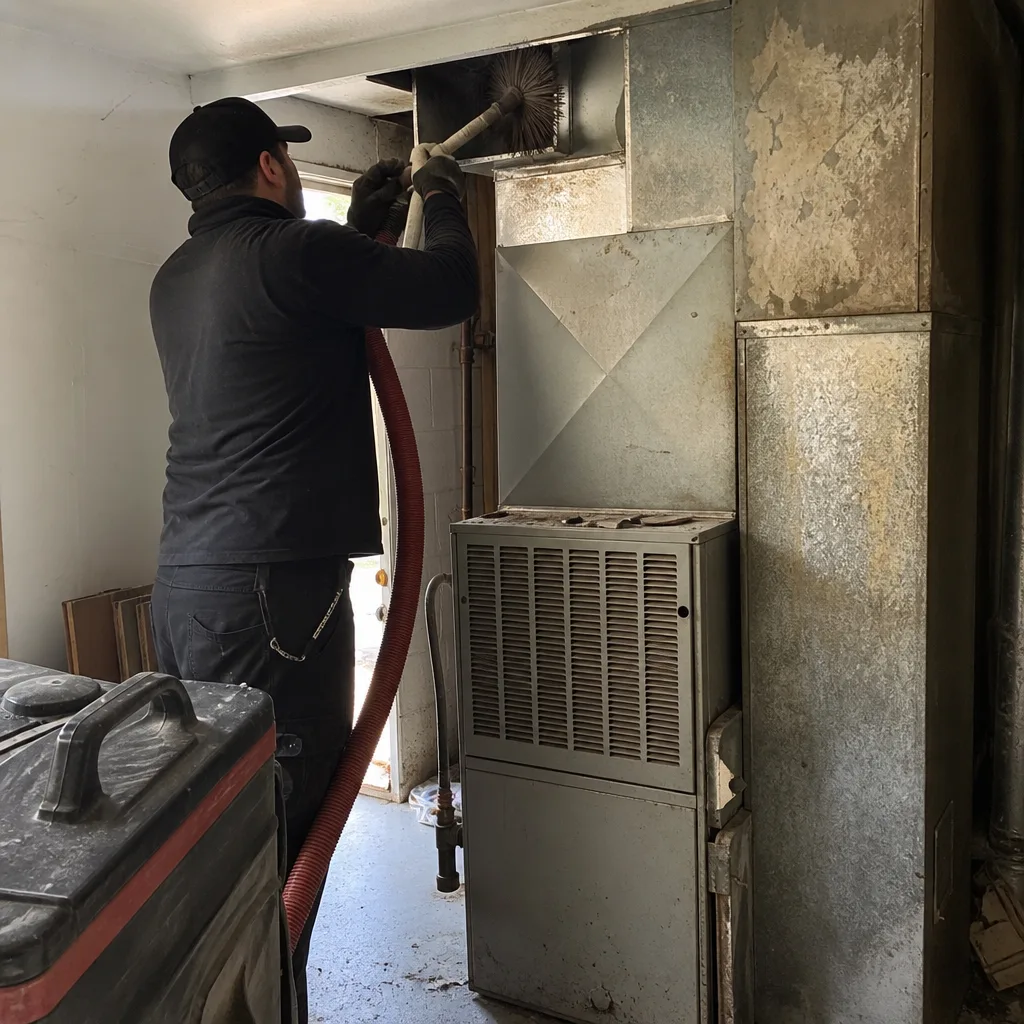
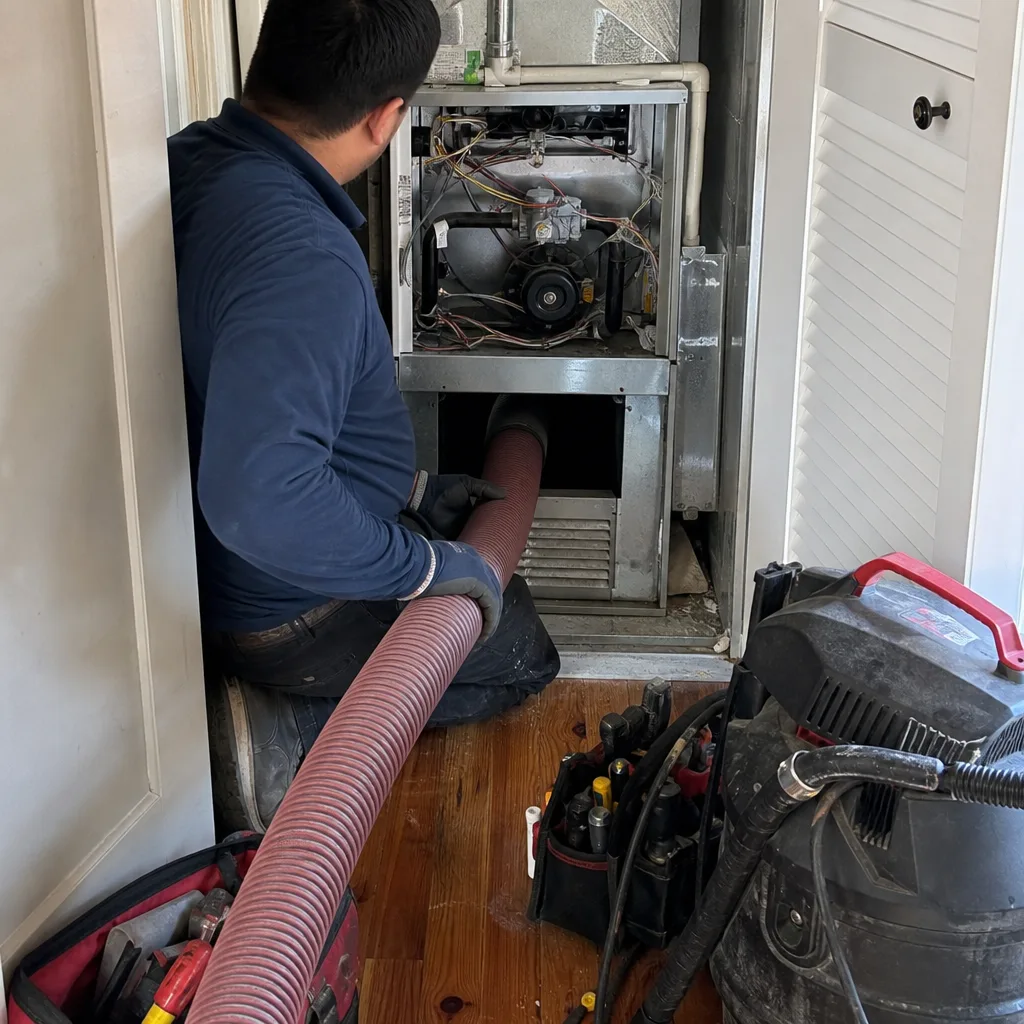
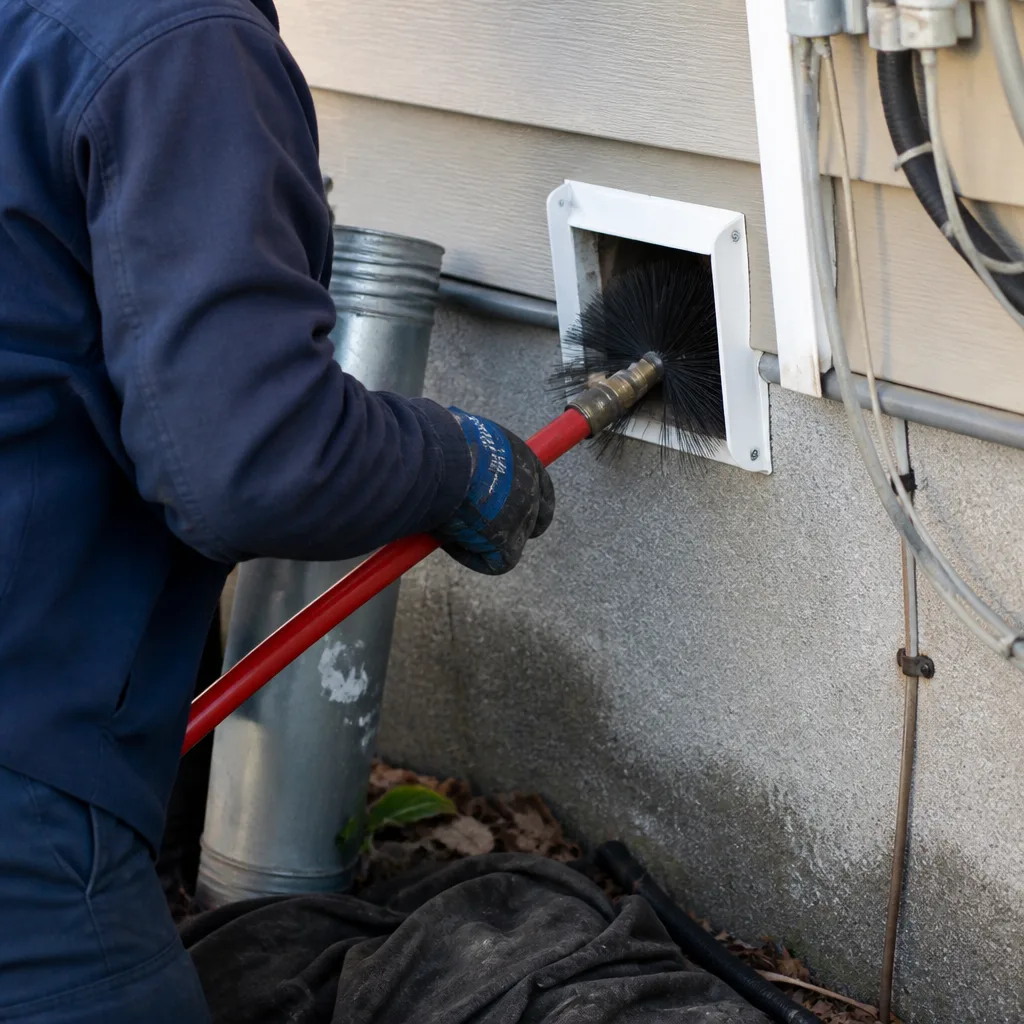
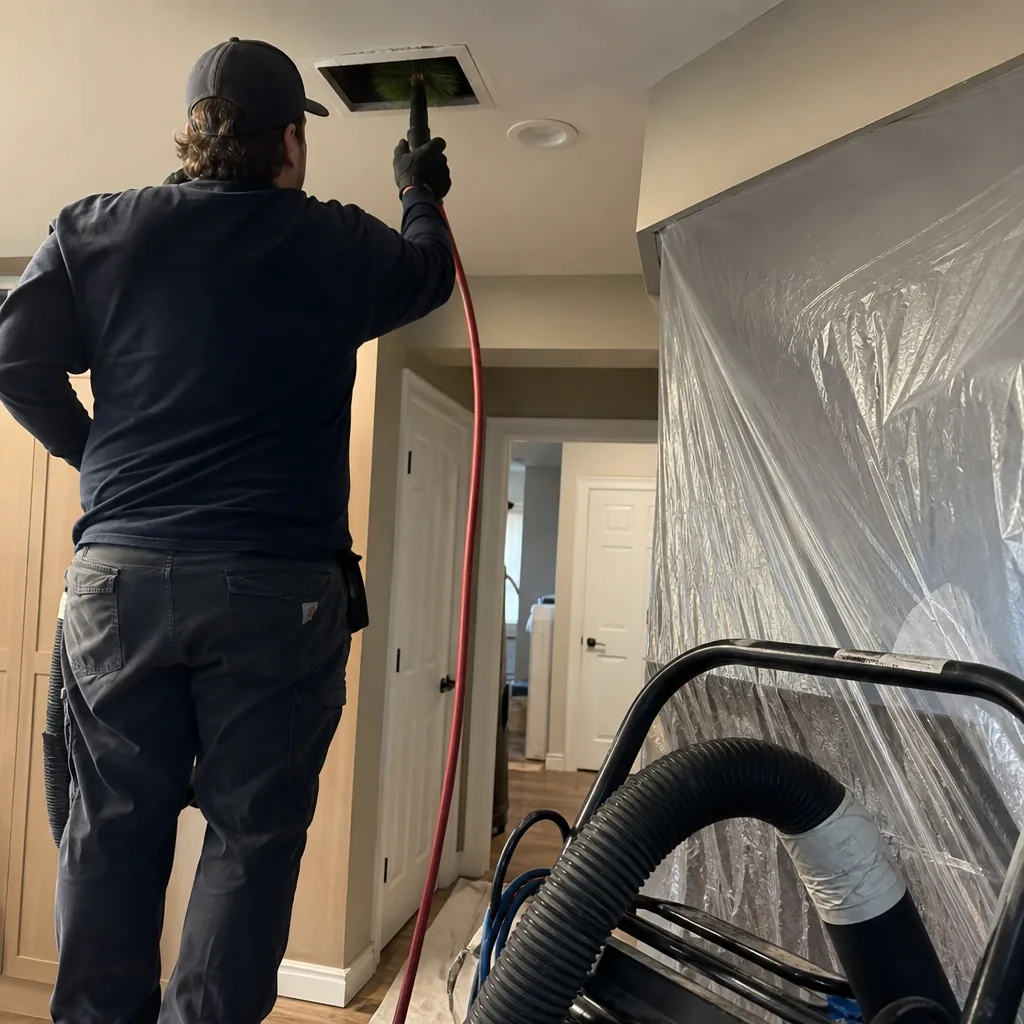
Whole-system duct and dryer vent check with before-and-after photos - you see exactly what came out of your vents
That "$99 whole-house special" is a bait ad - the real number appears once they are in your hallway, or the "clean" is a shop-vac at the register. We photograph the inside of your ducts before and after instead.

 Before
 After
After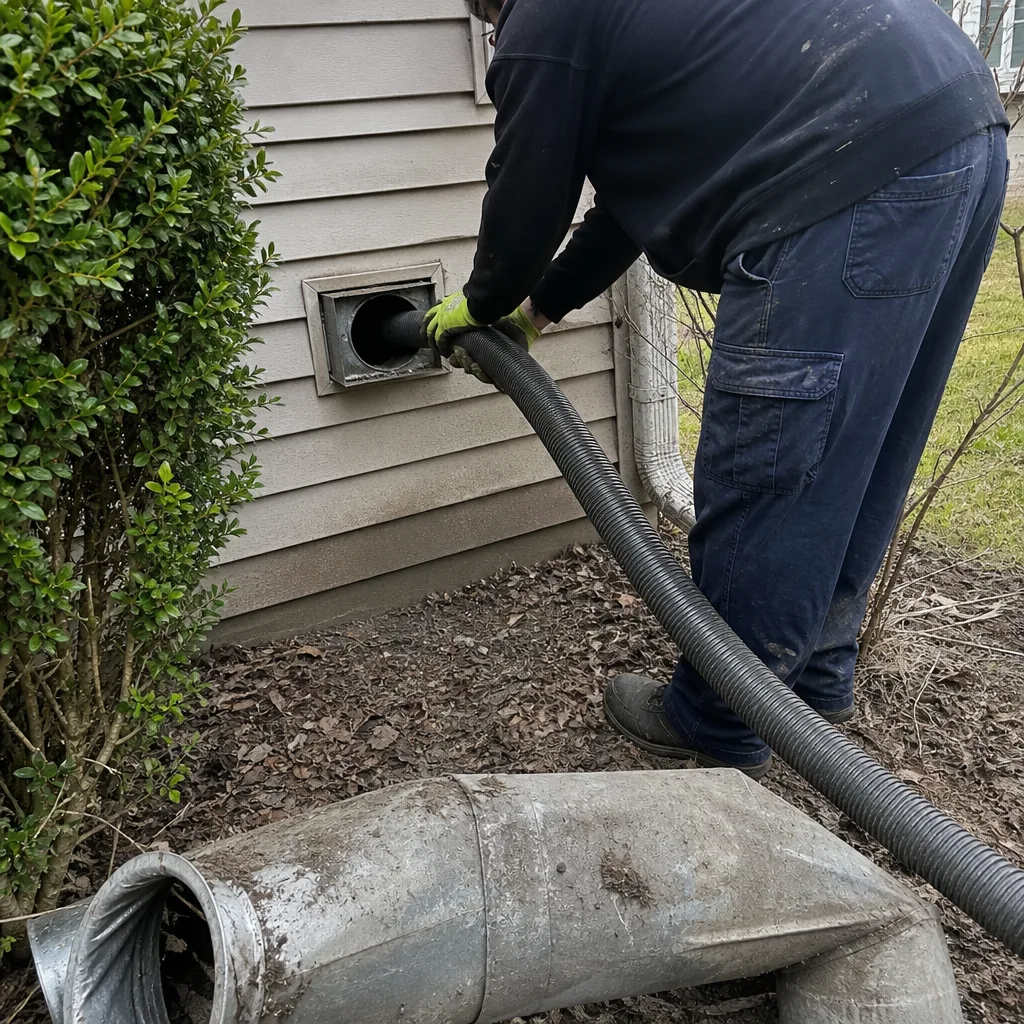 Before
 After
After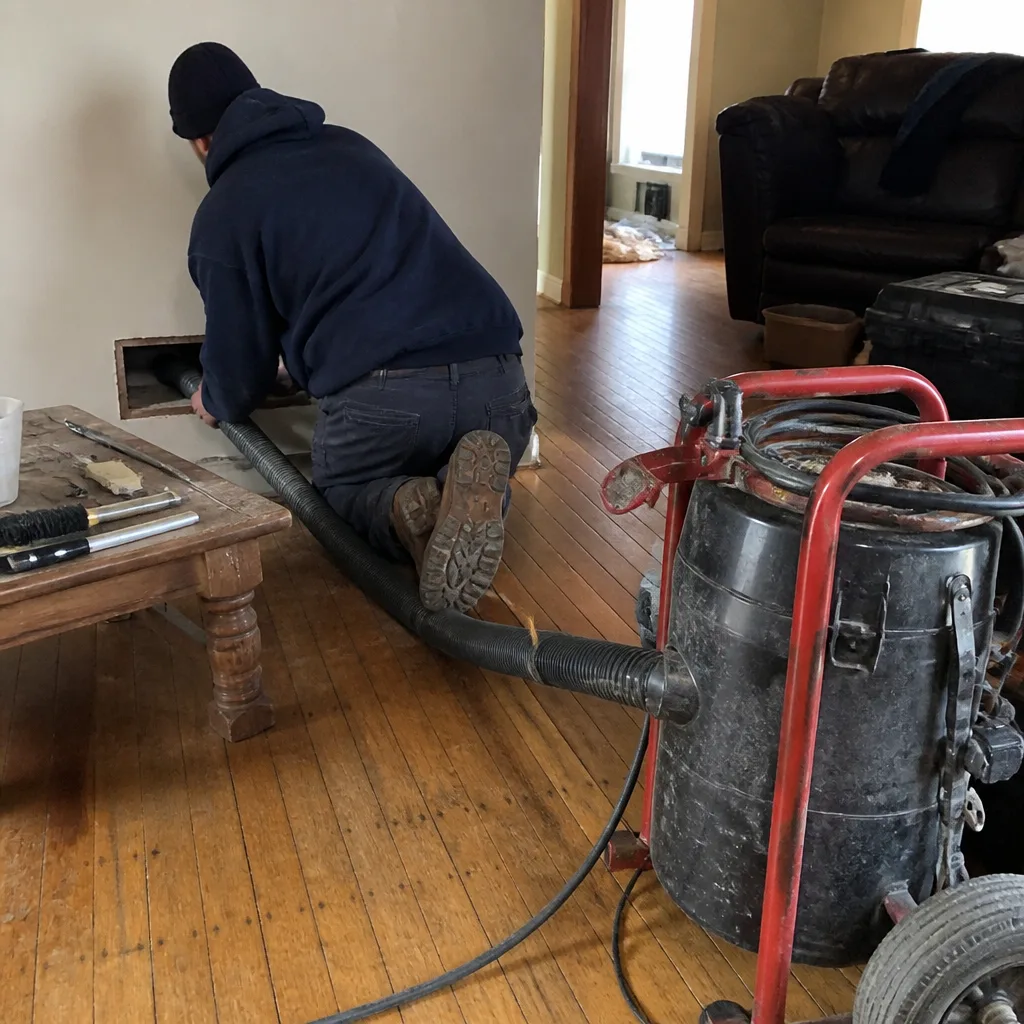 Before
 After
AfterAir Duct Cleaning Maintenance Checklist for Elk Grove Village Homeowners
After photographing the inside of hundreds of duct systems in Elk Grove Village, the single most reliable predictor of heavy debris accumulation isn’t age - it’s whether the home had any renovation work done without sealing the registers first. We’ve pulled back return-air grilles in homes built in 2018 and found drywall dust packed to the elbow, while 1970s split-levels with careful owners showed barely a film. This checklist is built around what Elk Grove Village technicians actually find during inspections, not vague timelines. You’ll learn how to inspect your own system with a flashlight and phone camera, what specific conditions warrant professional air duct cleaning versus routine monitoring, and how to keep a written record that protects your warranty and your indoor air quality.
Quick Answer
Elk Grove Village homeowners should inspect their air ducts seasonally using a flashlight and phone camera at every supply register and return grille, check their filter change history against MERV rating specifications, and document any renovation dust, visible mold, or debris bypass. Professional cleaning is warranted when the return-air plenum shows three specific visible signs: debris accumulation thicker than a quarter-inch, discoloration patterns indicating moisture intrusion, or fiberglass duct liner shedding visible as fuzzy strands in the airstream. Keep a written service log with dates, technician names, conditions noted, and warranty expiration for every visit, and check our more guides & resources for additional maintenance tips.
Table of Contents
- Room-by-Room Inspection with a Flashlight and Phone Camera
- How Filter Change History and MERV Ratings Predict Duct Condition
- Three Visible Signs Inside Your Return-Air Plenum
- Elk Grove Village-Specific Factors That Accelerate Duct Contamination
- The Written Service Log Every Homeowner Should Keep
- A Seasonal Maintenance Schedule That Actually Works
- Common Mistakes to Avoid
- When to Call a Professional
- Frequently Asked Questions
- The Bottom Line
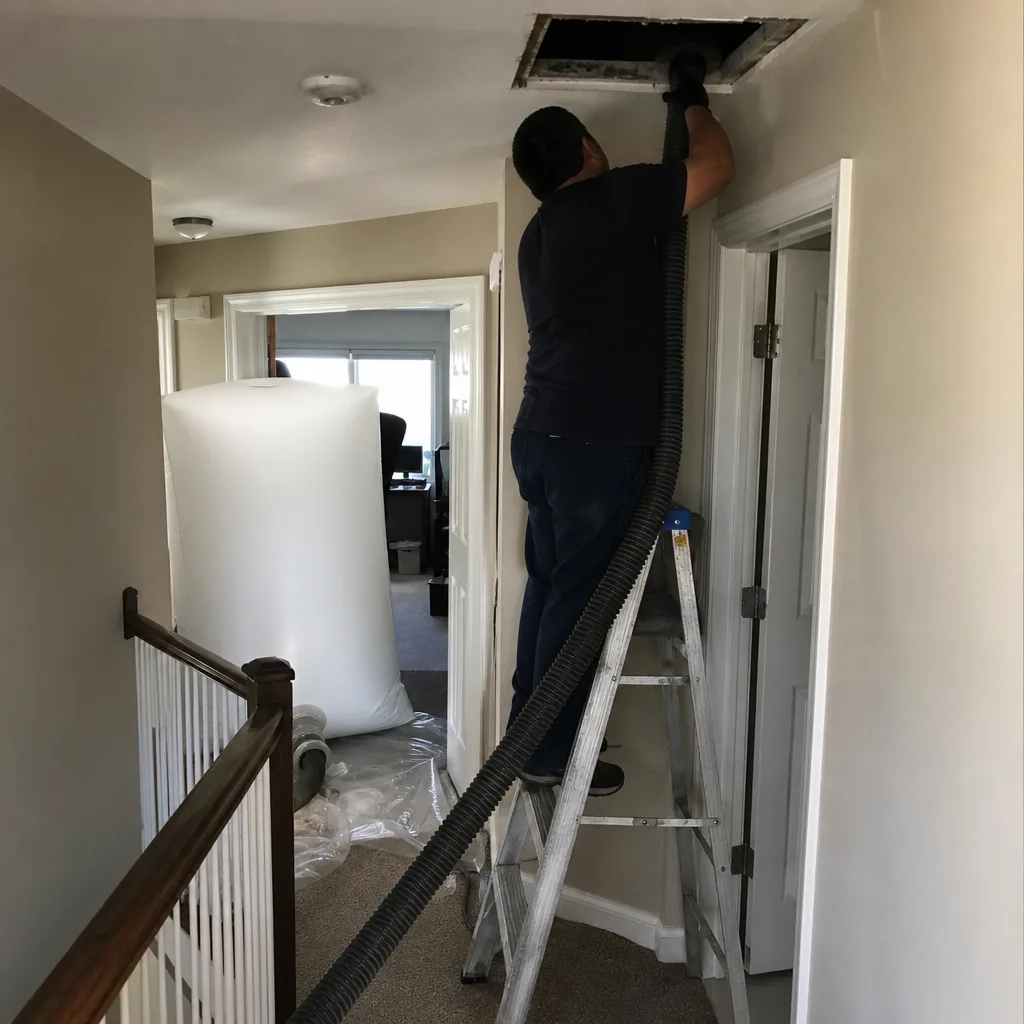
BeforeAfterRoom-by-Room Inspection with a Flashlight and Phone Camera
Most homeowners never look past the register cover. The ductwork behind it tells a different story, and you don’t need specialized equipment to see it. Here’s how to document what matters.
What You’ll Need
- A flashlight with focused beam (phone flashlight works; a dedicated flashlight with narrow throw is better for deep duct runs)
- Your phone camera with timestamp enabled
- A flathead screwdriver or coin for register removal
- A notebook or the log template described in the Written Service Log section below
At Every Supply Register
- Remove the register carefully. Metal registers in Elk Grove Village’s older split-levels often have paint buildup around the screws. Don’t force them. Document any resistance - it may indicate how long since last removal.
- Photograph the boot (the metal transition piece between register and duct). Look for dust accumulation on the horizontal surface. A thin, even film is normal. Clumps, streaks, or debris piled against the upstream edge indicate airflow problems or filter bypass.
- Shine your flashlight straight down the duct run. In rigid metal ductwork common in homes built before 1990, you should see reflective metal walls. In flex duct (corrugated plastic with insulation wrap, common in additions and 1990s construction), look for sagging or compression that creates debris traps.
- Photograph the first elbow or turn. This is where debris settles. A quarter-inch of accumulation is a yellow flag. Half-inch or more, or any visible mold, is a red flag.
- Note the room’s use pattern. Bedrooms with closed doors and limited runtime show different accumulation patterns than living areas with constant airflow. Document this context - it matters for interpreting what you find.
At Return-Air Grilles
Return ducts pull air back to the furnace, so they collect what floats: skin cells, pet dander, cooking particulate, and the fine dust that settles on your furniture. In Elk Grove Village, proximity to O’Hare means jet fuel combustion particulate and runway de-icing compound residue add to this load.
- Remove the grille and photograph the cavity behind it. The return-air boot should show relatively even dust distribution. Heavy streaking or “clean” paths through dirty surroundings indicates turbulent airflow, often from undersized returns or blocked pathways.
- Look for filter bypass evidence. If your filter doesn’t seal properly (gaps at the sides, wrong size, or filter media that has collapsed), you’ll see heavy accumulation immediately downstream of the filter slot. This is one of the most common preventable problems we document in Elk Grove Village homes.
- Check for moisture indicators. Dark streaks, rust on metal surfaces, or white powdery deposits on fiberglass indicate humidity control problems. Elk Grove Village’s summer humidity peaks in July and August; poorly sealed crawl spaces or basement returns are especially vulnerable.
Store these photos with dates and room labels. When a technician arrives, show them your documentation. It saves diagnostic time and demonstrates you’re tracking system condition over time.
How Filter Change History and MERV Ratings Predict Duct Condition
The filter is your system’s first defense, but the wrong filter can be worse than no filter at all. We’ve documented blower motor failures in Elk Grove Village homes where a MERV 13 filter was installed on a system never designed for that restriction.
MERV Ratings: What Actually Works
MERV (Minimum Efficiency Reporting Value) measures filtration efficiency. Higher numbers catch smaller particles. But every filter also creates resistance - measured as pressure drop - and excessive pressure drop strains the blower motor, cracks heat exchangers, and pulls unfiltered air around the filter edges through bypass.
| MERV Range | Typical Use | Elk Grove Village Application | Pressure Drop Risk |
|---|---|---|---|
| MERV 1-4 | Basic protection, minimal restriction | Rarely appropriate; O’Hare particulate warrants better | Low |
| MERV 5-8 | Standard residential, pollen and dust mites | Appropriate for most systems 15+ years old | Low to moderate |
| MERV 9-12 | Improved particle capture, finer dust | Good balance for Elk Grove Village’s particulate load | Moderate; verify system capacity |
| MERV 13-16 | Hospital-grade, bacteria and smoke | Only with verified system compatibility | High; requires professional assessment |
Documenting Your Filter History
Keep a simple record:
- Date changed (not “every three months” - the actual calendar date)
- Filter brand and MERV rating (photograph the packaging)
- Visual condition at removal (heavy loading, bypass gaps, moisture, frame collapse)
- Any pressure drop warnings (whistling at the grille, reduced airflow at distant registers, blower running longer cycles)
Correlate this with your duct inspection photos. A MERV 11 changed every 60 days in an Elk Grove Village home near Higgins Road may show cleaner ductwork than a MERV 8 changed every 120 days. But a MERV 13 on an undersized return will show heavy bypass debris and potentially motor strain indicators.
If you’re unsure about compatibility, a technician can measure total external static pressure - the actual resistance your system is working against. CleanRun includes this measurement on every HVAC Cleaning in Elk Grove Village visit, documented in writing.
Three Visible Signs Inside Your Return-Air Plenum
The plenum is the large sheet-metal box directly above your furnace or air handler. It’s the collection point for all return air before it passes through the filter and enters the conditioned space. Because it’s upstream of the filter, it accumulates everything your filter missed - and everything that bypassed it.
Access requires removing a panel, typically with sheet-metal screws. If you’re not comfortable with this, note the signs from the filter slot opening or call a professional. The plenum contains electrical components and the blower assembly; it’s not a casual inspection point.
Sign 1: Debris Accumulation Thicker Than a Quarter-Inch
Use your flashlight at the filter slot. Look at the floor of the plenum, visible just below the filter rails. A thin, even dust layer is normal. Accumulation thick enough to obscure the metal surface, or piled against the blower inlet, indicates sustained filter bypass or inadequate filtration.
We’ve photographed plenums in Elk Grove Village’s Biesterfield corridor homes where the accumulation measured two inches at the blower inlet. The homeowner had been changing filters regularly - but the wrong size, with a half-inch gap on each side. The debris was bypassing entirely.
Sign 2: Discoloration Patterns Indicating Moisture Intrusion
Healthy sheet metal shows uniform gray or the manufacturer’s paint. Watch for:
- Dark, irregular patches - often mold or mildew colonization from humidity spikes
- Rust streaking - active or past water intrusion, common in plenums above condensate pans that have overflowed
- White, chalky deposits - mineral residue from evaporated water, indicating repeated wet-dry cycles
Elk Grove Village’s summer dew points regularly hit 70°F. A plenum in an unconditioned attic or with poorly sealed return ductwork in a humid basement is at risk. Moisture in the plenum doesn’t just affect air quality - it corrodes heat exchangers and shortens equipment life.
Sign 3: Fiberglass Duct Liner Shedding Visible as Fuzzy Strands
Some plenums and ductwork in homes built 1965-1985 have internal fiberglass liner - insulation applied to the metal surface for thermal and acoustic performance. When this degrades, it sheds visible fibers into the airstream.
Look for fuzzy, cotton-candy-like strands clinging to the plenum walls or caught in the blower wheel. This is not normal dust. It’s degraded liner material, and it indicates the liner has reached end of service life. In Elk Grove Village, we’ve found this particularly in the original construction around Landmeier and Meacham, where fiberglass-lined ductwork was common in ranch and split-level builds.
Shedding liner requires professional evaluation. It cannot be cleaned effectively - the cleaning process itself accelerates degradation. Options include encapsulation or duct replacement, both documented with before-and-after photography under CleanRun’s standard protocol.
Elk Grove Village-Specific Factors That Accelerate Duct Contamination
Every location has its own particulate fingerprint. Elk Grove Village’s is shaped by three factors that should inform how aggressively you inspect and how you interpret what you find.
O’Hare Proximity and Flight Path Particulate
Elk Grove Village sits under established arrival and departure corridors for O’Hare International. Jet engine exhaust contains ultrafine particulate, unburned hydrocarbons, and sulfur compounds. Runway de-icing fluids (propylene glycol and potassium acetate formulations) become airborne during application and can travel miles downwind.
These particulates are small enough to penetrate standard filtration. They don’t create visible dust bunnies, but they contribute to the fine film that coats surfaces in homes near the flight paths - the areas roughly between Higgins Road and Biesterfield, and east toward Route 53. If you live in this zone, inspect more frequently and consider MERV 10-12 filtration with verified system compatibility.
Older Construction with Fiberglass Duct Liner
As noted above, Elk Grove Village’s 1960s-1980s housing stock includes significant fiberglass-lined ductwork. This material degrades with age, with mechanical disturbance (renovation, rodent activity), and with moisture exposure. The village’s freeze-thaw cycles create condensation potential in unconditioned spaces that accelerates this degradation.
If your home dates to this era and has never had ductwork replacement, add liner condition to your annual inspection checklist. Look for the shedding indicator described above, and for musty odors that persist after filter changes and surface cleaning.
Baseboard Systems in Area Split-Levels
Many Elk Grove Village split-levels and tri-levels use hydronic baseboard heat with a separate central air system. The ductwork for cooling only runs seasonally, allowing dust accumulation during the heating months that is then disturbed and distributed when the blower starts in spring.
Homes with this configuration should include a pre-season inspection in their checklist: run the blower before cooling season starts, check registers for expelled debris, and consider a professional cleaning if the first cycle produces visible dust at multiple registers. See Air Duct Cleaning Warning Signs: A Elk Grove Village Homeowner’s Reference Guide for what to watch for.
The Written Service Log Every Homeowner Should Keep
Documentation is what separates a maintained system from a neglected one. Not because the log itself improves airflow, but because the act of recording forces observation, and the accumulated record reveals patterns invisible in isolation.
Here’s the template we recommend, based on the records CleanRun delivers after every visit:
| Field | What to Record | Example Entry |
|---|---|---|
| Date | Actual calendar date of inspection or service | March 15, 2025 |
| Technician/Inspector | Name and company; your own name if self-inspection | T. Reyes, CleanRun / or “Self” |
| System Condition Noted | Specific observations, not vague ratings | “3/8″ debris at master BR elbow; filter bypass gap 1/4″ left side” |
| Work Performed | What was done, with equipment noted if professional | “Negative-pressure extraction, Rotobrush mechanical agitation, photo record delivered” |
| Filter Details | MERV, brand, dimensions, date installed | “Honeywell FC100A1029, MERV 11, 16x25x4, installed today” |
| Warranty/Expiration | Guarantee terms and end date | “365-Day Done Right Promise - expires March 15, 2026” |
| Photos Reference | File names or cloud storage location | “EGV_2025-03-15_masterBR_01 through _12” |
Keep this log with your home maintenance records. When you sell, it demonstrates system care to buyers. When you dispute a warranty claim, it establishes baseline condition. When you compare quotes, it gives technicians specific history to work from rather than generic assumptions.
CleanRun delivers a completed log entry after every Air Duct Cleaning in Elk Grove Village job, with the photo record attached. Homeowners who maintain their own records between professional visits have the most complete documentation we’ve seen.
A Seasonal Maintenance Schedule That Actually Works
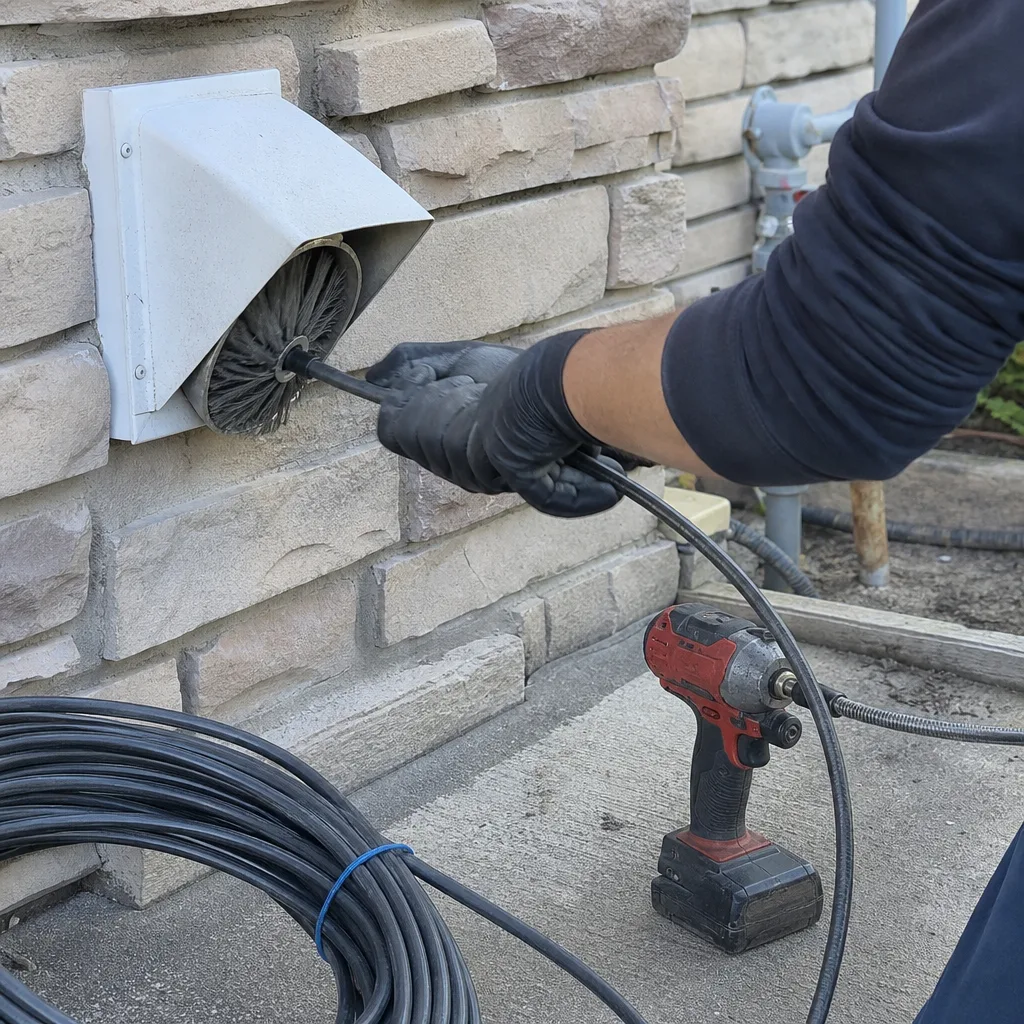
Calendar-based schedules fail because they ignore actual conditions. This schedule ties inspection to observable triggers and seasonal risks specific to Elk Grove Village’s climate.
March: Pre-Cooling Season
- Run the blower for 30 minutes with windows open to purge heating-season accumulation
- Inspect all supply registers for expelled debris
- Change filter, note MERV and dimensions in log
- Schedule professional cleaning if visible debris appeared at multiple registers
June: Mid-Summer Humidity Check
- Inspect return grilles and accessible plenum for moisture indicators
- Verify condensate drain is flowing freely (wet/dry vacuum test if accessible)
- Check filter condition - summer runtime is high, loading accelerates
September: Post-Cooling, Pre-Heating
- Full room-by-room register inspection with photography
- Compare photos to March baseline - note any acceleration in accumulation rate
- Change filter, verify proper fit and seal
- Schedule Dryer Vent Cleaning in Elk Grove Village if not done in past 12 months (lint accumulation accelerates in summer high-heat cycles)
December: Heating Season Midpoint
- Spot-check two representative registers (one high-use, one low-use) for accumulation
- Verify carbon monoxide detector function - unrelated to ducts, but heating season safety
- Plan budget for any professional work needed in spring
This schedule produces four documented inspection points annually. Most years, two will be brief confirmations; one may reveal a developing issue; one may trigger professional service. That’s the right ratio for maintenance that catches problems before they become expensive.
Common Mistakes to Avoid
- Sealing registers during renovation but not the return grilles. Elk Grove Village’s active remodeling market sees this constantly. Drywall dust enters the return path, bypasses any filter protection, and coats the plenum and blower. Seal both supply and return openings, or pressurize the work zone negatively relative to the duct system.
- Installing high-MERV filters without pressure-drop verification. The filter that “seemed like a good idea” can crack a heat exchanger. MERV 13+ requires professional compatibility assessment. Haven Standard Clause 1 - written price before work starts - applies to this assessment; there’s no charge for verification at CleanRun.
- Ignoring the filter frame condition. A perfect MERV 11 filter in a bent or corroded frame bypasses at the edges. Inspect the frame, not just the media.
- Assuming “no dust at registers” means clean ducts. Well-sealed flex duct with leaks in the crawl space can pull in dirty air after the filter, distributing it without ever passing the register inspection point. Musty odors with “clean” registers suggest this pattern.
- Using “duct cleaning” as a synonym for “filter problem solved.” Dirty ducts are a symptom. The cause - wrong filter, bypass, unsealed return path, or equipment malfunction - must be addressed or the ducts recontaminate. Professional cleaning should include diagnosis, not just extraction.
- Discarding photo records after the service visit. The before-and-after comparison is your proof of work performed and your baseline for future evaluation. Store with your home records, not on a phone you’ll replace in two years.
When to Call a Professional
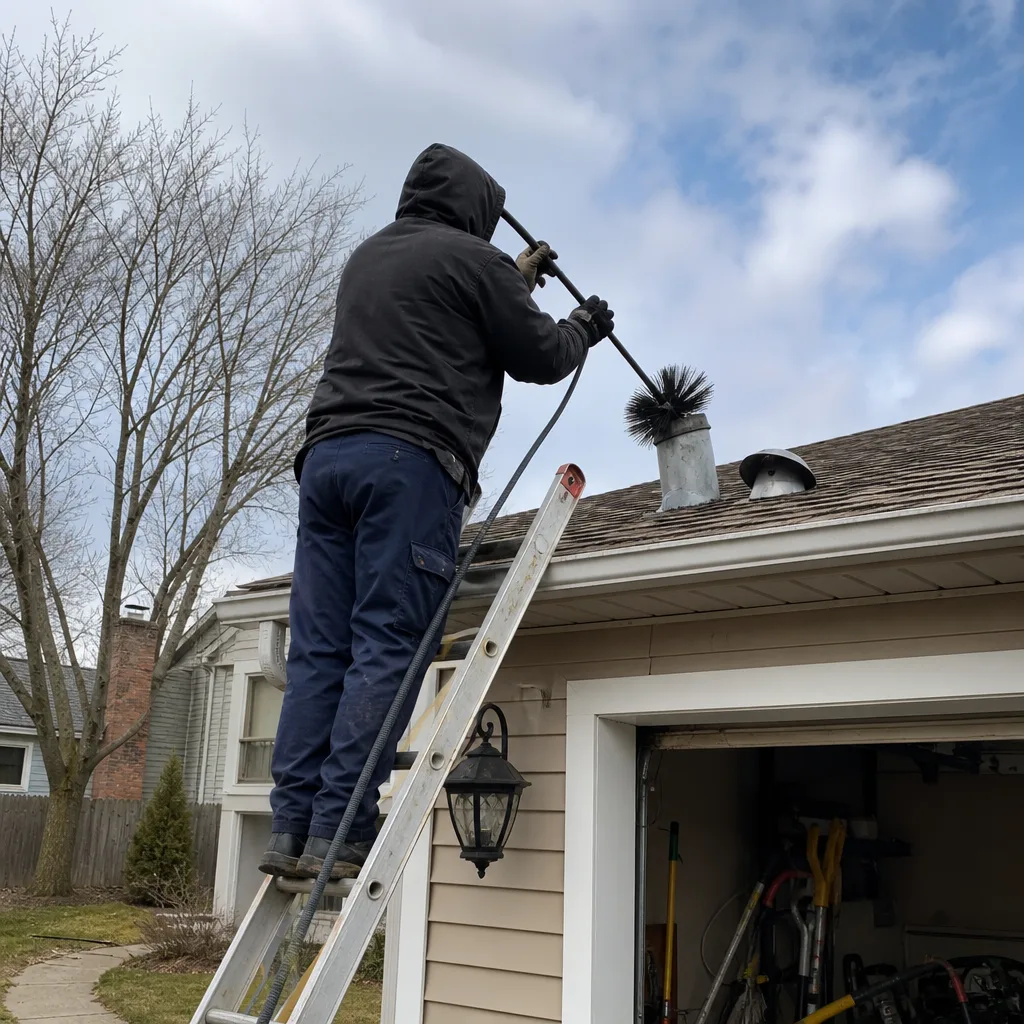
Some conditions exceed homeowner inspection and correction. Call a qualified technician when you observe: visible mold growth in any duct component; fiberglass liner shedding as described above; debris accumulation that returns within one season after cleaning; persistent musty odors that survive filter changes and surface cleaning; or any evidence of moisture intrusion in the plenum or ductwork.
Also call before any renovation that involves the HVAC system, including register relocation, basement finishing, or addition construction. The cost of pre-work protection is a fraction of post-contamination remediation.
CleanRun Air Duct Cleaning Elk Grove Village offers free estimates in Elk Grove Village - call (224) 344-8881. Every estimate includes a written price before any work begins, under Haven Standard Clause 1, and every completed job delivers a Documented Photo Record of every duct run. The 365-Day Done Right Promise covers all work in writing.
Frequently Asked Questions
Whole-system air duct cleaning for a typical Elk Grove Village home ranges from $450 to $850 depending on system size, accessibility, and contamination level. CleanRun provides a written price before any work starts - no per-vent add-ons, no post-arrival upsells. Call (224) 344-8881 for an exact quote; estimates are free.
The $79-$149 coupon offers typically cover a brief vacuuming of accessible registers, not full-system negative-pressure extraction with mechanical agitation. The real cost reveals itself after the technician arrives and “discovers” additional charges. Ask any provider: is the price for the complete system, documented with before-and-after photos of every duct run? If not, you’re comparing a car wash to an engine rebuild.
Demand a photo record. CleanRun’s standard deliverable includes timestamped before-and-after images from inside every duct run, delivered with the invoice. If a company can’t or won’t show you what they found and what they removed, you have no verification that the work occurred. This documentation practice has been in place since our first job in 2013.
There’s no universal timeline. A home with no pets, no renovations, proper filtration, and no moisture problems may go 7-10 years with minimal accumulation. A home near O’Hare’s flight paths, with multiple pets, recent remodeling, or filter bypass issues may need attention every 2-3 years. Inspect annually using this checklist and let observed conditions drive the schedule, not a calendar.
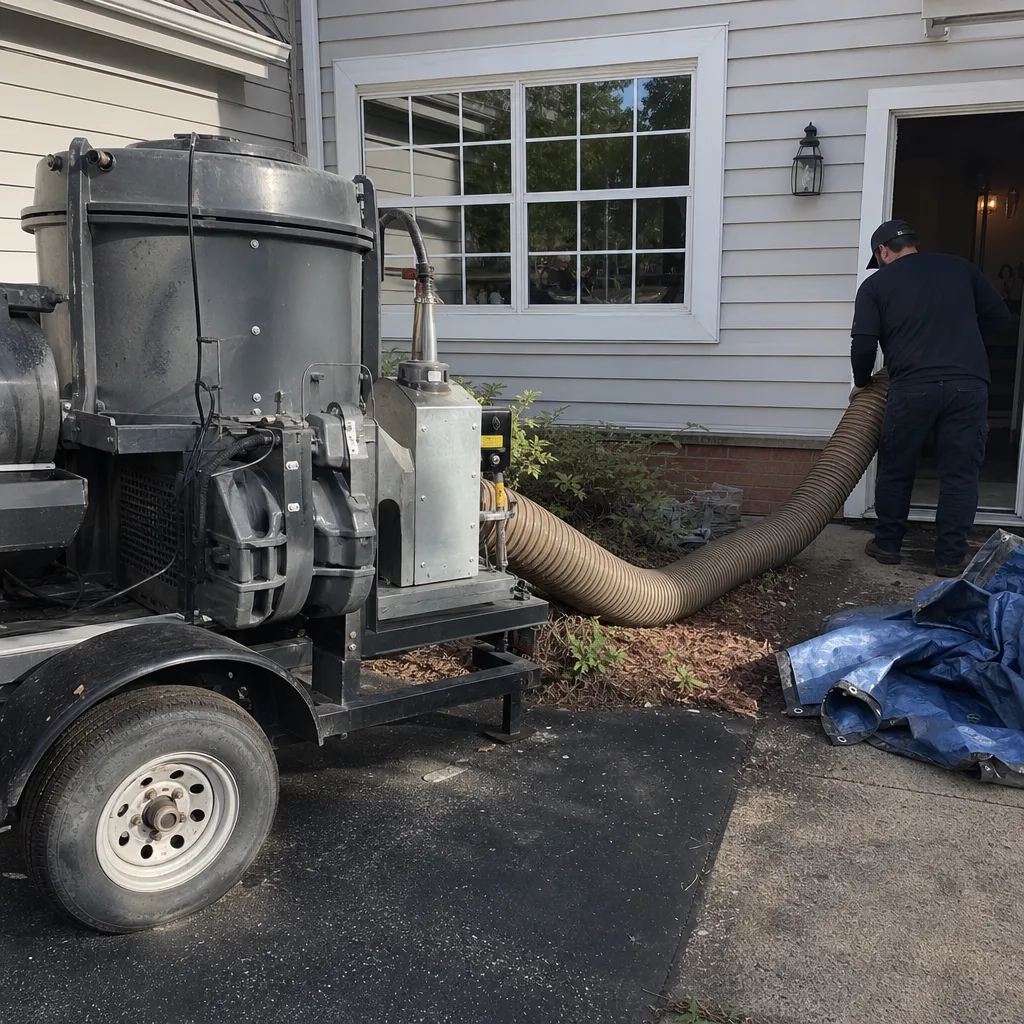
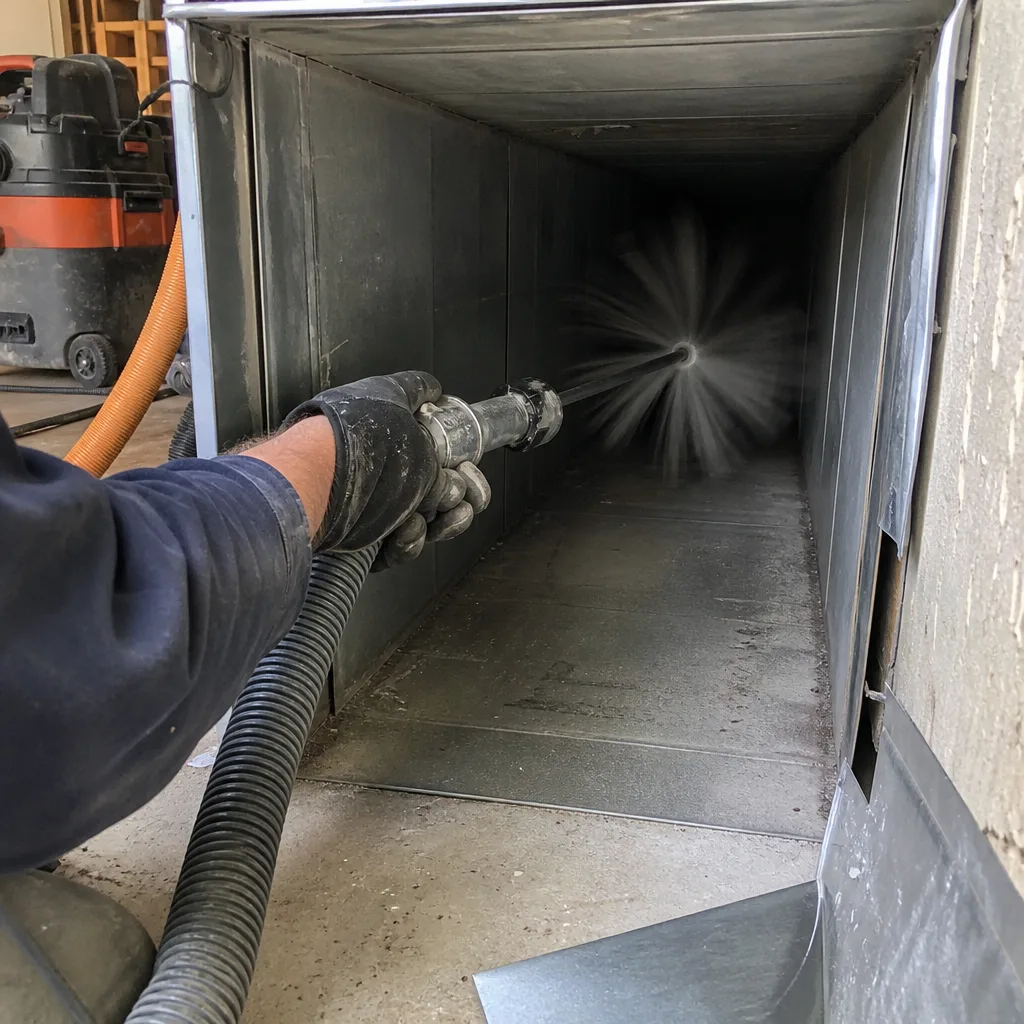
Surface cleaning of registers and visible boot areas is reasonable homeowner maintenance. Deep cleaning of the full duct system requires negative-pressure extraction equipment (Nikro and Abatement Technologies systems, in our case), mechanical agitation tools (Rotobrush), and containment protocols that prevent redistribution of contaminants into the living space. Attempting DIY deep cleaning without proper equipment typically redistributes debris rather than removing it.
Elk Grove Village follows the Illinois Energy Conservation Code and ICC mechanical codes, which specify duct sealing standards but do not mandate cleaning intervals. However, the Village’s building department does require permit and inspection for ductwork modification or replacement; see Air Duct Cleaning Permits, Codes & Inspections in IL: What You Need to Know for full details. If your inspection reveals degraded fiberglass liner requiring replacement, that work triggers permit requirements. CleanRun handles permit coordination as part of replacement scope when required.
The Bottom Line
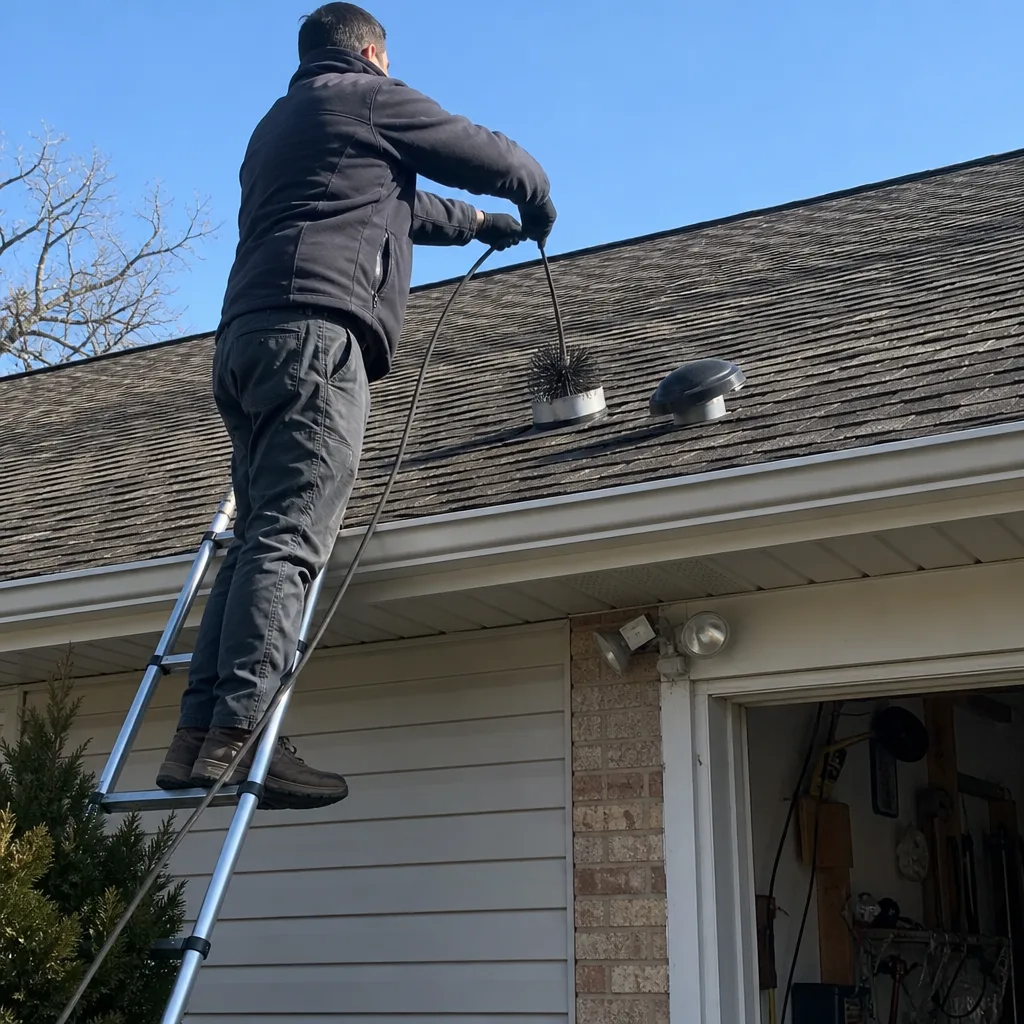
Effective air duct maintenance in Elk Grove Village is observation-driven, not calendar-driven. Inspect with a flashlight and camera, correlate what you find with your filter history and MERV rating, document everything in a written log, and let specific visible indicators - not vague timelines - determine when professional service is warranted. The homes with the cleanest ducts we’ve photographed aren’t the newest or the most expensive; they’re the ones where owners paid attention, recorded what they saw, and acted on evidence rather than assumption.
For a free estimate with written pricing before any work begins, call CleanRun Air Duct Cleaning Elk Grove Village at (224) 344-8881. Every job includes a Documented Photo Record and is backed by our 365-Day Done Right Promise in writing.
Written by Tomas Reyes, Owner at CleanRun Air Duct Cleaning Elk Grove Village, serving Elk Grove Village since 2013.